
How to Grow Your Own Mushrooms at Home
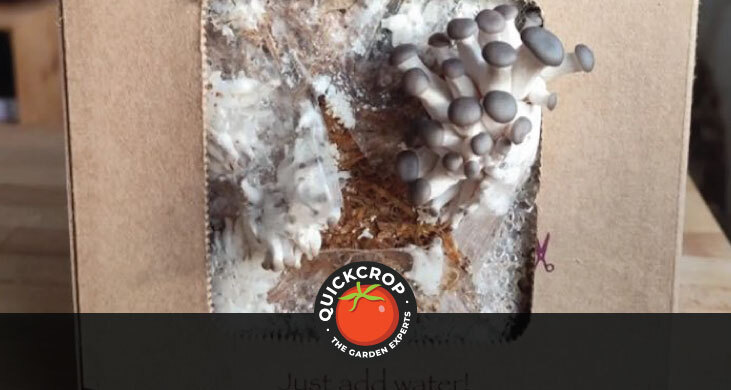
Growing your own mushrooms can be a fun challenge for any gardener. Mushrooms are unique in that they are grown in a different way to the methods that we are all familiar with in the vegetable garden. That makes sense: after all, they are fungi, not a vegetable.
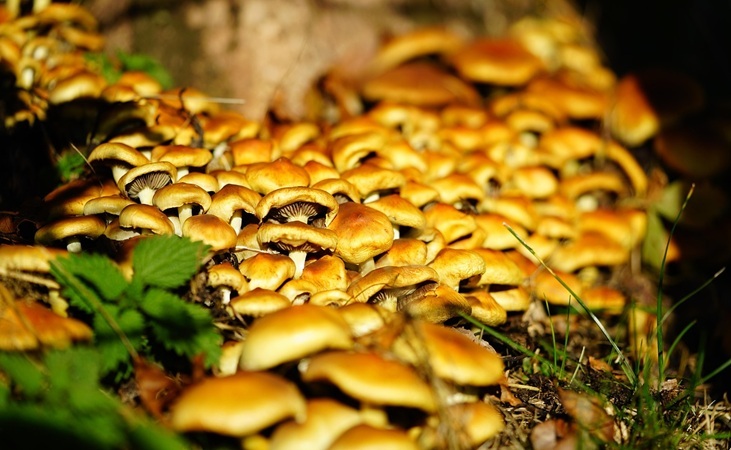
The mushrooms that you see in your local fruit & veg aisle are the fruiting bodies of a fungus. The main body of this fungus is known as ‘mycelium’ and grows underground or inside wood as a network of fine, thread-like structures.
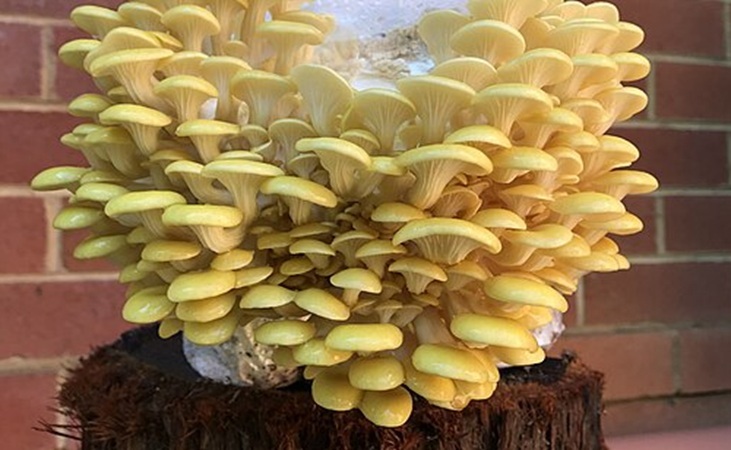
Mushrooms can be grown at pretty much any time of year, so if you’re looking for an indoor winter project to keep exercising your gardening muscles - look no further.
There are also a wide range of types to choose from, including ‘exotic’ varieties like pink oyster or lion’s mane.

Coir Planter Compost Makes 60 L
View ProductAlthough specific growing requirements can vary, most mushroom varieties will need an appropriate substrate, i.e. a nutrient-rich growing medium that allows the fungal mycelium to develop and spread or ‘colonise’. They are also often better grown undercover due to the fact that we are able to control conditions and humidity much easier (particularly in the winter months).
What are the Best Mushroom Types to Grow at Home?
Oyster Mushrooms
Fast growing, versatile and great for beginners. Oyster mushrooms can be grown on a variety of substrates, including straw, cardboard, sawdust and clean coffee grounds. Alternatively you can order a compact, beginner-friendly mushroom growing kit (see further below).
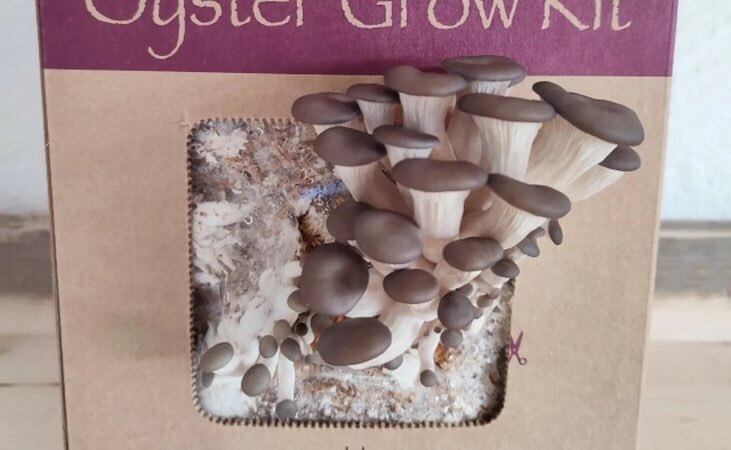
The names indicate the different colours that oyster mushroom varieties can give you: Blue Grey Oyster, Pink, Yellow Oyster, etc. Note that some varieties will require warmer conditions than others.
Shiitake
Again these can be relatively easy to grow, and have a rich, meaty ‘umami’ flavour. The firm texture lends them well to grilling or roasting.
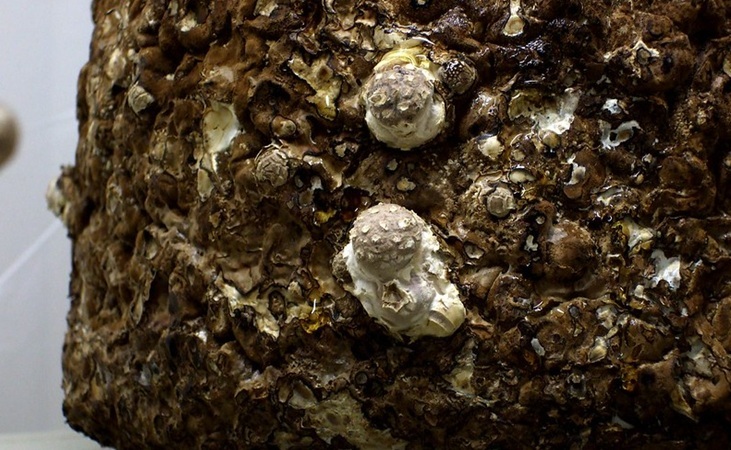
Shiitake mushrooms are often grown using hardwood logs or sawdust blocks, and they do well in cooler, shaded conditions. They tend to be slower to fruit - with a time frame of 6 to 12 months when cultivated on logs. Shititake mushroom varieties store well (1-2 weeks in the fridge after harvesting).
Lion’s Mane
This is a truly unique looking mushroom, resembling a fluffy pom pom. It is also believed to have a number of cognitive health benefits. This variety can grow very well indoors, but it is important that the space is well-ventilated.
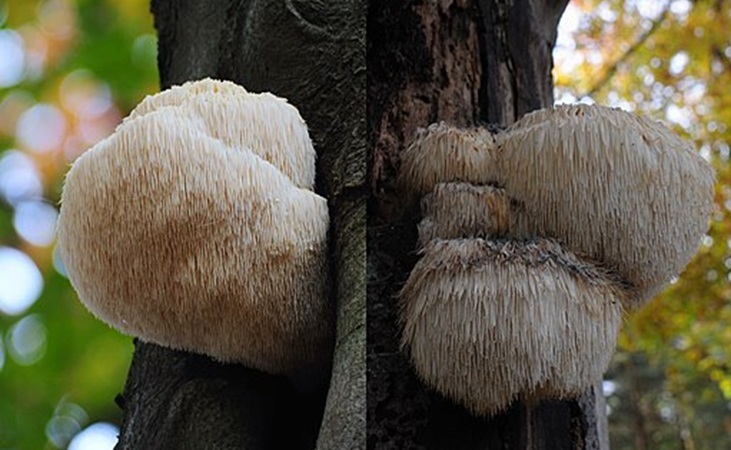
With a mild flavour and tender texture, Lions' Mane mushrooms work very well when pan fried and added to soups, stews or broths.
White Cap
Also known as button mushrooms, these have the classic mushroom appearance that most people are familiar with. ‘White Cap’ are more challenging to grow for beginners, but they come supplied in pre-inoculated grow kits to make life easier. Otherwise, composted manure is your best bet as a substrate.

Gee Up Horse Manure Organically Certified Bags
View ProductWhat do Mushrooms Require to Grow?
Growing mushrooms indoors is easier than you might think for the uninitiated. They require a few things to grow successfully:
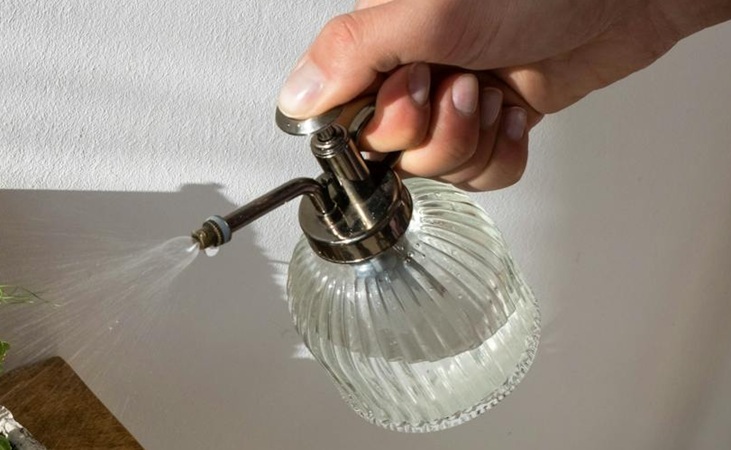
- High humidity: This can be more readily controlled by using plastic bags or mini ‘tents’, as well as by ‘misting’.
- Indirect light: mushrooms require a few daily hours of light to grow, but ideally it should not be direct sunlight. Grow lights can come in handy here.
- Oxygen: Create small holes for airflow if necessary.
- A suitable substrate or growing medium (see below).
- The substrate should provide nutrients for the mushrooms to grow and fruit.
Where To Grow Mushrooms
Indoors
Sheds and garages are suitable areas provided you can achieve a localised temperature of between 10-24 °C (as a general rule; some varieties of mushroom require cooler or warmer conditions).
Most mushroom grow kits can be placed on windowsills, as long as the windowsill is not subject to strong direct sunlight - avoid draughty windowsills as well.
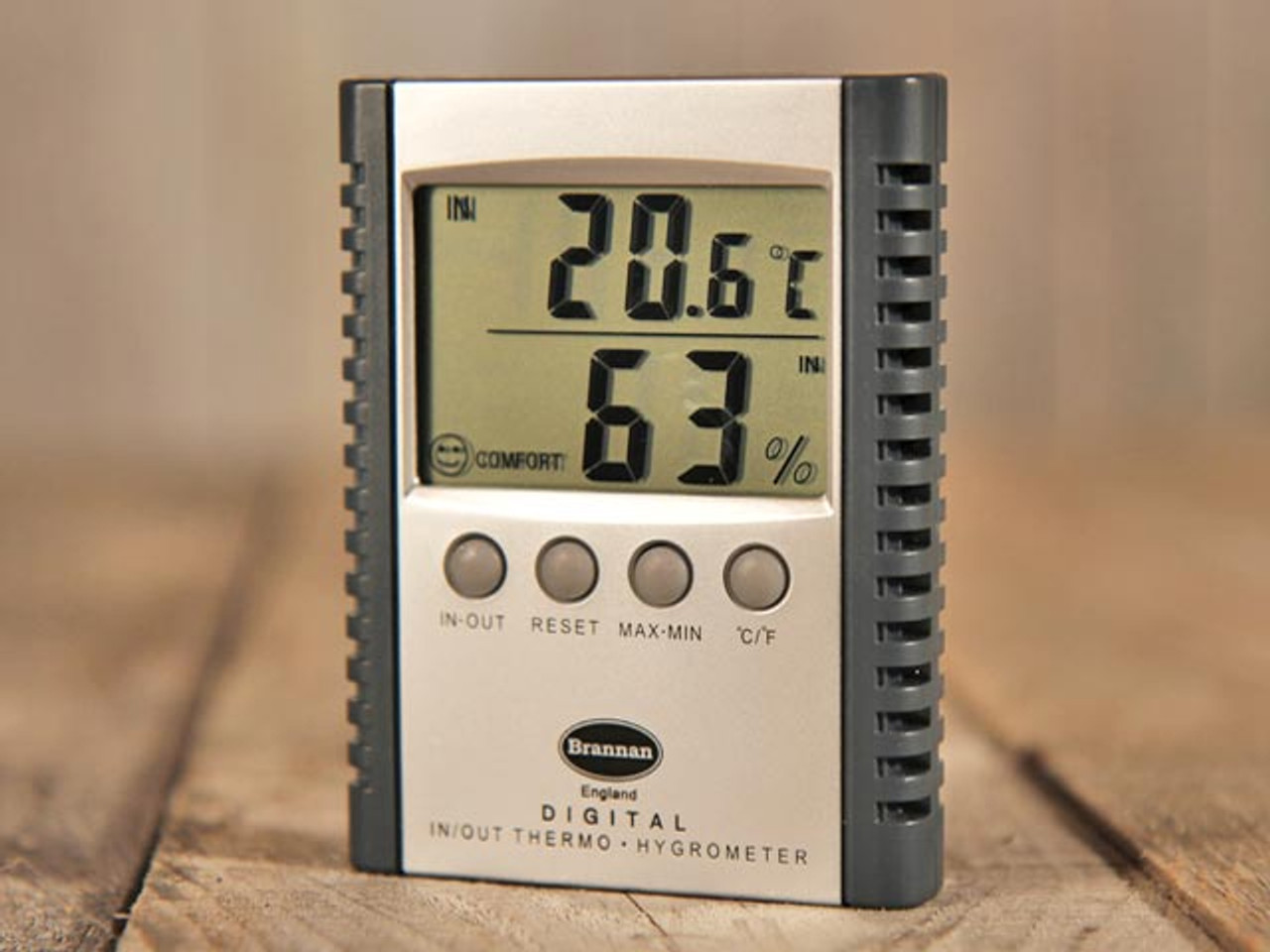
Tildenet Weather Station Thermometer
View ProductOutdoors
It can be much more challenging to grow mushrooms outdoors due to weather unpredictability, contamination etc. However it can be successful if you create the right bed conditions, use a cold frame (blurring the lines between indoors and outdoors perhaps), or use the log cultivation technique.
Mushroom Growing Methods
1 - Mushroom Grow Kits
The easiest way for a beginner is to go for an indoor grow kit. These kits typically come with a pre-colonised substrate. They should also have advice and guidelines on growing conditions and watering (or ‘misting’).
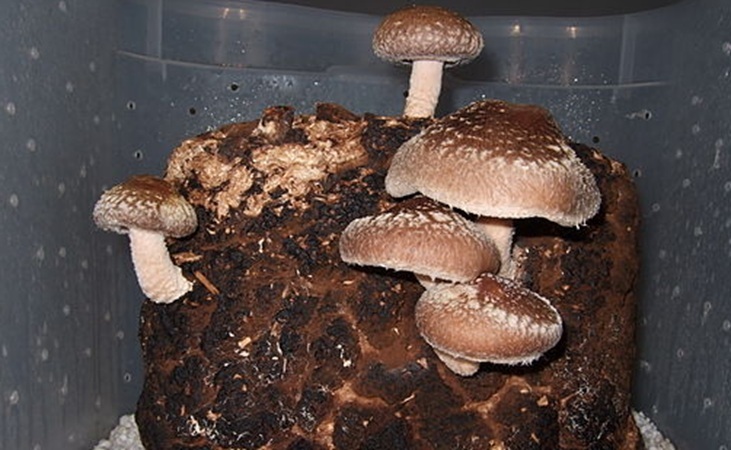
The simplicity of a grow kit notwithstanding, it’s still very fun to observe the process - and you should have some edible mushrooms in just a few short weeks (depending on variety).
Grow kits are compact enough to be used on kitchen counters or windowsills, but avoid placing in prolonged direct sunlight - indirect sunlight is best.

2 - Log Cultivation
This method closely mimics how mushrooms grow in the wild, and can be tried outdoors in the garden or in shaded areas. Shiitake and oyster mushrooms - which naturally grow on dead or decaying trees - are especially suited to this growing method.
The process involves inoculating freshly cut hardwood logs with wooden dowels or spawn plugs containing mushroom mycelium. Over time, the mycelium colonises the wood, eventually producing mushrooms from the surface.
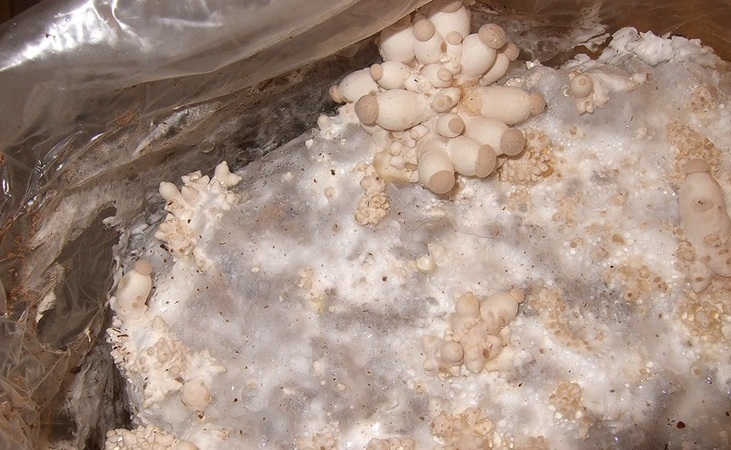
In effect, the logs serve as both growing medium and nutrient source, providing the fungi with everything they need to thrive for several years.
Hardwoods such as oak, beech, maple or birch are ideal for cultivating mushrooms. Avoid softwoods or resinous trees like pine, as their sap can inhibit fungal growth.
Logs should be cut from healthy, live trees during the dormant season (you can ask local community maintenance workers if you aren’t able to cut your own). The log cutting should be used within a few weeks to prevent contamination by wild fungi.
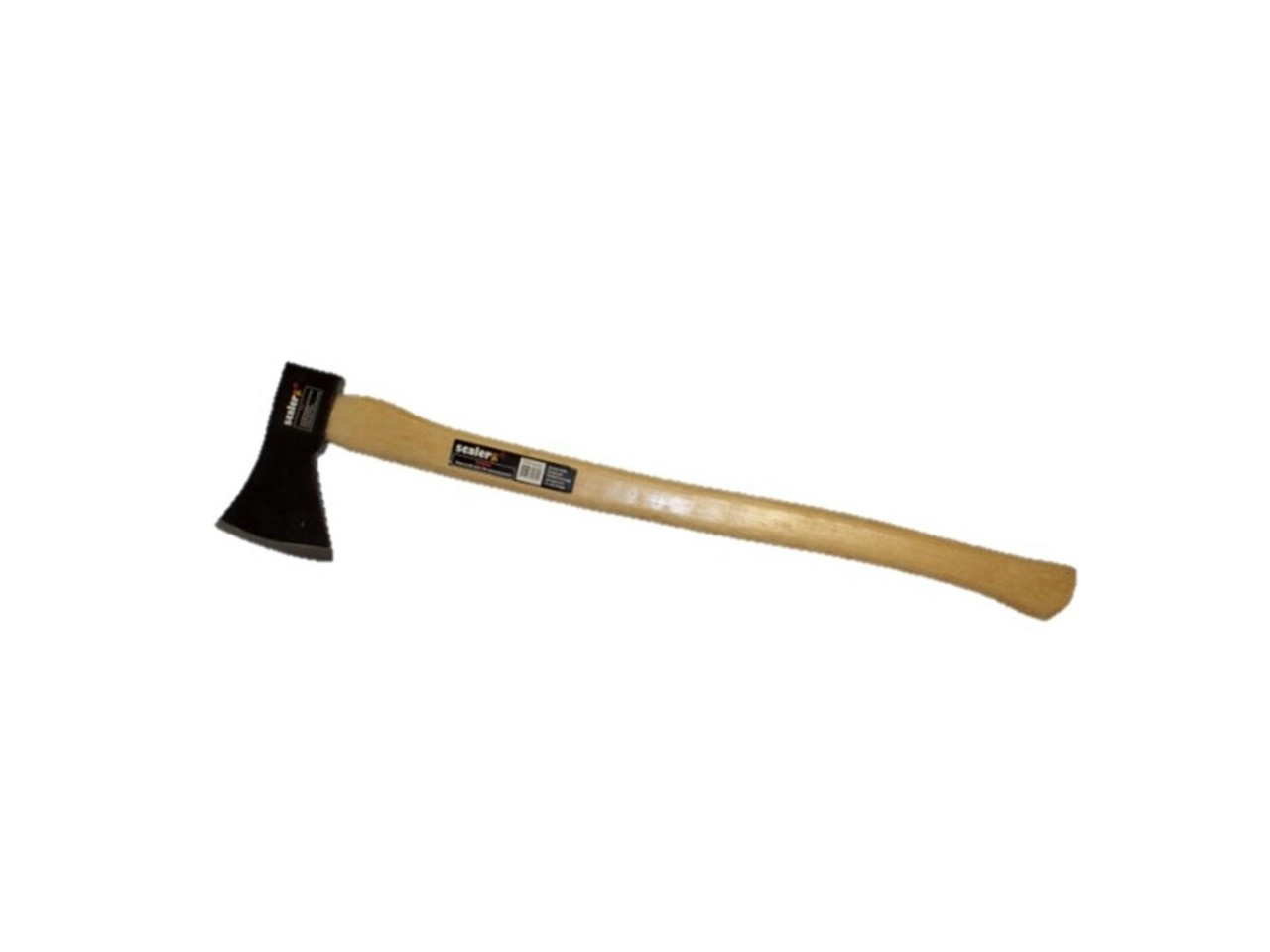
Workman Axe - Hickory Handle - 6 lb
View ProductLogs should also be of suitable size for both manageable handling and optimal colonization. 3-8 inches in diameter and 3-4 feet long is a good rough guideline.
Inoculation Process:
- Drill holes evenly across the log surface (about 15-20 cm apart)
- Insert mushroom spawn plugs or dowels into the holes, until they are flush with the surface
- Seal each hole with melted wax to protect against contamination and drying out (don’t seal the log ends, as they need some moisture)
- Label the logs with the species and date of inoculation for easy tracking
The mycelium colonisation period (or ‘incubation phase’) can take anywhere from 6 to 18 months, depending on the mushroom species and prevailing weather conditions. Once the mycelium has fully colonised the log, fruiting can be triggered by soaking the log in cold water.
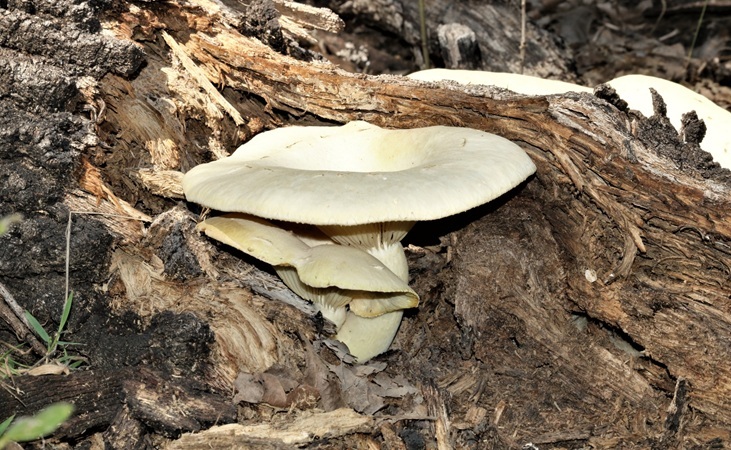
Logs can continue producing mushrooms for 3-5 years - and sometimes even longer for species like shiitake.
3 - Growing on Straw
This is a cost-effective substrate method and can work for a few different mushroom varieties, although it is particularly well suited to oyster mushrooms.
Examples of the types of straw that you can use are wheat straw, barley straw or oat straw. You can source some straw directly from farmers, or try garden centres or pet stores.
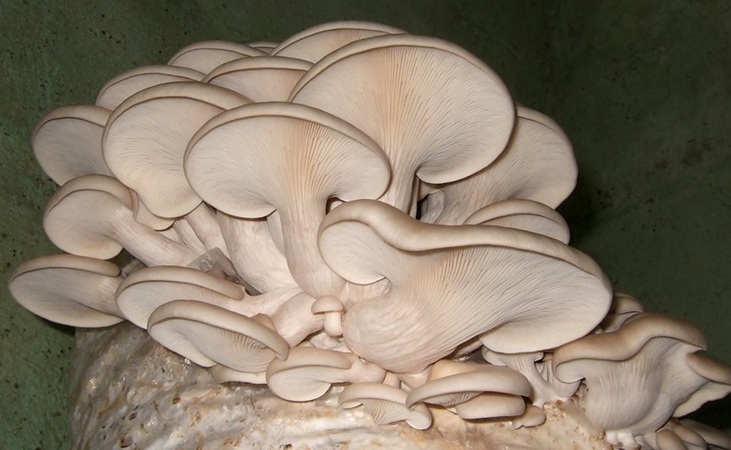
Steps:
- Use clean, dry straw and discard any that is discoloured.
- Straw may need to be chopped into smaller (1-3 inch) pieces (this helps the mycelium to colonise faster)
- (optional) Soak straw overnight and discard excess water
- Pasteurise the straw by submerging in a hot water bath (65-80 °C). Avoid using boiling water, which can actually make the straw more susceptible to contamination (by killing beneficial microbes)
- Drain thoroughly, the straw substrate should be damp but not dripping. Allow to cool
- Mix in mushroom (grain) spawn and spread evenly
- Place in a polythene bag, binliner or a bucket
- Keep in a dark area with a stable temperature (ideally 20-24 °C)
- Ensure adequate airglow by leaving space in the container
- Move to a warm, light, moist area and cut slits in the bag for fruiting. Aim for consistent humidity
- Mushrooms should appear over the following weeks

4 - Coffee Grounds
Used coffee grounds are a freely available, sterile and nutrient-rich substrate for mushroom cultivation. Ask your local cafe and they will usually be quite happy to hand some over. When it comes to coffee grounds, the fresher the better - ideally they will have been used in the last 24 hours.
Some good varieties for coffee ground cultivation include oyster mushrooms, ‘Nameko’ or Lion’s Mane (when mixed with woody material).
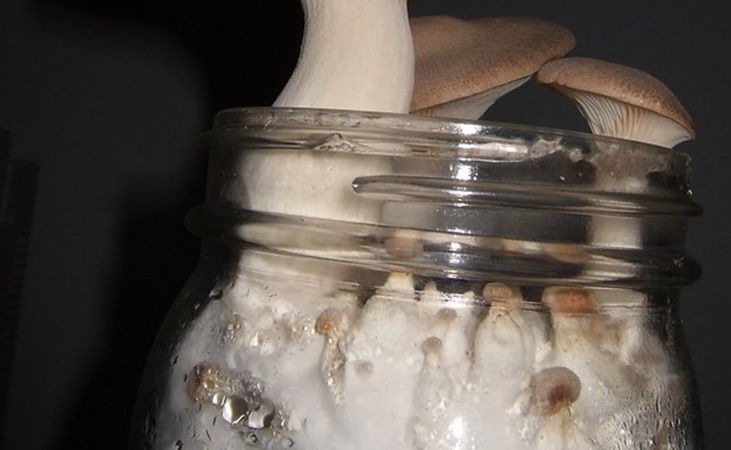
- A good guideline ratio is 20-30% spawn by wet weight: 70-80% coffee grounds
- Use a clean glass jar with a lid that you can puncture 2 small holes in. These holes can later be covered with microporous tape
- Sterilise your working area, tools and the jar for better results
- Add mushroom spawn to the top of the (cooled) coffee grounds, or mix it in lightly
- Seal the jar while ensuring some air exchange (e.g. the small holes in the lid)
- Keep the jar in a warm (18-20 °C), dark spot
- As the mycelium colonise the coffee grounds you will see the mixture taking on a white and ‘fuzzy’ appearance
- Move the jar to a cooler spot, while still avoiding direct sunlight
- Cover the jar with a damp cloth or kitchen roll and keep humidity levels high by misting
5 - Growing in Trays or Indoor Beds
A deep tray or a box can be a suitable growing environment when filled with the right growing medium. Your container should be about 6 inches (or 15 cm) deep.
- Use compost, broken-down manure or coco coir as a substrate.
- Spread spawn across the surface and mix 5-8 cm deep.
- Cover with damp newspaper until white mycelium appears.
- Add a 50:50 layer of garden soil/compost and lime.
- Mist to maintain moisture until fruiting occurs.
Harvesting Advice
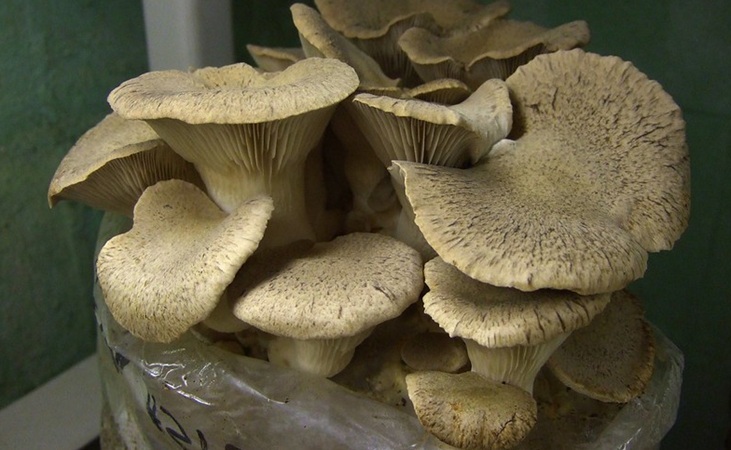
- Watch for mushroom “pins” (tiny mushrooms) to appear, then grow. When the caps start to flatten (but before they go too large), gently twist or cut off the cluster from the base.
- Aim to harvest mushrooms before the edges start curling upwards too much. In general this is when they are most flavorful.
- You will often get more than one ‘flush’ of mushrooms. After harvesting, re-moisten and keep humidity up to encourage a second yield.
- Mushrooms are high in moisture: store them in a paper bag or an uncovered container in the fridge, preferably on a shelf rather than in the drawer.