Where is the Best Location for a Bird Feeder?
Once you have a fair idea of what types of food are best for wild birds, the next thing to think about is where you feed them: in particular the location for your feeding station. Many bird species have good memories and will return to a location where a) they feel secure and b) there is a reliable source of food.
Safety from Predators
Birds like vantage points where they can make a risk assessment for any feeding sorties: tall hedging or trees - with a good view all around - are just as important as the food, as they keep the diners happy and secure. Territorial birds such as robins, meanwhile, like to defend their patch from a height.
Positioning your feeder close to hedging or shrubbery means that birds will have somewhere to quickly retreat to if there are predators about. A good guideline is approximately 3 metres (or 10 feet) away.
One thing to be aware of here is overhanging trees or branches, which can give squirrels or cats an opportunity to pilfer or pounce.
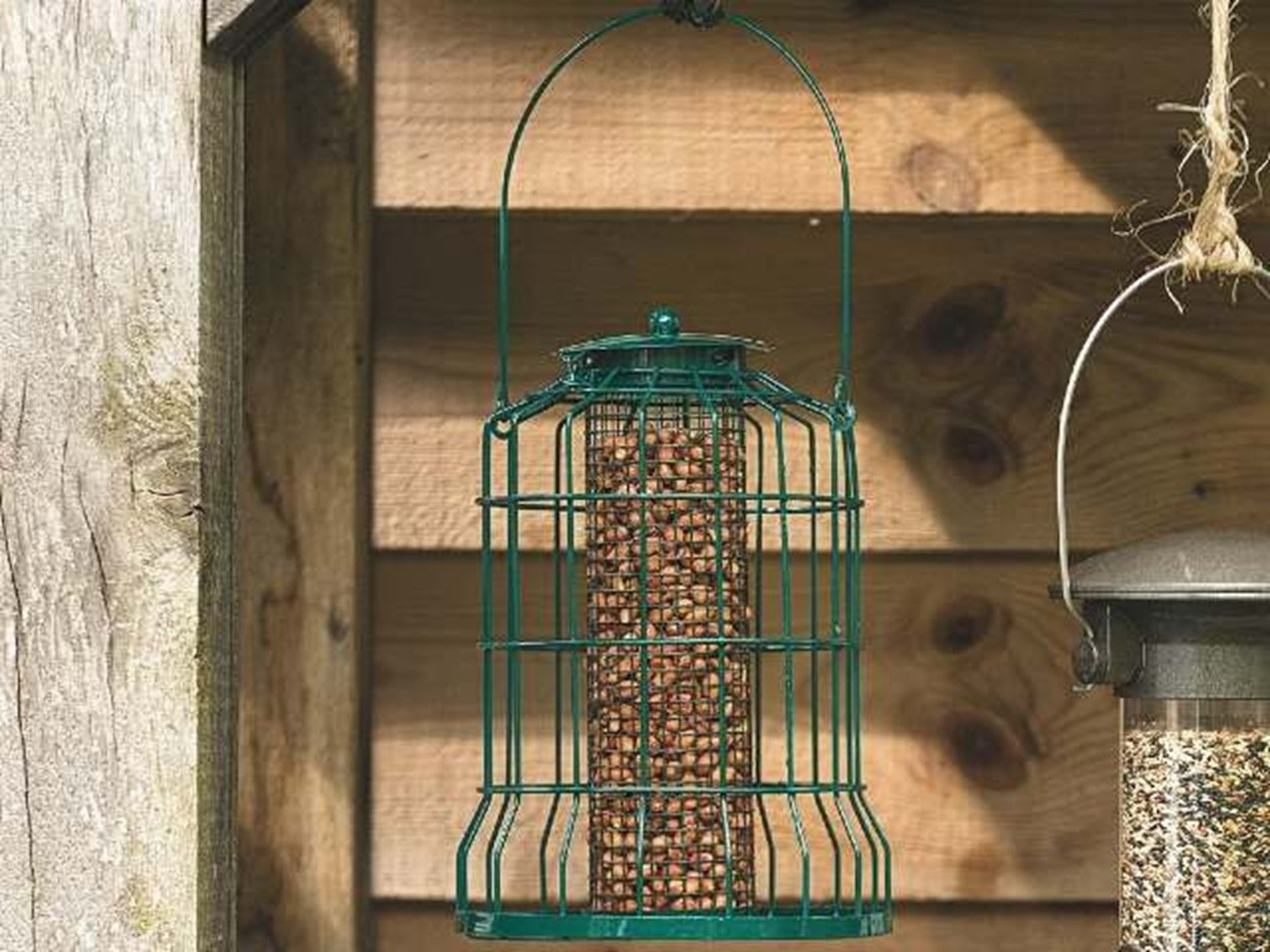
Gardman Squirrel Proof Peanut Feeder
View ProductBear in mind that native garden hedging can also provide nesting spaces as well as nuts, haws or fruit for foraging.
Again, the point is that good habitat keeps birds comfortable - and makes them more likely to feed.
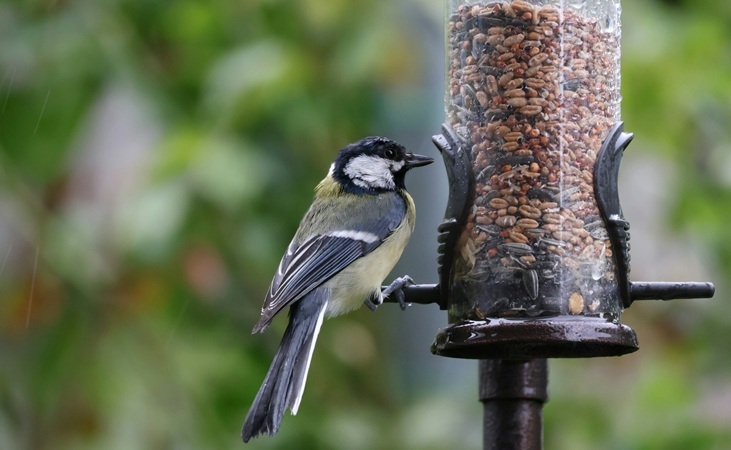
How High Should a Bird Feeder Be to Make it Cat Safe?
The bird feeder should be 5 to 6 feet off the ground at minimum. You don't want it to be so high that it becomes a chore to refill, but a low-hanging bird feeder is metaphorical catnip for predators.
You should also be aware of anything that cats can use to climb up closer to the feeder. They are very agile creatures who can leap a fair distance, so anything they can use as a foothold can quickly cancel out the height advantage of your bird feeder. Watch out for extending branches, low walls or ledges.
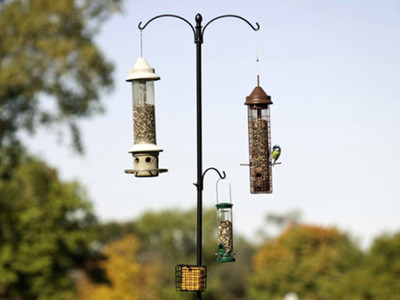
If not hanging from a tree branch, the feeder should be attached to a smooth, pole-like structure (rather than timber, which cats can scale).
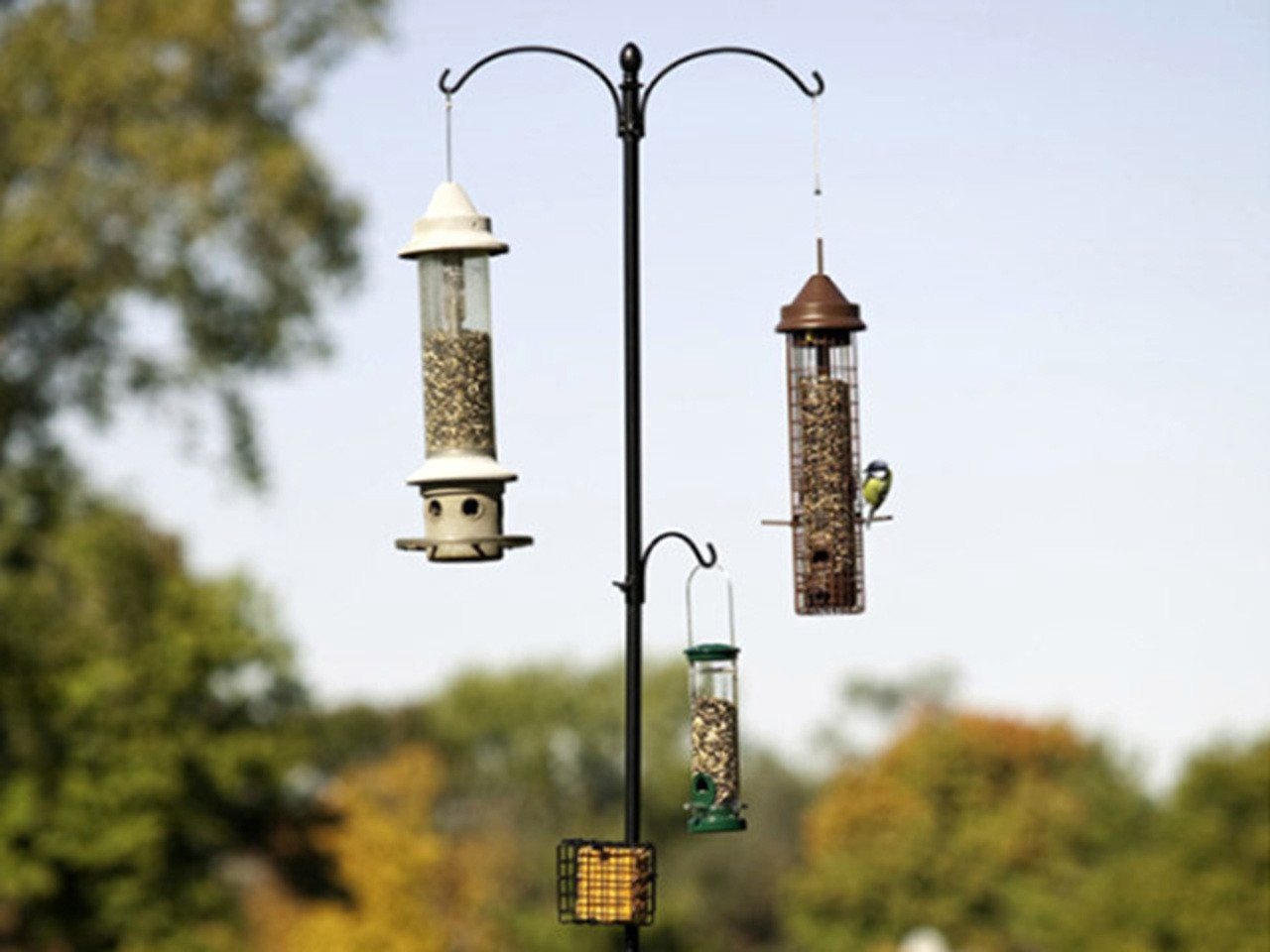
Two Way Bird Feeding Station
View ProductShelter
It may seem like there are already a lot of things to take into account, but it’s best if your bird feeder is in an area sheltered from strong winds or direct, intense sunlight (which can cause food to spoil).
Again, proximity to garden hedging can have a further advantage here as it can act as a natural windbreak. House walls or tree canopies can also provide partial shade, where birds will feel more comfortable feeding in warm weather.
How Far Should a Bird Feeder be from a Bird Box?
If you have set up (or are thinking of setting up) a bird box, it’s important to keep feeders and nest boxes at a distance from each other. While both are intended to support garden birds, placing them too close together can unintentionally cause problems.

Schwegler Nest Box 1B (Brown) - 1 Entrance 32 mm
View ProductBird feeders tend to attract a lot of activity, including multiple species visiting frequently (sometimes with the odd squabble breaking out!). Nesting birds generally prefer quieter, calmer areas where they feel safe to raise their young. Noise and disturbance near a nest box may discourage birds from using it at all, or may cause stress once nesting has begun.
It has been suggested that placing feeders in the front garden and bird boxes in the back garden is good practice, but a large garden should have enough space to keep feeders and nest boxes at a sensible distance.
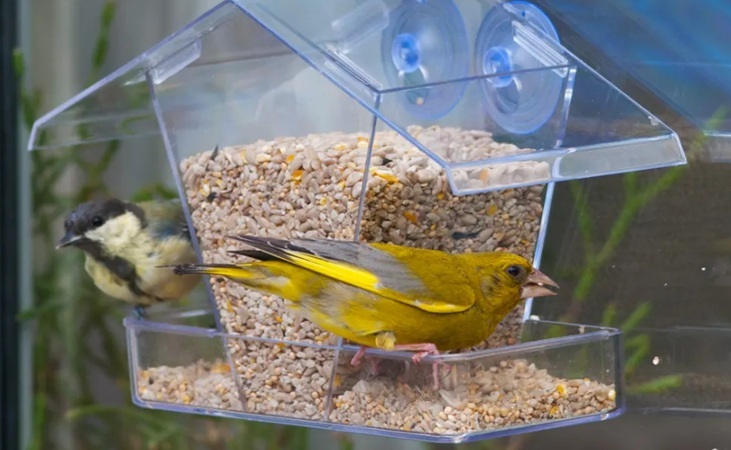
Window Feeders
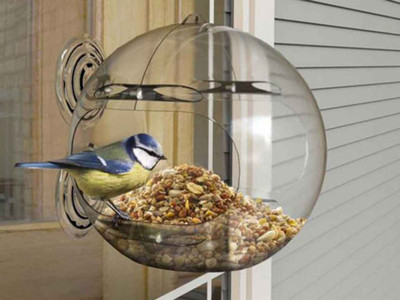
Some bird feeders are designed to be attached to a windowpane using strong suction cups. These often have a clear, transparent design which enables you to view birds up close as they feed.
You might be concerned about accidental window strikes by confused or over-eager birds, but in many ways a window feeder can reduce the chance of this happening. Birds will naturally slow down as they approach a feeding area, and they are unlikely to build up enough speed to hurt themselves when flying away again.

Peckish Globe Window Feeder
View ProductA common safety recommendation is that bird feeders should be within 3 feet of a window or more than 10 feet away. Naturally, a feeder that has been attached directly to a window fulfils this advice. You can place decals on the windowpane to make extra sure, though.
Diversity
Much like us humans, birds can have different preferences and quirks. Some prefer to feed under cover while others will dart out in the open, get a quick bite and dart away again.
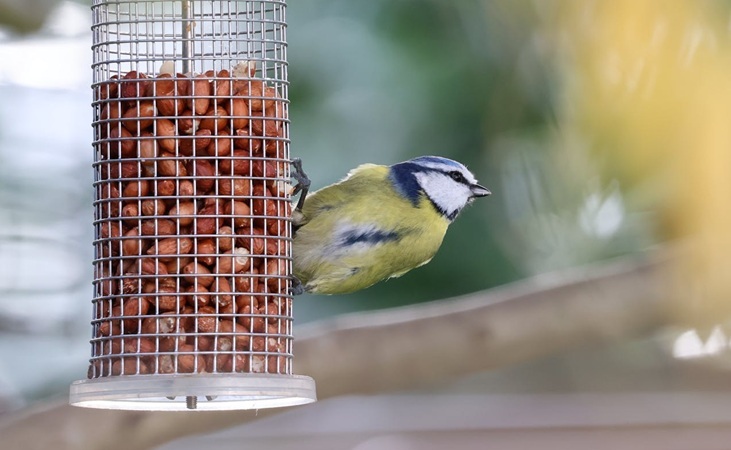
Placing bird feeders/tables at different heights or in different areas of your garden can cater to different preferences and behaviour.
Ground Feeders and Bird Tables
Then there are species such as the chaffinch or dunnock, who prefer to feed or forage on the ground and will benefit from a flat surface such as a bird table (which can be raised off the ground). Ground-feeding birds prefer low, open surfaces where they can spot predators.
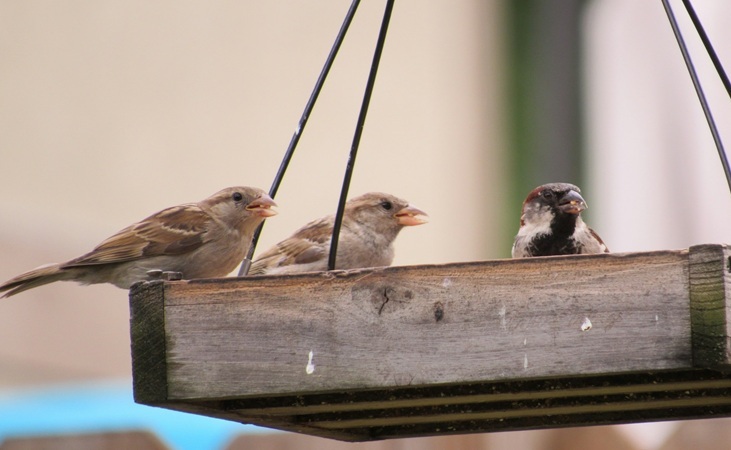
We've discussed above how hedges can provide good cover for birds, but they can also be used by cats to plot an ambush - so avoid placing a bird table in close proximity to a hedge or dense shrubbery.
One More Point
Don’t forget also about your own view - a bird feeder that can be seen from the kitchen window makes for something pleasant and interesting to look at while you do the dishes!