Description
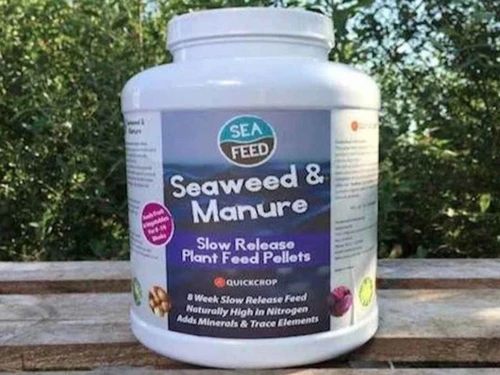
Seafeed is packed full of easily absorbable plant nutrients made by composting sustainably harvested seaweed and manure.
Seafeed undergoes a unique composting process which has been designed to stabilise the nutrient content and to maximise the availability of these nutrients to your plants. The finished pellets are guaranteed free of any pathogens, parasites and weed seeds.
- Composted poultry manure provides a slow release source of nitrogen, phosphate and potash (the 'Big 3').
- Seaweed contains naturally occurring growth stimulants, as well as a very broad range of essential minerals and trace elements which are used in the growth of strong, healthy plants.
Seafeed can be used to feed your plants at any time of the year, releasing nutrients slowly for up to 3 months. It's also great for adding to your soil mix when potting or planting.
This is the best all-round natural pellet plant feed we've come across, and is a vital part of our garden toolkit. Highly recommended!
N.P.K: 4.0 - 1.0 - 1.5
Manufactured from fish, seaweed, humic acid and manure.
Choose Your Size
We Supply our Seafeed plant food in 2 different size buckets; 4kg and 10kg. Please choose the required one using the drop-down menu above.
Why is seaweed so beneficial?
Seaweed has been used for centuries by Celtic and Scandinavian people as a soil improver, in fact in many cases (the Aran Islands off the West coast of Ireland for example) the soil has been entirely built on a seaweed base.
The sea is very rich in minerals and as the seaweed grows it absorbs minerals in its plant tissues, which are then released and made available to plants when the seaweed is broken down.
Scientists have found in seaweeds a veritable soup of plant-growth stimulants, vitamins, chelating agents, trace minerals, enzymes, and amino acids; all of which influence the growth of plants in different ways.
Studies have shown that seaweed can produce dramatic results in plants, including a 40 percent increase in yield from cucumbers and potatoes. Plants have been seen to have better frost tolerance, increased seed germination and a greater ability to absorb trace elements.
Application
Only needs to be applied every 6-8 weeks.
Application rates:
Vegetables: 150g per m² to seed bed before planting.
Further applications can be added at a rate of 50g per square meter every 8-14 weeks, or as required.