Compost Bin Comparisons - The Best Home Composters

As bin charges increase and households try to be more environment friendly, we are seeing a corresponding increase in home composting. We have been interested in domestic composting for a long time now, and stock some very effective solutions which have a number of unique selling points to suit various applications.
We are often asked to weigh up the pros and cons of each solution so I thought it might be helpful to cover the key differences today and explain how they work. So, here goes.....
Carbon, Nitrogen and Oxygen
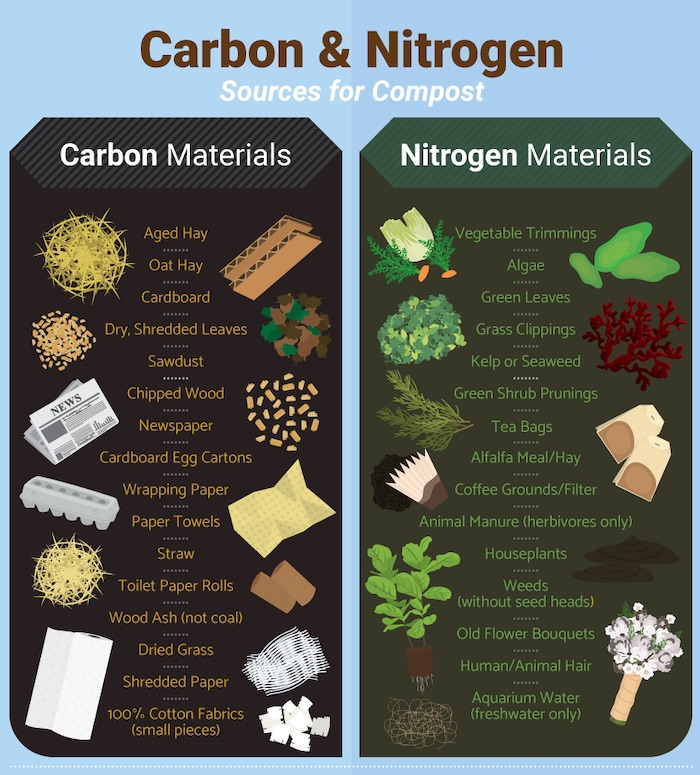
It's worth pointing out that a compost bin needs three main elements to work: carbon, nitrogen and oxygen. Carbon and nitrogen come from the waste material added to the bin; this is broken down by friendly bacteria. Air is needed for the bacteria to breathe - if there is no air in your compost pile, it won't work.
- carbon comes from dry brown material - dry leaves, cardboard, wood chip etc.
- nitrogen comes from green material - e.g. vegetable peelings, grass clippings, green garden waste
Air is introduced by either turning the compost with a garden fork or by rotating the compost bin itself. As regards ratio, I find the best mix is 2 parts green x 1 part brown (by weight). In volume this will look more like 50/50, as the brown material weighs less than the green. The most common problem with composting is not enough brown material.
Cold vs Hot Composting
Any organic material will eventually break down to form compost, but if the material can be made to produce heat it will happen a lot quicker.
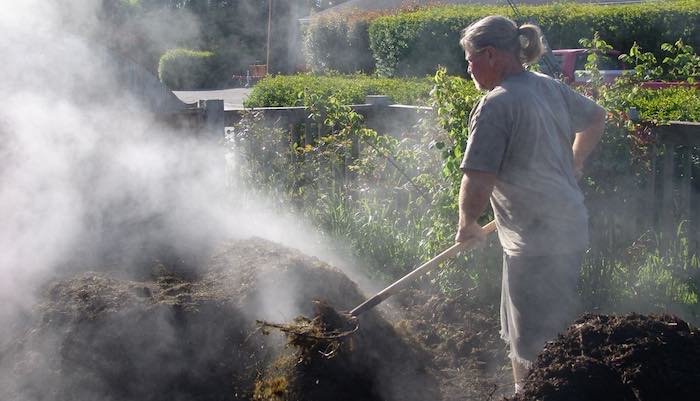
Heat is produced by the bacteria that break down the compost; the heat can be managed by adjusting the mix of materials, adding air and/or insulating the pile. Apart from the quicker rate that it produces finished compost, hot composting also has the advantage of killing weed seeds and pathogens.
A hot compost heap requires some planning and input from the gardener, while a cold heap is built as materials become available - so the latter is much easier to do. A cold compost heap takes a long time to break down (a year or more depending on local conditions), but will still make perfectly good compost.
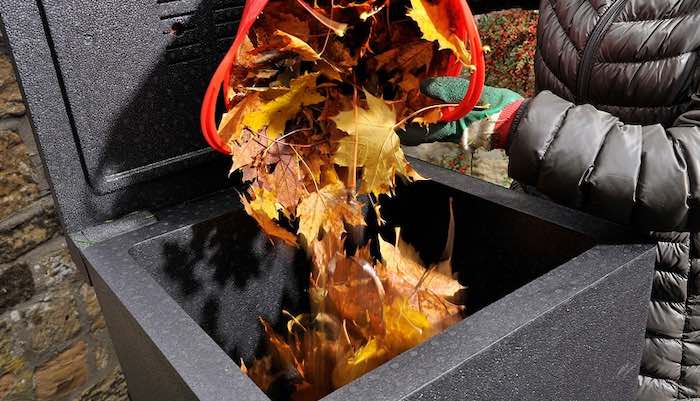
Insulated Composting
Naturally, an insulated compost bin will retain heat longer than an uninsulated one. More heat means faster composting: material from an insulated compost system is usually ready for use in the garden in 60-90 days.
What is Worm Composting?
Worm composting or 'vermiculture' uses worms instead of bacteria (but in truth a bit of both) to break down the material. The big advantage of worm composting is that the finished product is a highly nutritious compost, with a perfect balance of nutrients to feed plants.

Worm Works Wormery For Home Composting
View ProductSome Key Composting Solutions:
Static Compost Bins
Obviously the most basic compost solution is simply a pile of compostable material. The next step up is an enclosure of some kind.
Plastic bins are the cheapest solution, and while they can be used for hot composting they are more likely to be used for cold. The most common issue with this type of system is a smelly bin due to lack of air. This can be easily remedied (but rarely is) by emptying the bin and mixing the contents before re-filling. If the contents are overly wet, they should be mixed with a dry carbon-based material.
Wooden alternatives feature an open slatted design which allows air to circulate, so they do not tend to suffer from the problems above.
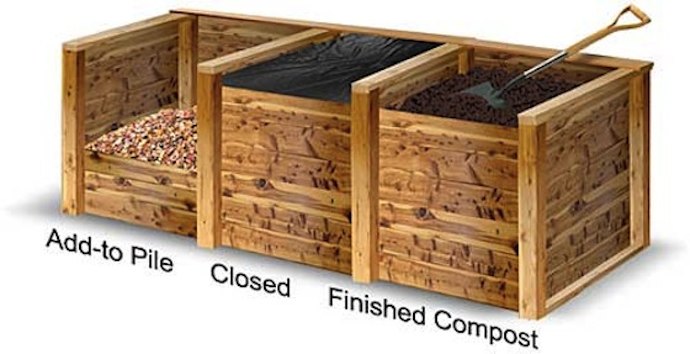
The New Zealand Box system
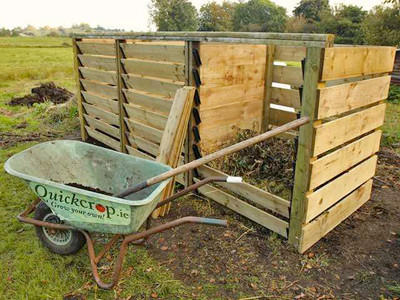
The New Zealand Box system is a 3 bay system designed to aerate compost by turning from one bay to another. This is a very effective system which can be made far more effective by paying attention to the C/N mix. The procedure is as follows:
- Compost material is added to the first bin - this is the hottest compost stage. Material can be added over a period of time, but is most effective (gets hotter) when added in large batches.
- After 6-8 weeks the hot compost pile is turned into the second bay, which mixes it and introduces air. This triggers a secondary compost cycle, that does not create as much heat as the first but breaks down the material further.
- After another 6-8 weeks the material can then be turned into the final bin where it breaks down further, and can be used as needed.

Treble Bay Easy Access Timber Composter
View ProductThe New Zealand box system is the best if you have large volumes of garden waste that need to be processed. This method will not build up sufficient heat unless you have enough material to build a large pile (ideally 4ft cubed).
Thermo Plastic Compost Bins
A newer product which bridges the gap between static and insulated compost bins, the 'thermo' range are made from a specially engineered Thermolen® plastic. Tiny bubbles in the material improve heat retention, which speeds up the composting process.
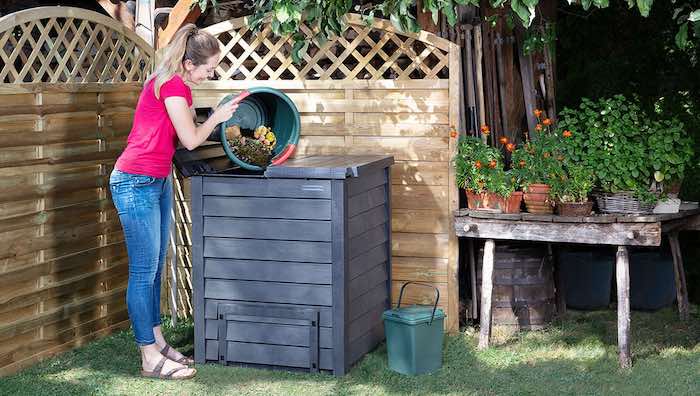
The Thermo Wood, Thermo King and Thermo Star compost bins are all made from thermolene, with the Thermo Wood being the most attractive with a smart wood finish. All are made by German company Graf/Garantia and are a high quality product.
These composters are pretty simple to set up using a click and connect system. The Wood is the most attractive of the three options; although it's not actually made of wood you could be fooled into thinking otherwise, such is its realistic, slatted appearance.

Thermo King Composter - Green
View ProductThe Thermos will compost quicker than a standard plastic bin, producing finished compost in 16 to 20 weeks in the summer months. Material can still be added in winter but the composting process will be slower.
Each of the composters feature access flaps on top for adding material as well as separate access points for the finished compost. The upper flaps provide a generous amount of elbow room for turning the material, checking the temperature and so on. Ventilation is also provided by a series of openings (which are well disguised on the Thermo Wood version it has to be said).
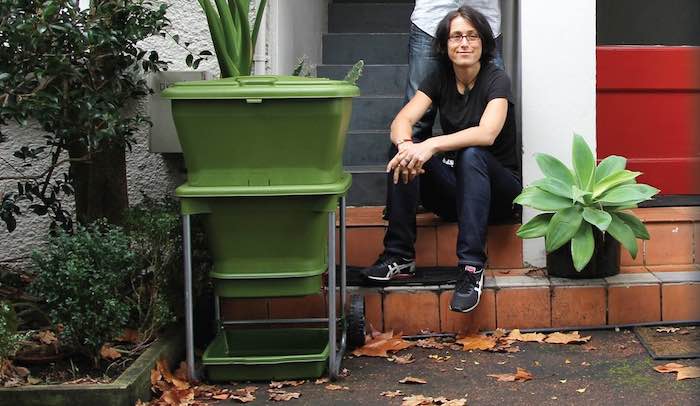
The Hungry Bin
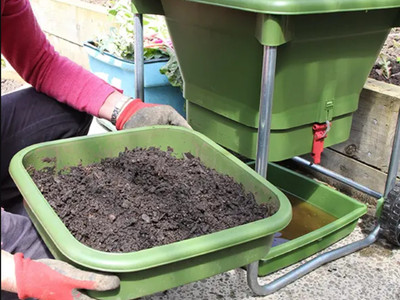
The Hungry Bin is a worm composting system designed to be easy to use and large enough to cope with household waste (anything smaller is really only a hobby kit). The bin is home to up to 16,000 composting worms which process kitchen and garden waste into highly nutritious compost.
Apart from the fun of having thousands of worms eat your scraps, it is the resulting compost that is the Hungry Bin's big advantage: it's a perfectly balanced plant feed. The Hungry bin also produces a liquid 'worm tea' which is an excellent liquid feed.
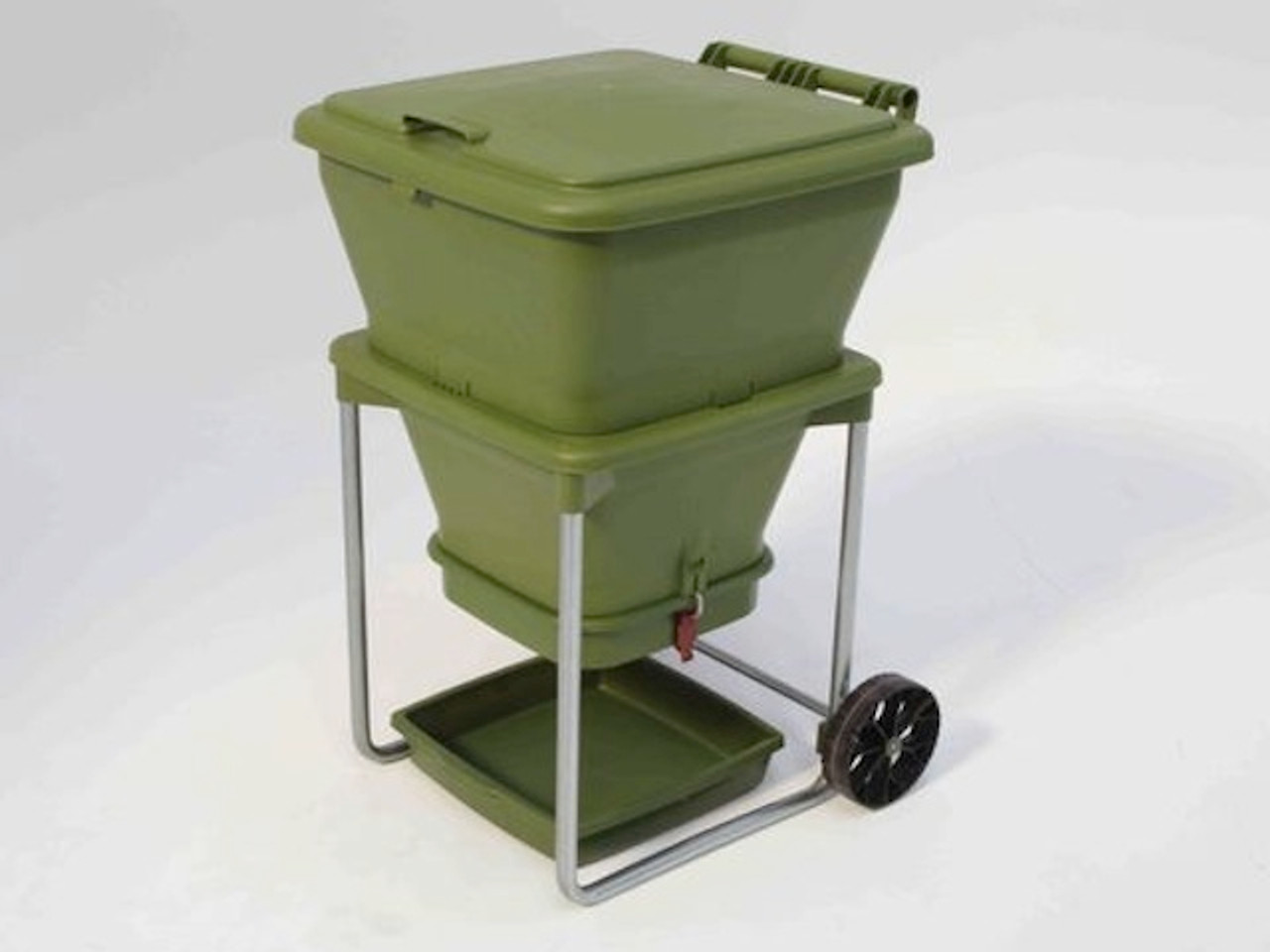
Hungry Bin Worm Composter
View ProductMade from a durable food-safe plastic, the unique conical design takes advantage of the fact that worms are 'surface feeders': they will tend to stick to the upper regions of the Hungry Bin as they feed on fresh waste.
An added benefit is that you won't need to separate worms from the worm castings. As the compost moves its way down it will be compressed by the narrowing sides, meaning you can harvest the finished compost without things getting messy. The bin is also quite easy to move around on its wheels, even when operating at full capacity.
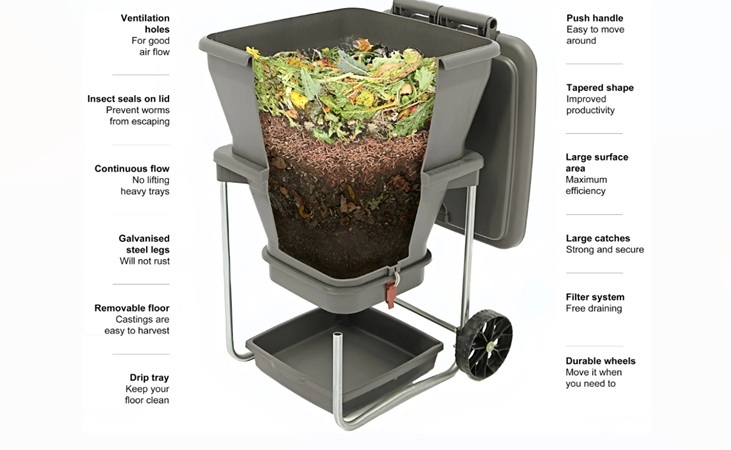
To get the Hungry Bin going you will need approx. 2000 worms (naturally we supply). The population will grow over 6-8 months to the full 16,000, depending on how much food is placed in the bin.
At full capacity, the Hungry Bin can process 2.0 kg of waste per day. However the worm population will self regulate in balance with available food, so you do not need a very large amount of material to feed the bin. Indeed the Hungry Bin is very effective when it comes to processing smaller amounts of waste, as it doesn't rely so much on heat or mass.
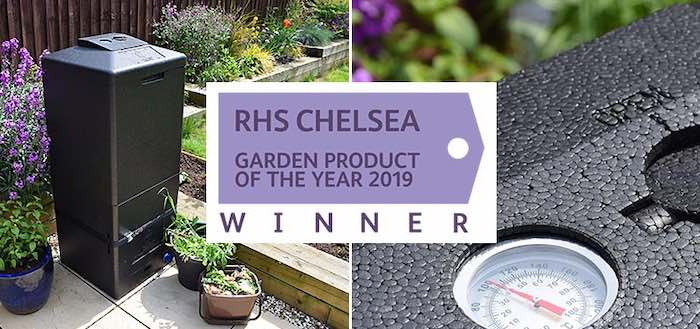
The Hotbin
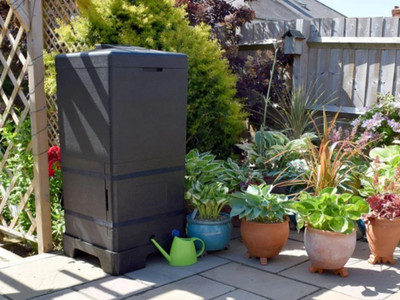
With its wheelie-bin like appearance, the Hotbin can fit in your garden or outdoor area without drawing attention to itself. It's an insulated compost bin (made from expanded polypropylene) which is capable of processing all kitchen waste.
The Hotbin is pretty easy to use: a lid on top allows you to add material, while a panel at the base is removable so that you can access and take away compost when it's ready. Temperatures inside the Hotbin reach a steady 60-70 ˚C, which allows the Hotbin to compost meat and fish waste and ensures that any weed seeds or pathogens are killed off.
A temperature gauge on top shows you how hot the compost is getting. An additional portable thermometer is provided which you can use to check the temperature of the core (this method is more accurate, as the gauge can sometimes be slightly off if the Hotbin isn't full).
If the contents have cooled down or are not composting correctly, the material should be stirred and new material added. A blue cap at the base of the unit allows you to collect liquid runoff, which can then be used as a liquid fertiliser.
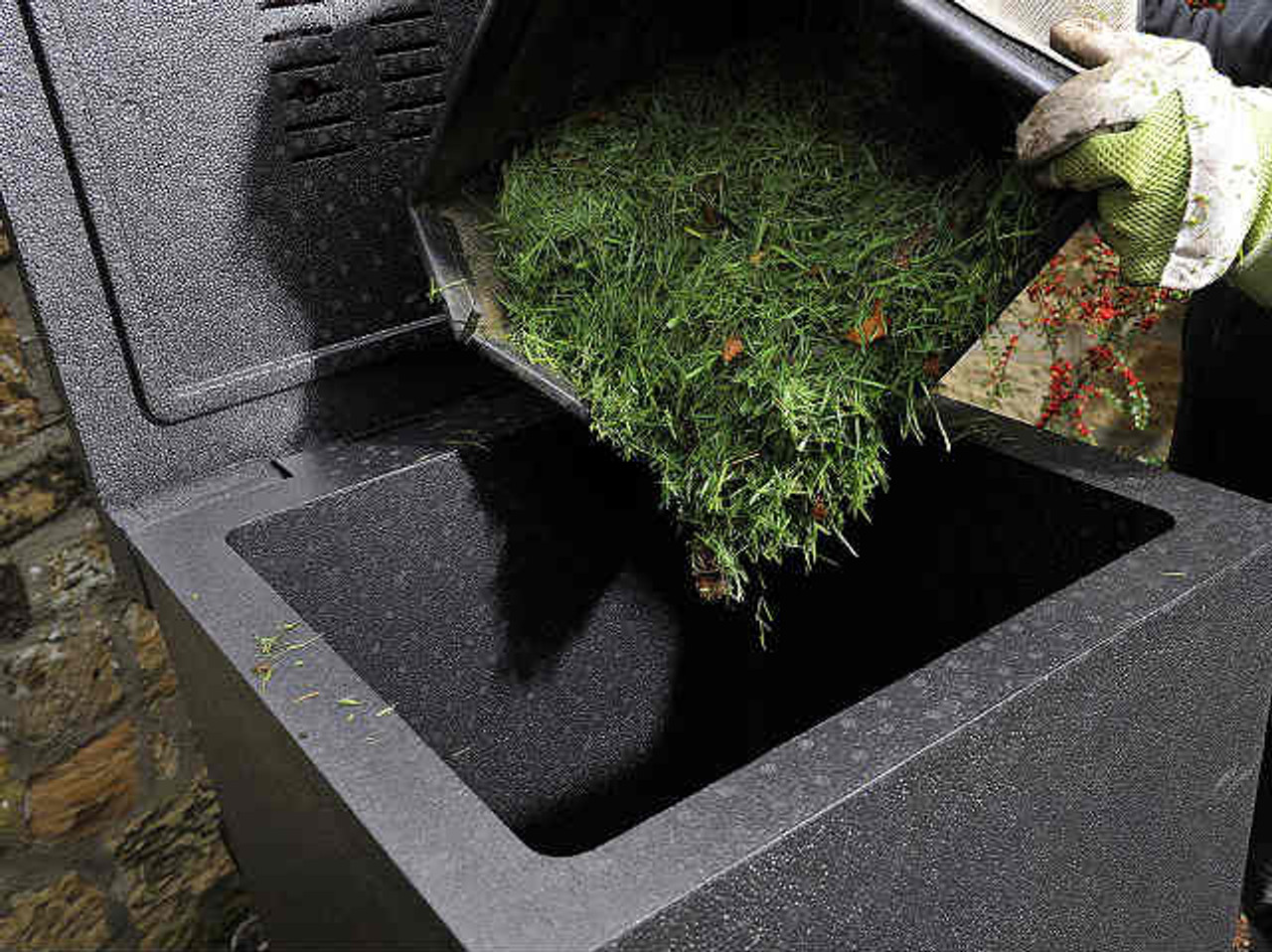
Hotbin Composter - Hot Compost Bin 200 Litres
View ProductThe 'mini Hotbin' 100 litre version is ideal for smaller households (2-3 people), while the large 200 litre version will process waste from a medium to large family (4-6 people). Finished compost can be produced in 6-8 weeks and will be fastest in summer - but it will still compost effectively in winter.
Bulkier modular 'Mega' Hotbins are also available for processing larger volumes of organic waste, such as on larger plots, allotments or community gardens.
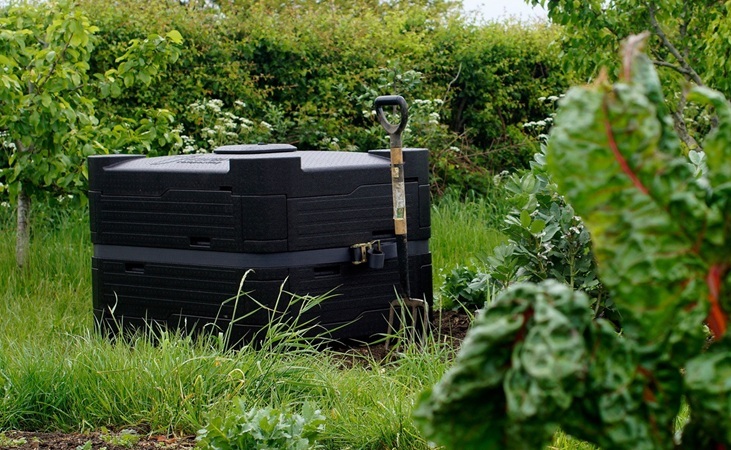
Joraform Composters
The Joraform design is probably the most versatile, easy to use and effective composter available; it is also the most expensive. The Joraform can do everything a Hotbin can, but is more forgiving for the user. The rotating composting chamber mixes material when turned, which makes it easy to correct any imbalance in the Carbon:Nitrogen ratio while also introducing air.
The unit is split into two separate chambers, with one batch being filled while the other is closed off to mature.
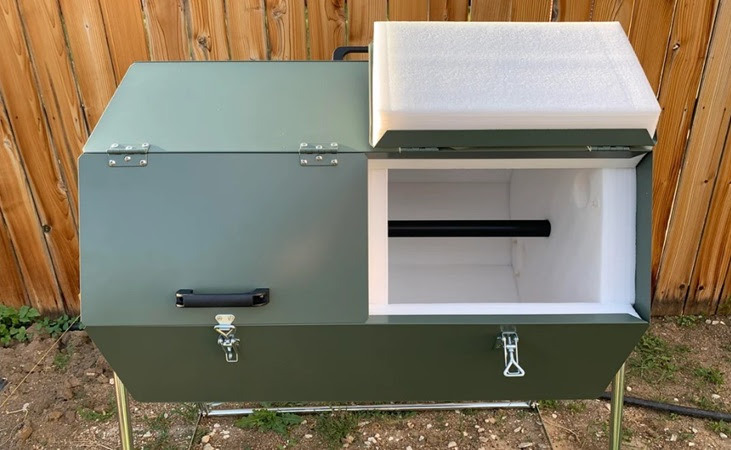
Made from galvanised steel panels, the Joraform is fully rodent-proof and designed to last. This compost bin is available in a range of sizes including a 125 Litre (small household), 275 Litre (medium to large household) and 400 Litre (small commercial application e.g guest house or school).
There is also a commercial Joraform (the JK800) designed for medium sized restaurants, cafes, guesthouses or similar. Since this blog post is primarily about home composters, we will point you to a related blog post about Commercial Composters and how they can help businesses to process their organic waste on site.
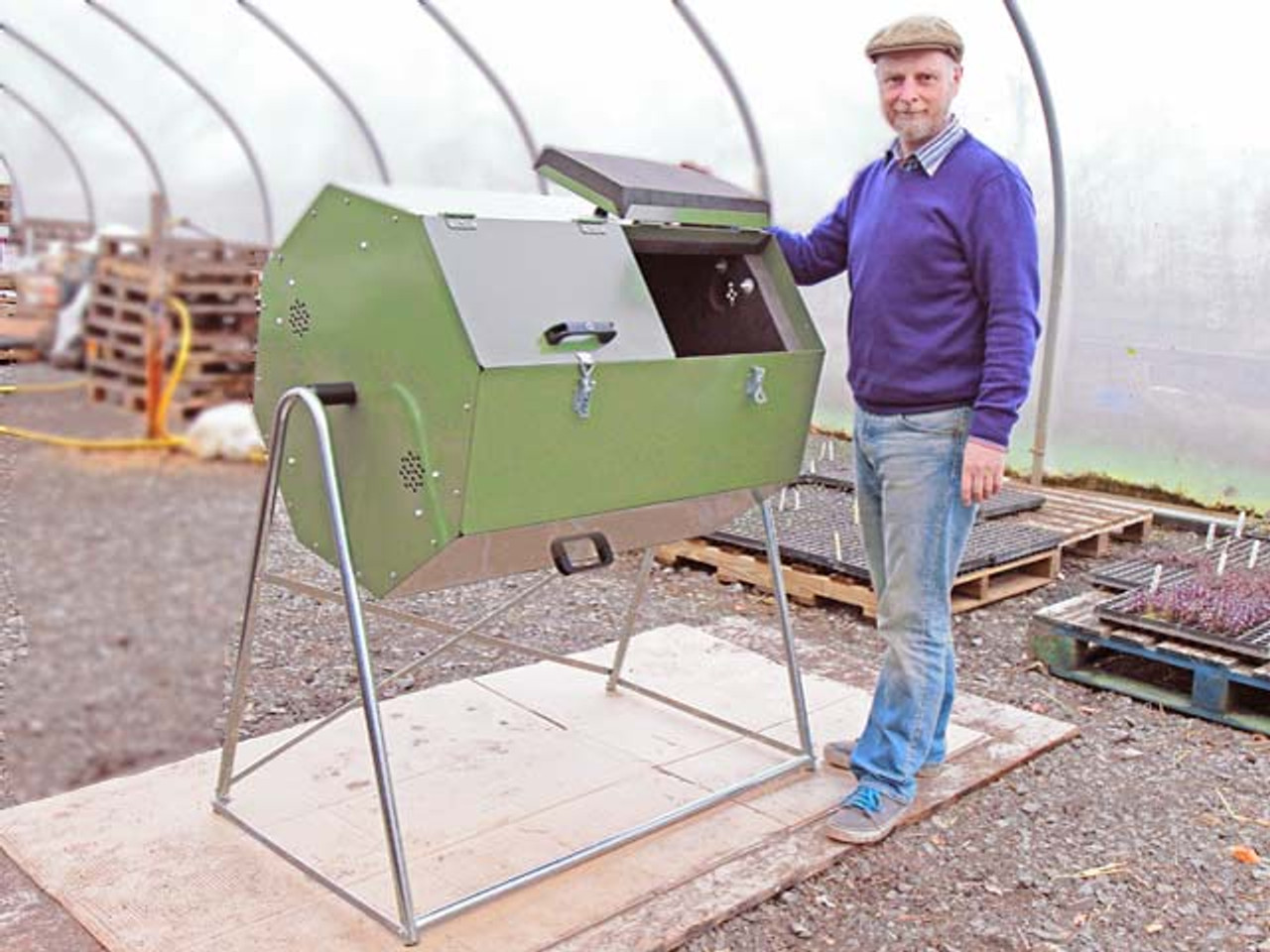
Joraform Composter JK270 'Big Pig' Fully Assembled
View ProductIn my opinion the Joraform is the simplest rapid compost bin because the mix of materials can be easily adjusted. Finished compost can be ready in 6-8 weeks, and is easy to harvest by opening the hatch and inverting the bin. Like the Hotbin, the Joraform can also process meat and fish waste.
Bokashi Kitchen Composting
The Bokashi method has become increasingly popular in recent years, particularly for apartment dwellers who lack the space or the volume of inputs for traditional composting.
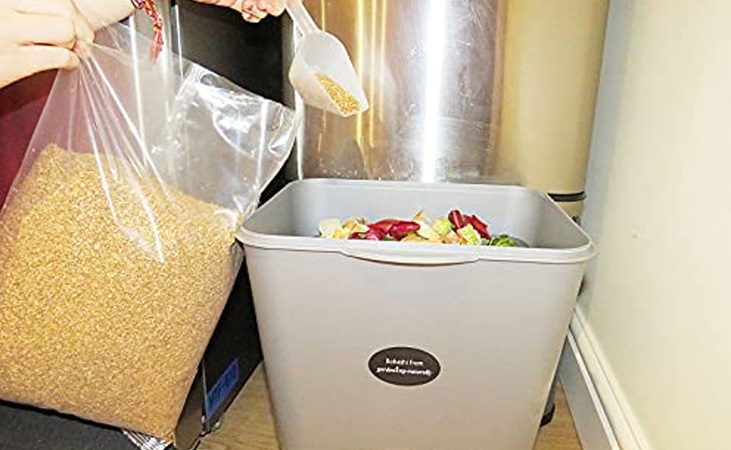
Strictly speaking, Bokashi is different from the composting process. It's more accurately referred to as fermentation (indeed this is where the Japanese phrase comes from). What you end up with though is a form of 'pre-compost' that you can either dig into your garden or add to an outdoor compost pile, a wormery or a ‘soil factory’.
But why add this extra step? Actually, before we go into that, how does it work? Well you place kitchen scraps and leftovers in the bin, sprinkle with a 'Bokashi Bran' which has been inoculated with friendly microbes, and then push the layer of material down tightly (which removes excess air).

Bokashi Organko 2
View ProductWhile oxygen plays an important role in composting, with Bokashi you want as little air as possible for an effective ferment. Once the lid is kept tightly closed, the process takes about two weeks. At that point you can add the fermented material to your outdoor compost or spread it in your garden (for example by making a 6 inch deep trench) and allow it to start breaking down.
Maybe the biggest advantage of using a Bokashi bin to process your kitchen waste comes from the fact that you don’t need to add a large amount to kickstart the process. With traditional composting methods you need a fair chunk of organic material to get things moving (and keep the compost hot enough).
Realistically though, someone living in a two-bed apartment will not be producing a large amount of usable waste - and may not have access to a community compost scheme. With the Bokashi bin they can add kitchen scraps as they go, without worrying about proportions of green vs brown material etc. It can also speed up the composting process once the material is added to your compost bin proper.
Another advantage of Bokashi that may appeal to many: the fermented material is almost odourless (save for a mild vinegar-like scent).
Further Reading: The Bokashi Method for Recycling Kitchen Waste