How to Make a DIY Bird Box
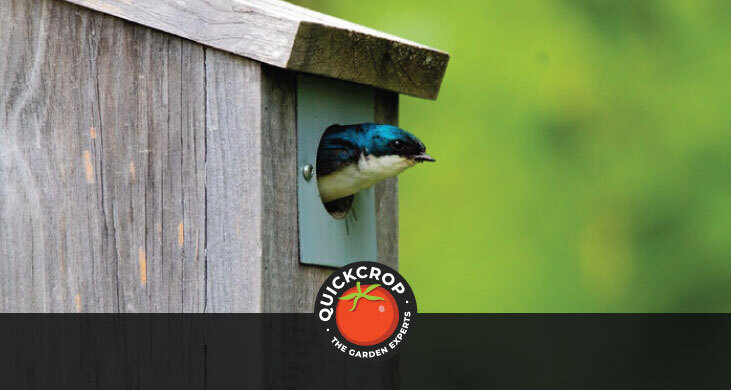
Bird nest boxes can serve as an alternative to traditional nesting spaces that birds avail of in nature (e.g. cavities in trees or cliffs or structural gaps in old buildings). According to Teagasc over 30 bird species have been observed using nest boxes in Ireland.
If you're looking to provide a bird nest box of the highest quality and longevity, we recommend choosing one made from temperature-regulating materials such as 'woodcrete'. However, if this isn't within your budget, constructing your own timber bird box can be a fun weekend project.

Schwegler Nest Box 1B (Brown) - 32 mm Entrance
View ProductThere are some important guidelines to keep in mind, as a poorly made (or placed) bird box can arguably do more harm than good.
Tools You May Need:
- saw
- drill/drill press/hole saw
- ruler/pencil
- screwdriver
- hammer
- galvanised nails
- measuring tape
- wood glue
What Materials Should I Use?
The material that the nest box is made from should be well-insulating. Avoid using metal or thinner timber, which can easily overheat.
If making your own nest box, use softwood such as cedar or pine (cedar will last longer due to natural rot resistance). The outer wooden boards should be 15-20mm thick: this ensures good insulation for nestlings, and helps to stabilise the inner climate when outdoor temperatures are very hot or very cold.

Irwin Jacksaw Soft Grip Handsaw 770 - 22 in
View ProductWood should be untreated to avoid exposing the young birds to chemicals. The exterior of the nest box can however be treated with a non-toxic, water-based preservative. The wood should also be unplaned, as this enables fledglings to get a foothold when they are leaving the nest.
The exact dimensions of the box, including the size of the entrance hole, will differ according to what species you are hoping to attract. Further info on this below.
Related Article: A Guide to Bird Nesting Boxes
Constructing the Nest Box
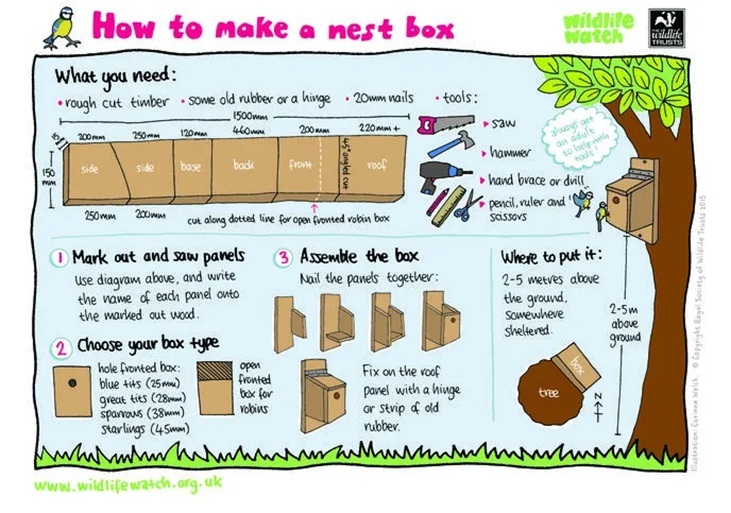
- Cut your wood into panels (e.g. back 45 x 15cm, front 20 x 15cm, base 11 x 15cm; see further below for suggested dimensions for different species).
- Using a pencil, write the name of each panel on the timber so that they don't get mixed up:
- Front Panel
- Back Panel
- Side Panels
- Floor Panel
- Smooth sharp external edges; however the interior surfaces should have a degree of roughness as this enables fledglings to get a foothold.
- A hole saw can be used to create a clean hole on the front panel. Centre the hole; it should be closer to the roof than the base; a gently overhanging roof can shelter the entrance from rain and predators.
- The entrance hole should be at least 125mm from the base of the nest box.
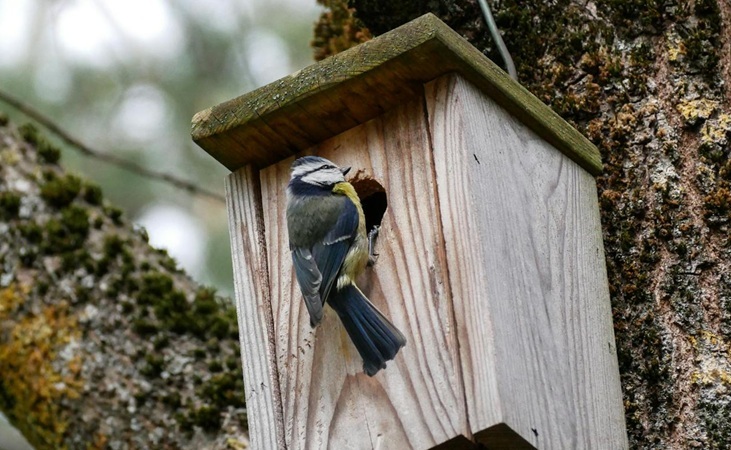
- The sides, back and front should effectively 'wrap around' the base. If you are attaching a slanted roof (recommended, see below) you will need to make a gently sloping cut from the top of the front panel.
- Drill 3-4 small drainage holes in the base panel. It is also often recommended to create some very small holes for ventilation towards the top of each side panel.
- A pre-drilled hole in the back panel will allow for hangers to be attached.
- Use galvanised nails to fix the panels together. Be gentle so that the wood doesn't split.
- For an open-fronted nest box, ensure that the front panel is lower than the sides, creating a 'porch' effect that allows easy access for the birds while still providing shelter from wind and rain. The height of the front panel should be sufficient to give protection, but not so tall that it blocks the birds’ entry.

DIY Bird Nesting Box
View ProductAttaching the Roof
A sloping, overhanging roof can encourage rain to runoff and keep the inside of the nest box dry, as well as discourage predators. Angling the nest box slightly downwards is another method for keeping the interior dry and sheltered.
Note that having a hinged or removable roof panel can make it much easier to clean or maintain the nest box. Use a hinge or strip of rubber when attaching the panel.
Deterring Predators
Ideally a nest box should be somewhat inconspicuous or natural-looking. Similarly, a perch may seem like a bird-friendly addition but it can also give potential predators a foothold.
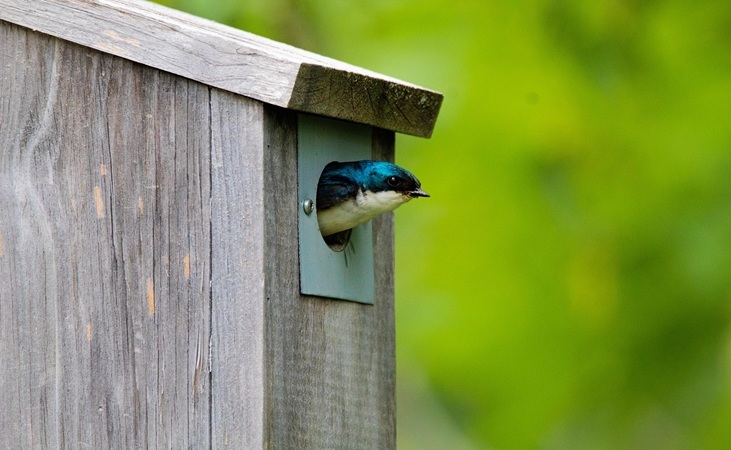
One extra step you can take is to attach a stainless steel plate around the entrance hole; this prevents squirrels or larger birds from attempting to enlarge or chew at entrance holes. Make sure the plate has no sharp edges.

Peckish Everyday Nest Box
View ProductEntrance Holes
A guide to common entrance sizes - and the species that each one will attract - follows.
25-27mm: These smaller sized entrance holes are ideal for Blue Tits or Coal Tits. These birds can use boxes with larger entrances, but 25-27mm entrances will prevent access to bigger birds who may oust them from their nest.
28mm: This entrance size will suit Great Tits, Tree Sparrows, Pied Flycatchers and sometimes Wrens; the same birds mentioned above can also avail of these nest boxes.
32mm: Suited to House Sparrows, Tree Sparrows, Great Tits, and possibly Pied Flycatchers.
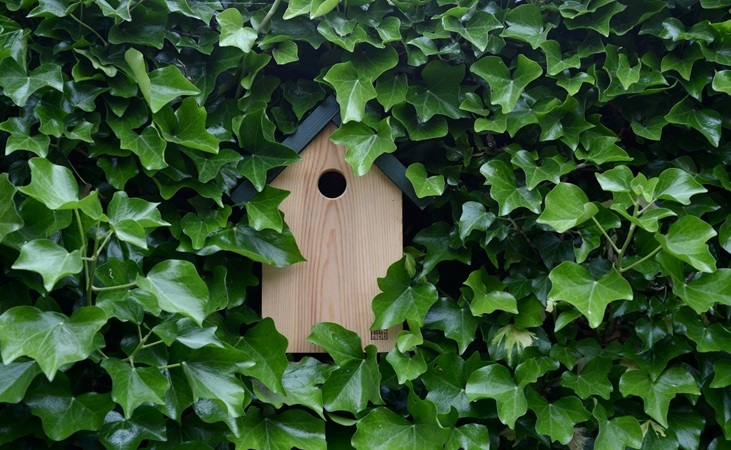
45mm: Starlings require this larger entrance hole size, as well as a more spacious nesting chamber.
'Open Fronted' nest box: Robins, Wrens, Spotted Flycatcher, Wagtails.
Pay attention to the interior dimensions of the nest box as well. For example:
- Tits & sparrows will benefit from internal measurements of approx. 12 x 12 x 25 cm
- Robins & wrens: 14 x 14 x 25 cm
- Starlings: 15 x 15 x 30 cm

Birds Of Ireland - Jim Wilson And Mark Carmody
View ProductWhere to Place the Nest Box?
Important guidelines on placement include:
- 2-4 metres above ground (higher if predators are common)
- Sheltered from strong sunlight or winds
- Don't place too close to feeding areas, as this can cause disturbance or nest abandonment
Mount Securely.
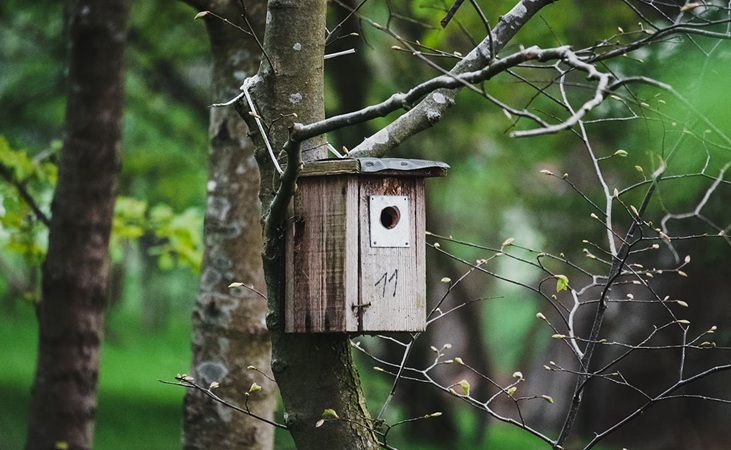
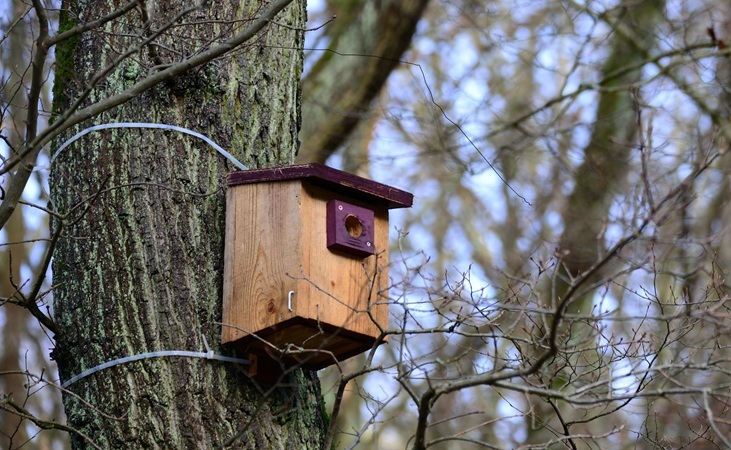
If you want to avoid nailing directly into a tree trunk, you can use heavy duty nylon webbing, rope, wire (combined with rubber hosing to protect the trunk), or use a mounting bracket. The attachment method may need to be checked and adjusted or loosened (yearly) to account for tree growth.
Further Reading: Where is the Best Location for a Bird Feeder?
Cleaning and Maintaining Nest Boxes
Timber bird nest boxes should be cleaned at least once yearly to prevent the spread of parasites like mites or feather lice. This should only be done when the nest box is not being actively used - from late September or October is a good guideline, but double check to be sure.
It is also best to do any cleaning before the weather gets colder, as some bird species are known to use the boxes for winter roosting and warmth.
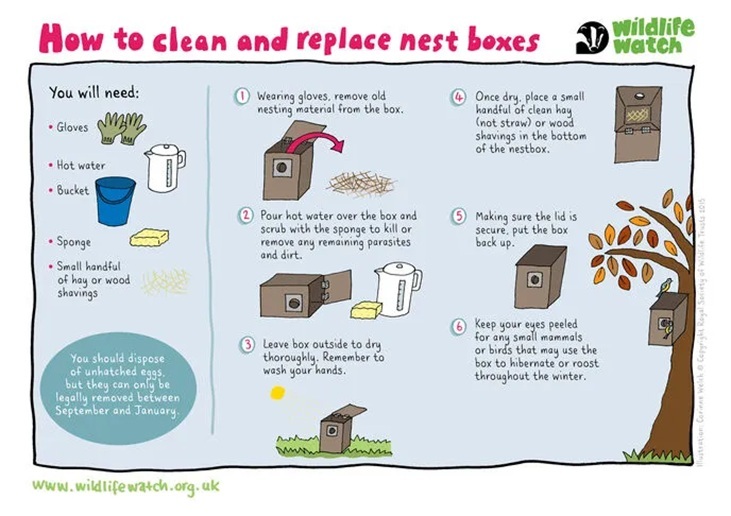
- Wear gloves; a dust mask is also recommended.
- Tap the box gently before opening.
- Take the box down and remove any old nesting material or debris.
- If there are unhatched eggs, you can remove and dispose of these.
- Use a stiff bristled brush - such as an old toothbrush or dish washing brush - to dislodge any hardened debris, making sure to get into corners.
- Clean the inside of the nest box with freshly boiled water, which should kill any lingering parasites. Chemicals are not necessary.
- Leave the nest box to air dry.
- Add some wood shavings (not straw) at the bottom of the box to encourage winter roosting.
References: "Nestboxes pdf." BirdWatch Ireland, https://birdwatchireland.ie/app/uploads/2019/09/Nestboxes-factsheet.pdf
"Nest Boxes: Your Essential Guide." BTO https://www.bto.org/sites/default/files/bto-nest-boxes-essential-guide.pdf