Sowing and Growing Peas
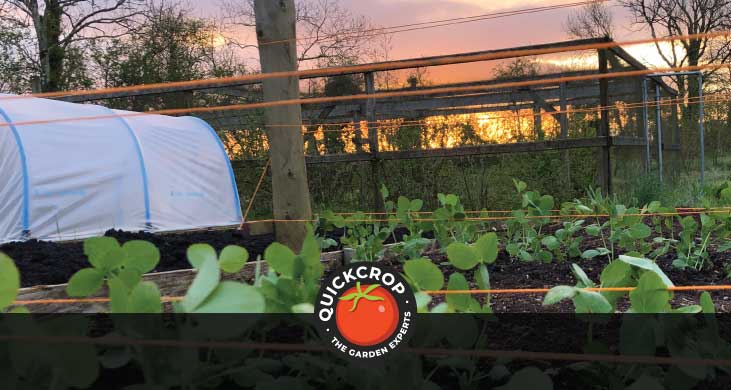
I have a soft spot for peas. They are easy to sow, look beautiful, are fascinating to observe as they climb and, of course, have a delicious sweet flavour. They are an active, friendly and tactile crop.
Peas are also a lot more versatile than you might think. There are a range of different varieties obviously, but there are also different pea types: including Mangetout, Sugar Snap, Early, Second Early and Maincrop peas. You will also probably have noticed that pea shoots have become very trendy as a garnish or as part of a salad bowl.
What is the Difference between Mangetout and Sugar Snap peas?
Mangetout and sugar snap peas are often confused - in both cases you eat the whole pod - but they are very different.
Mangetout peas
- are best picked and eaten when the peas are just beginning to show.
- the thin walled pod is the main feature and is used raw is salads or lightly steamed or stir fried.
- pods can be classic green or, in the case of 'Shiraz' a deep purple colour which ads a bit of fun to a salad.
- another great mangetout variety is the heritage 'Carouby de Maussane' which gives enormous flat pods up to 12cm long!
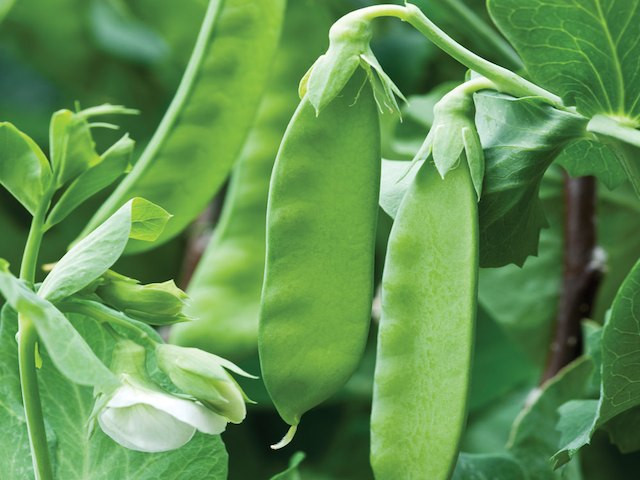
Mangetout Pea 'Carouby de Maussane'
View ProductSugar snap peas
- are eaten when the peas have swollen
- have a much thicker and juicier pod. I think snap peas are great for this reason, a bite gives delicious pod and pea in one with a satisfying crunch and sweet pea taste.
- Good varieties include 'Sugar Snap' and 'Sugar Ann'.
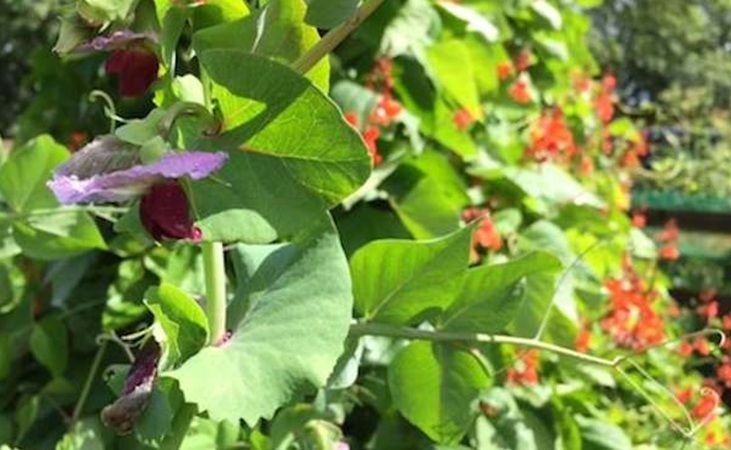
The photo above is of late sown 'Shiraz' peas which have a beautiful purple flower - just as pretty as sweet pea - but also produces striking dark purple pods. My wife Siobhan loves these flat mangetout peas, which find their way into nearly everything when they are in season.
Like any peas 'Shiraz' are easy to grow and are great value for the splash of colour they add to the garden and to your dinner plate.
Early, Second Early and Maincrop Peas
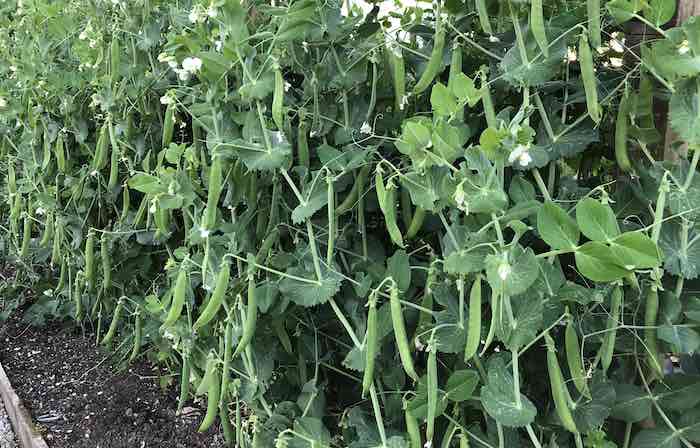
Your classic garden pea is a thin and stringy pod filled with a neat row of peas. The flavour of the pea ranges from sweet to mealy, depending what size the peas are when you pick them and what the variety is.
Peas can be classed as early, second early or maincrop, with a sowing time from March to the end of May. Early peas tend to be less sweet and crop for about two weeks, whereas maincrop varieties will crop for about a month.
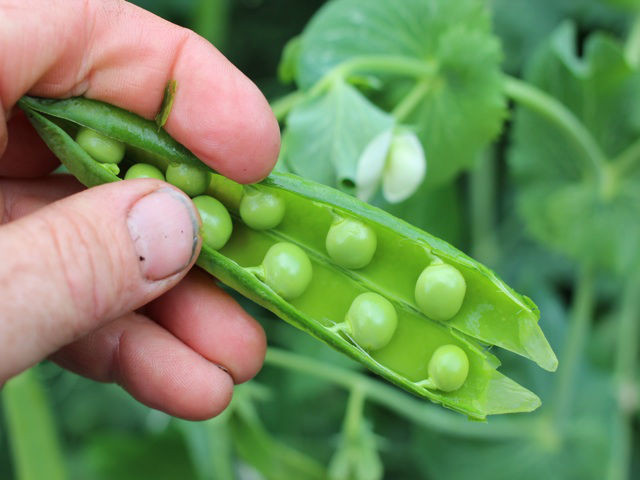
Garden Pea 'Karina'
View ProductI tend to sow both to get an early crop, but also because maincrop peas are likely to suffer from mildew from mid-July onwards, so you never know how long they will crop for.
Watering Peas
Peas are best sown by mid May but can still be sown up to the beginning of June. This year had such a cold start that many gardens are behind (including mine) so later than ideal sowings may be needed.
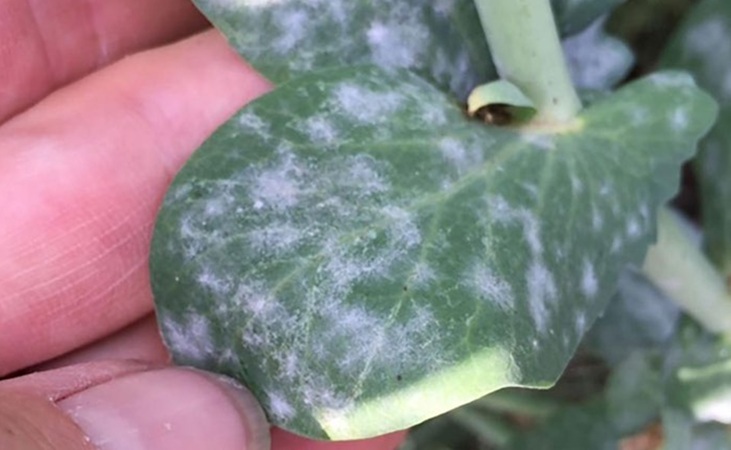
There are a couple of potential pitfalls for late sown peas, the most common being mildew which is likely to be a problem around mid July. Mildew can be kept at bay by spraying with a 10% milk solution from the beginning of July onwards. A tip here is to use low fat milk as this will have little or no odour but will still have the same anti fungal properties of full fat.
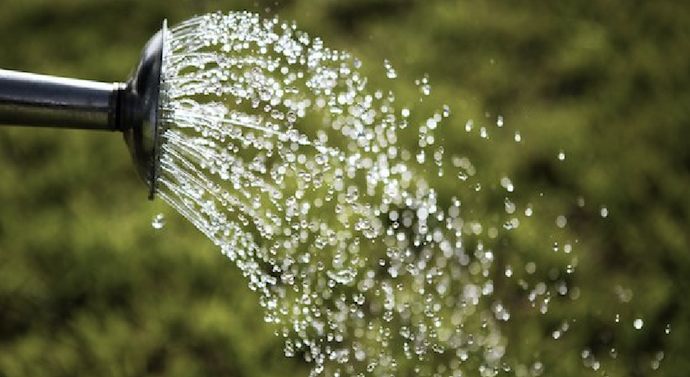
It is also generally accepted that peas don't grow as well in hot weather, but this has more to do with moisture than temperature. If peas are kept well irrigated in dry weather they will still produce excellent crops but be aware they will need regular watering.

Build Your Own Drip Irrigation System (Parts Picker)
View ProductIt is probably worth noting here that all tall plants like peas and beans will need plenty of water during dry spells. This is because the surface area of leaves is relatively large compared to the size of the root.
Pea Growing Tips
- Peas like a sunny yet sheltered site.
- You will need a support of some kind for most types (with the exception of low-growing bush varieties like 'Meteor').
- For the highest yields per square foot you need to go for a climbing type.

Pea and Bean Support Mesh - Support for Climbing Plants
View Product- When building a support remember that, unlike beans, peas can't climb a pole. They need lateral as well as vertical supports: use a mesh, or weave branches or string together to make a lattice.
- It is also important to get your support in place before sowing or planting, as if peas are allowed to flop over they never yield as well.
Pea Spacing
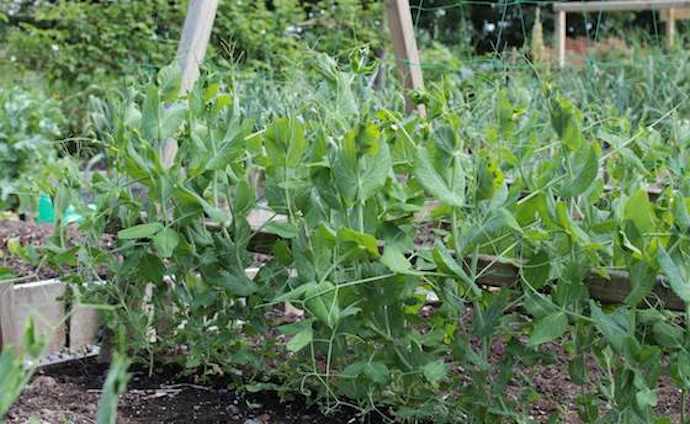
When I see photos of peas in people's gardens they are usually sown too thinly (not your gardens of course, you guys are pros). Those nice thick 'hedges' of peas you see are made up of large numbers of individual plants.
Peas should be sown or planted 5 cm apart. I create a 10 cm wide drill and 'zig zag' them at 5 cm spacings, effectively creating a double row. I find this best for the highest yield, but research has also shown that if you sow at 12 cm apart the peas will crop for longer because the roots have less competition.
As regards planting distance between rows, I would go for no less than a metre as the plants tend to grow into each other and make harvesting difficult.
Harvesting Peas
To keep peas (and beans) productive you need to keep picking the peas and avoid letting any ripen on the vine. When peas are fully ripe the pods will be packed with large, hard peas and the skins will begin to shrivel and turn brown.

Pea and Bean Planter Growbag
View ProductThe sweet peas we harvest are immature peas picked before the pods have fully filled out. Bear in mind it is the pea plant's job to produce mature seed for new pea plants; once this has been achieved it will consider its job done and die back. If you prevent a pea plant from reaching its ultimate goal it will keep producing new peas to try and fulfill its objective. More work for the plant, more peas for you!
Pea Picking Technique
It is very easy to damage pea vines when picking, as the peas are very securely attached at the immature stage we pick them. Rather then holding the vine with one hand and removing the pea with the other, a one handed method is much more effective.
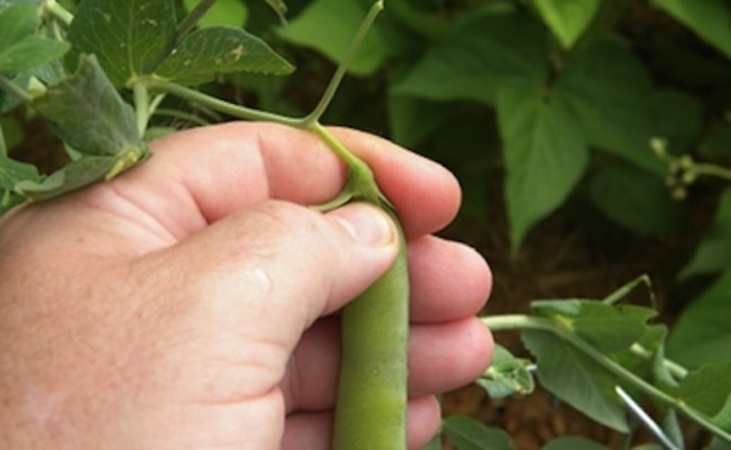
Hold the pea with the point where the sepal (the bit that looks like Peter Pan's hat) meets the pod between your top two fingers. Push your thumb into the gap between your two fingers and the pea will snap off beautifully. It's well worth getting the knack of this, especially if you may be picking peas with someone watching - it looks pretty impressive when done well!
Growing Pea Shoots
We'll finish with an easy and fun little project which can be done even if you don't have a garden. Pea shoots are as delicious as peas and very versatile as a garnish or as a complete salad. They have a delicious mild pea flavour and also hold their shape very nicely so look great in a salad bowl.
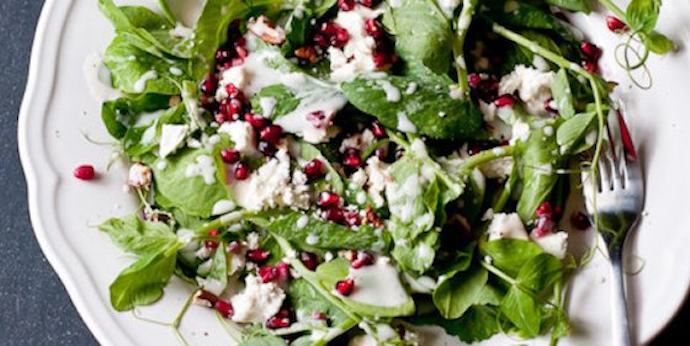
Soak pea seeds overnight in a jug of water. Fill a seed tray with an inch of good compost (I like to use organic Living Green wormcast compost as I now there's nothing nasty in it) and thickly sow peas across the surface. The peas should germinate in 3 or 4 days in a warm place.
Once the peas have germinated place in a bright place and allow to grow until the shoots are 20-25cm tall when they can be harvested with a scissors. Keep the compost moist but not soaking at all times.