How to Grow Tulips (updated 2026)
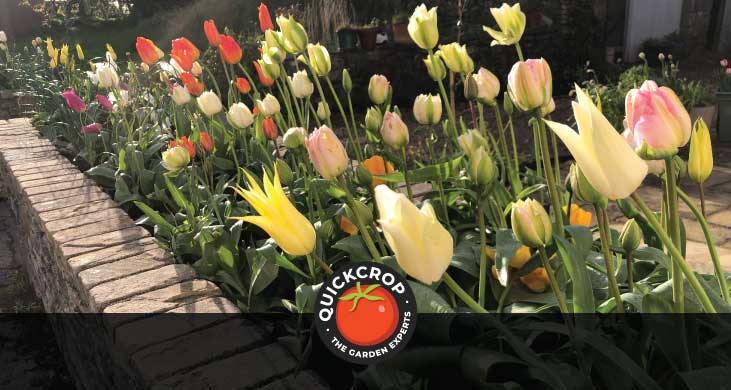
This week sees a whole new departure for the Quickcrop team as we stick our pretty little toes into the wonderful world of flowering plants. It is not that we have fallen out of love with our vegetable garden - as Uncle Monty (the late Richard Griffiths) would say, we still 'find the carrot infinitely more fascinating than the geranium' - but our heads have been well and truly turned.
In particular we have been lured by one of the sirens of the spring garden: the tulip. Tulips have become very fashionable in the last few years, with many new and exciting varieties becoming available to the home grower. Rich candy colours are particularly popular: mouth-watering mixes of blackcurrant, burgundy, apricot and orange.
As you know we are very trendy ourselves, so we have chosen to stock a range of the most desirable colours, but we have also made sure they are the most reliable varieties to grow.

Tulip Darwin Hybrid 'Lighting Sun' - 6 Bulbs
View Product2026 Recommended Tulip Varieties
For this season we have searched far and wide for more unusual tulip varieties - and I have to say we have come up with some absolute stunners. My own taste is for the more subtle, natural colours; especially blooms that change hue as they mature because you will see so much more variation in your tulip beds.
Multiheaded single tulip 'Blue Heaven'
If you like being up with the latest fashion, I can tell you that blue tulips are going to be all the rage in 2027. I don't want to see you being left behind so we are carrying the very best: 'Blue Heaven'! This is a multiheaded variety, meaning you will get 3-5 stems per bulb (and therefore 3-5 separate flowers).
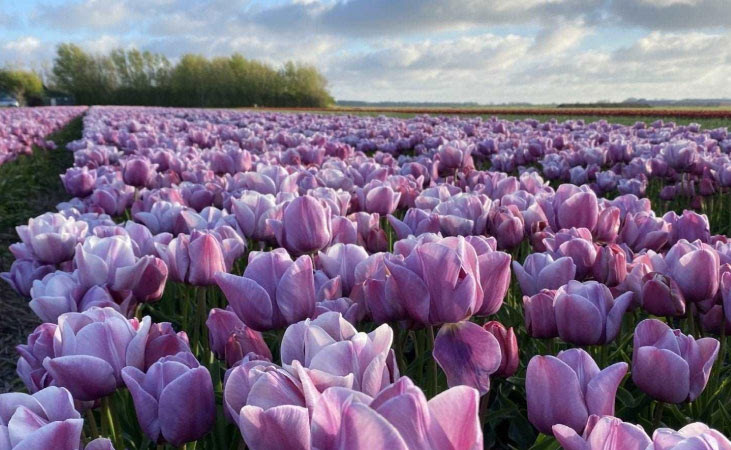
If anyone remembers 'Bruine Wimpel’ from 10 years ago, this one is similar but with a more vivid blue colour. The photos don't really do it justice as it looks more or less blue depending on the light and what stage of maturity it has reached.
The single cupped flowers start off a blue/lilac but take on a copper edge to the petals and a wonderful warm copper/caramel shade inside as they open.

Tulip Single Late 'Blue Heaven' - 6 Bulbs
View ProductWhatever about how they look in the garden, they are absolutely beautiful in a vase: where the silvery blues and warmer peach skin tones look really subtle and sophisticated. They work well with other cool, soft colours or (because they have such variation) they can do just as well on their own.
Tulip Double Late 'Copper Image'
If you like coppery colours here's another really gorgeous one: this time a double tulip with big, peony-like blooms. 'Copper Image' has a lovely old world vintage style reminiscent of the popular 'La Belle Époque', but a little more saturated and with larger heads.
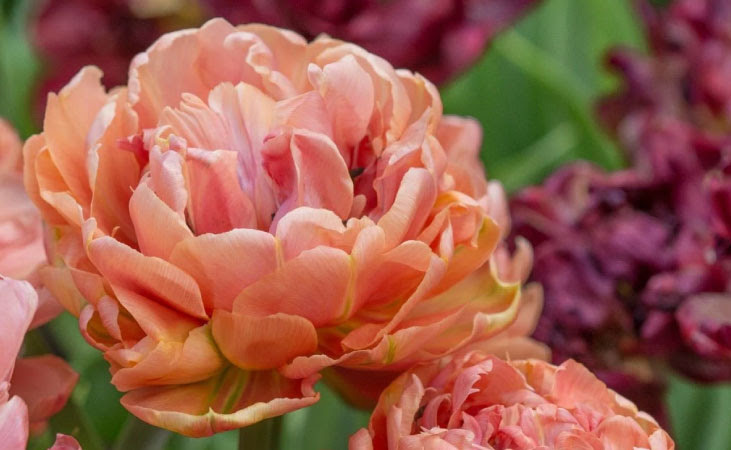
Like 'Blue Heaven', 'Copper Image' also looks great as a cut flower because it shifts through its colour range - orange, copper, apricot and dusky pink - as the heads mature.
Tulip Double Late 'Password'
I have also included 'Password' - again thinking of cut flowers, where it will look great with 'Copper Image' or softer-coloured double tulips like 'Finola' or the beautiful white 'Mount Tacoma'.

Tulip Double Late 'Password' - 8 Bulbs
View Product'Password' starts off a pretty apple blossom pink-and-white with a soft lemon base; as the blooms mature they open to reveal their sunny, summery centre.
Tulip Darwin Hybrid 'Light & Dreamy'
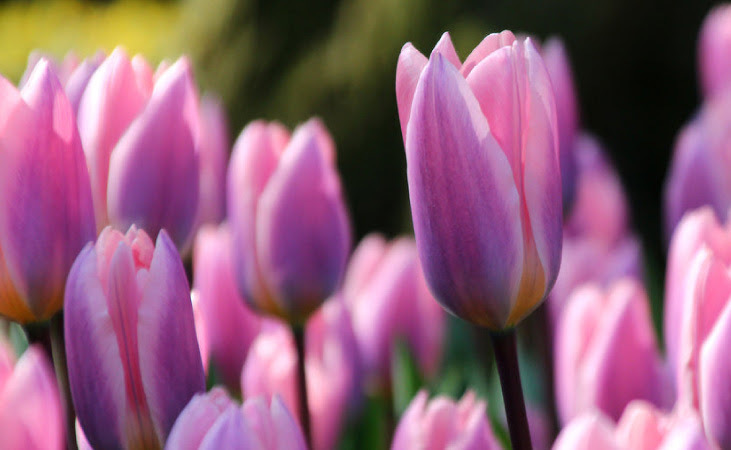
Again we are 'on trend' here, with an exceptional Darwin hybrid of lavender blue, mauve and pink. You can't see it very well in this photo (below), but the edges of the petals fade to almost white, while the base is a warm yellow-and-white.
Tulip Double Late 'Wyndham'
Another one for cut flowers, 'Wyndham' is a superb double late tulip with a rich and sophisticated colour combination. The claret-coloured base of the petals fades to cream and white towards the margins, while the interior is a warm blush of wine and rich yellow cream. The burgundy tones deepen as the flower head matures, giving further definition and interest.
Tulip Double Late 'Orca'
Of course we aren't forgetting about the brighter candy colours either, with a fabulous new double orange variety 'Orca'. I have included this one with our growing range of doubles as it looks so good with the the lavender blues, reds (Salcido) or the dark purples like 'Black Hero'.

Tulip Double Late 'Orca' - 5 Bulbs
View ProductCheck out the full range of tulip varieties here, along with other spring flowering bulbs including alliums and Narcissus daffodils. If you pre-order your spring flowering bulbs they are shipped out in mid-September ready for planting in October.
Tulip Growing Tips
The great thing about tulips (or any flower bulbs) is they are like primary school children: they bring their own lunch with them. The bulb you plant in autumn is the food store for next year's flower, and for that reason they aren't fussy about the soil they are planted in.
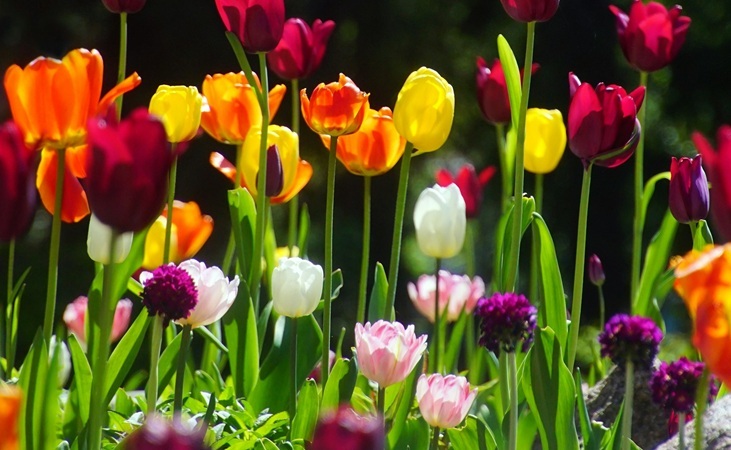
Bulbs will grow happily in most soil types - or in pots. The exception will be heavy clay or waterlogged soils, as bulbs may rot in this case.
If you do have a heavy soil it is often recommended to make a deeper than normal planting hole and partially fill with sand or grit, though I am unsure how effective this is. I have some pretty wet areas in my garden, so will do some tests and report back in the spring.

Heavy Duty Windbreak Netting Rolls
View ProductWindy Locations
Tulips (especially double types) will prefer shelter from strong winds, so exposed sites won't be suitable. If you do have a windy garden, double tulips like Angelique and Black Hero are best planted in pots in a sheltered spot - as the heavy heads will be at risk of blowing over.
Planting Depth and Perennialising
As all you geniuses know, a perennial plant is one that lives for more than two years. Botanically speaking, tulips are perennials - in that they can survive underground and regrow after flowering - but they tend to behave like (and are best treated as) annuals: even if they return the following year, they will likely do so with much less vigour.
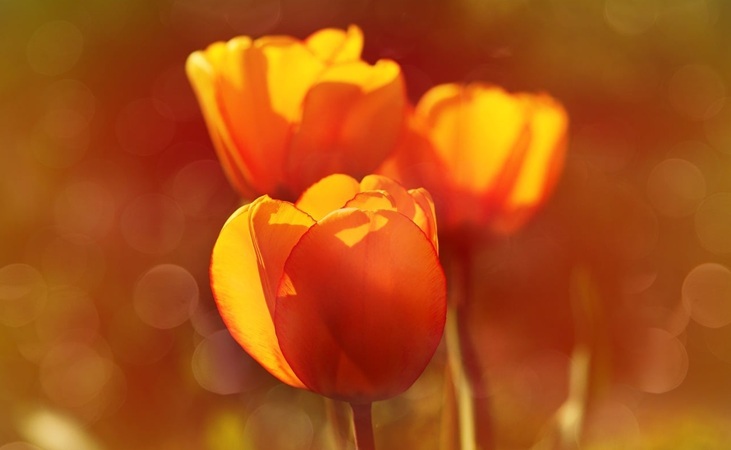
Some tulip varieties are exceptions to this rule, though. Perhaps the most reliable 'perennialisers' are the Darwin varieties, which can repeat flower for up to 3-5 years - and sometimes even longer than that if conditions are optimum.
A number of factors can affect repeat flowerings. It is generally accepted that deeper planted bulbs will be more likely to perennialise - with a depth of 10-12 inches recommended. I am not sure what alchemy is afoot here, but it would appear that the pressure of the surrounding soil at this depth helps prevent the bulb from dividing.
Tulip Darwin Hybrid 'Lighting Sun' - 6 Bulbs
View ProductUnlike garlic, where we want the cloves to divide and produce a new bulb, when tulips divide they form smaller bulbs which produce leaves but not flowers.
How to Plant Tulip Bulbs
You can either dig a trench or make separate planting holes: either way they should be 10-12 inches (25-30 cm) deep for tulips, or 2/3 times the height of the bulb for most other bulbs.
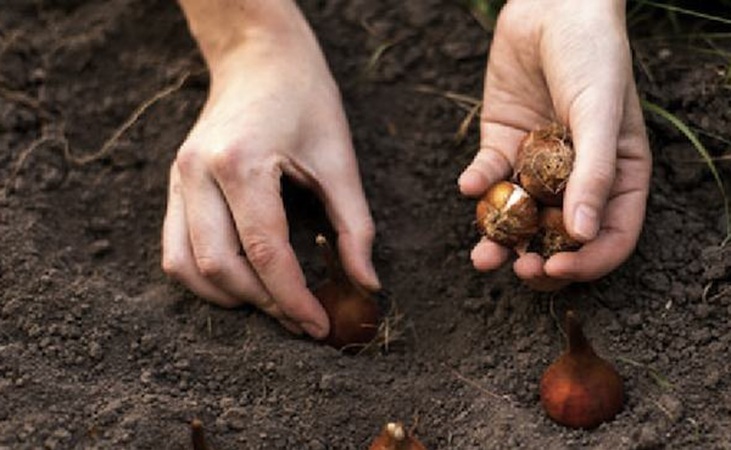
If you are planting a large area you can speed things up by using a bulb planter, which quickly makes a planting hole by removing a plug of soil. We stock both long handled and hand held versions; they are excellent in good soil but not so good if you have very stony ground.
This is probably obvious, but when planting place the bulbs with the root side facing down and the pointy end facing upwards (as in the photo above).
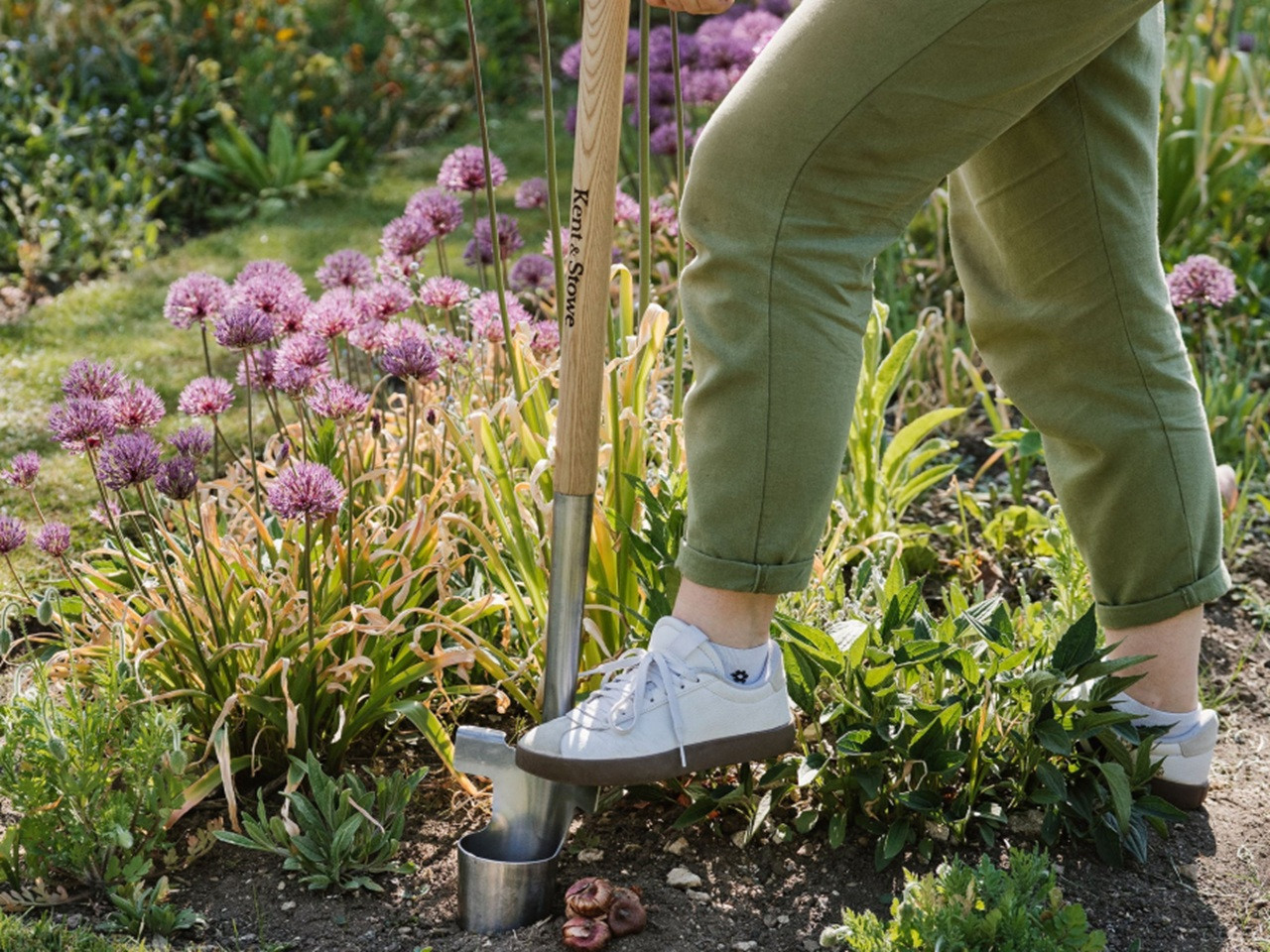
Kent & Stowe Long Handled Bulb Planter
View ProductPlanting Tulips in Pots
You might want to grow the more showy tulips like 'Rococo', 'Angelique', and 'Black Hero' in pots rather than in your beds. Because the flowers are so elaborate, they can look overly conspicuous when the rest of the plants are in their more restrained spring mode.
Use our ready-made flower growing mix (a topsoil and compost mix with horticultural sand to aid drainage) or make your own by mixing approx. 3 parts multipurpose compost with 1 part grit. Remember, potted plants can only get their nutrients from what you put in: so make sure you feed them if you want to keep them coming back.
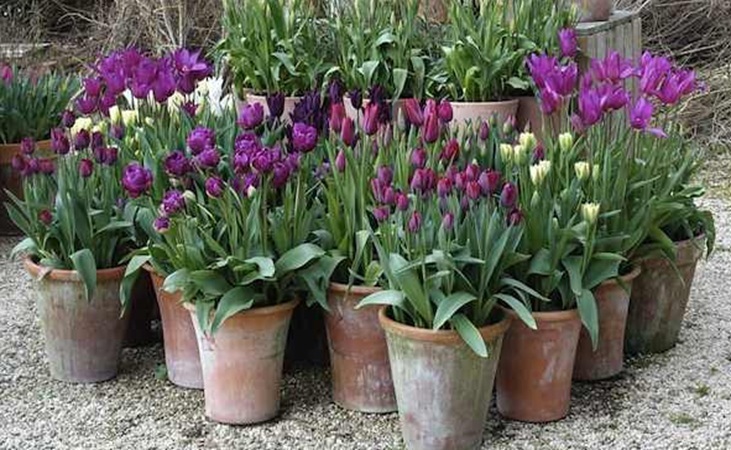
A big reward for only 30 minutes work!
Planting bulbs takes very little work; they are relatively cheap, they're fun to plant and they give an optimistic boost to the tail end of your growing year. You are essentially burying treasure in your garden and will be rewarded with a hoard of sparkling jewels in the spring.