
November in the Vegetable Garden
It will come as no surprise to learn that November is a quiet time in the garden, as once we pass the middle of the month temperatures will usually drop to a level that halts plant growth.
It's true that there are very few vegetables to sow or plant in November, but that doesn't mean the garden is redundant. Winter is the season for planting trees, hedging, fruit and other bare root stock (while the plants are dormant). There is also plenty of planning and preparation that, if done now, will make next season a whole lot easier.

Starting Garlic in Modules
I might also make the point that the polytunnel or greenhouse can be a most pleasant place in winter, especially with a bit of sunshine when they warm up very quickly.
On Saturday I decided to plant up some trays with some left over seed garlic. The sun was making an appearance between showers as I pushed garlic cloves into trays of soft compost, before arranging them on the heat bench. Using a heat bench is not necessary and a bit of a luxury, but I do use it if I've left planting 'til November - as the garlic will sprout and root quicker.
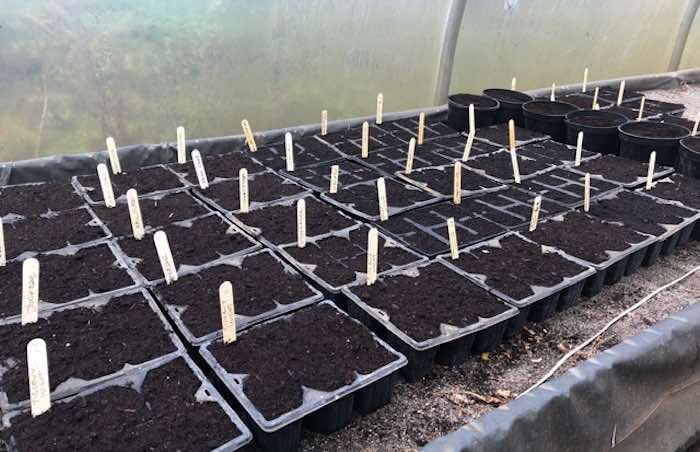
The idea of planting garlic in modular trays is you will get more growth out of them in the tunnel than you would outside. The result is that the garlic plants will be larger than those planted directly in the soil, so you should get a larger finished crop.
Module grown garlic produces excellent bulbs and is an effective method for avoiding cold and wet winter soil in more northerly gardens. I grow most of my garlic this way and would be inclined to recommend it for anyone who lives in a similarly rainy location.
Sowing Sweet Peas
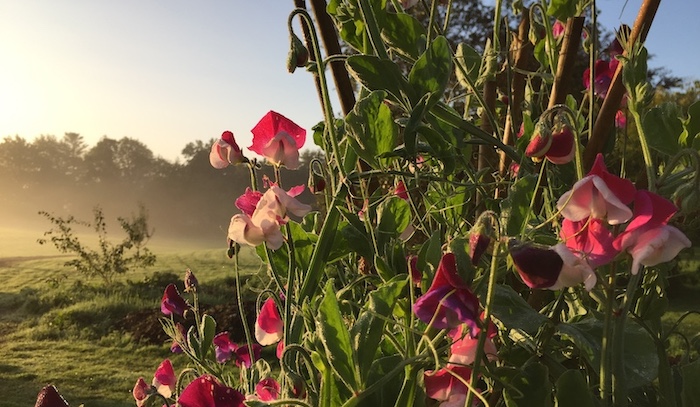
You're probably bored to death with me going on about sweet peas, but they gave me so much joy this year it's difficult not to. Teepees of sweet peas (oops) placed around the vegetable garden attract pollinators, look sensational and have a wonderful scent.
Sweet peas are typically sown outdoors in March, but you can sow indoors anytime between October and March. Like garlic, overwintered sweet peas will produce larger plants. Sweet peas sown in October/November will also flower earlier: as early as late May in southerly gardens.
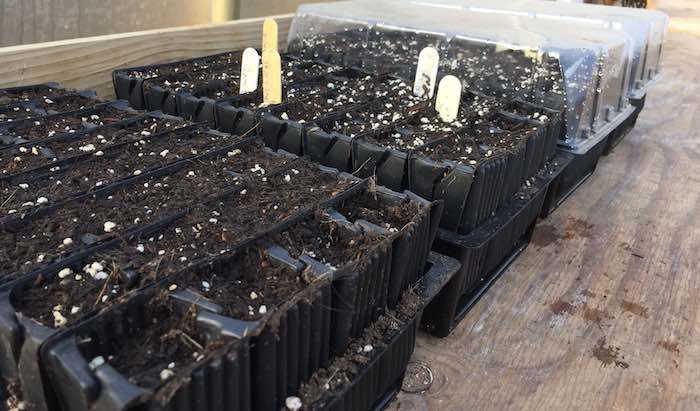
As shown above, I use deep rootrainers to start seedlings off and usually pot on to larger pots when I pinch out the tips in January. Pinching out the tips (after 2 sets of leaves have formed) causes the plants to branch out and produce more flower-bearing stems.
It is important that plants get plenty of cold over the winter; pampered seedlings will produce weak plants.
Drawing Up a Garden Plan
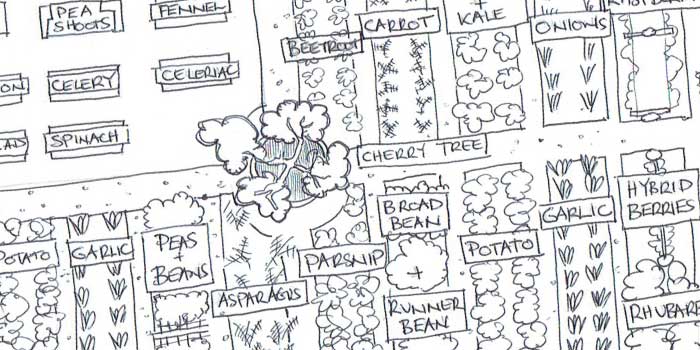
It might seem a bit early to draw up next year's garden plan but it makes a lot of practical sense. For one thing you can start getting excited about next year, and by drawing a scale plan you can work out how many plants you can fit in.
If you are preparing your soil now it is helpful to know where everything is going so you are accurate with your soil amendments. Members of the cabbage family like plenty of well rotted manure, for example, while carrots will be happier in a leaner soil.
A garden plan is also important for crop rotation so we can avoid growing a crop in the same location year after year. The reason we move some plants around the garden is to avoid the build up of pests or disease associated with that crop.
Early Carrots
I have been in the habit, over the last few years of sowing carrots in the polytunnel in late January. This has been a big success and gives me fresh homegrown carrots 4-6 weeks before I would harvest them outside. It is also possible to sow carrots in late November or early December but, as the soil in polytunnel beds will be cold (carrots need at least 10˚C to germinate), it is better to sow in pots.
Use an early carrot variety like early Nantes or Amsterdam forcing and sow in a deep pot indoors or in a propagator for a bit of extra heat. Once the seeds have germinated bring the pot into the polytunnel but cover with fleece on very cold nights. This is a bit of fun really but should give you some nice baby carrots in late April and early May.
Broad Beans
Again this advice is for a polytunnel, but broad beans can also be sown now in modules for gardeners looking for something to do. This can depend on the size of the tunnel and the planting plan for next year, because once up they will be planted in the tunnel beds and will take up a bit of room.
Obviously the advantage is an early crop of beans which usually do well and will crop in April (a month before those sown outside). I am a big fan of broad beans and - because I lost so many seedlings to slugs last spring - I will be going for a backup tunnel crop this season.
Broad beans are very cold hardy but they will need a little heat to assist germination if the weather is cold: either on a warm windowsill or in a heated propagator. For November or early December sowing, use the variety Aquadulce claudia.
The above also applies to early peas (e.g. Meteor) which can give a nice early harvest in April or May. As with beans, sow in modules and transfer to beds in January.
Cold Tolerant Salads
If you do have covered growing space, you can sow cold tolerant Asian salad crops like mizuna, rocket or mustard greens. There is a huge variety of these leafy greens to choose from, with most of them on the peppery side as regards flavour.
It depends what the weather is like, but it is probably best to germinate seeds in a propagator or on a windowsill in the house before planting out in the tunnel beds. but
As regards growth, again it depends on outside temperatures. It will likely be slow but it can be helpful to use a cloche or mini tunnel inside the main tunnel for a double glazing effect and some extra warmth. Either way growth will take off again in February and give a welcome burst of fresh greens.
You can also sow annual spinach for baby leaves, as well as claytonia or corn salad. Again, this is more for February/March crops but still worth getting going now if you want to stay occupied.
Harvesting
November is the time when both your eye and your appetite turn to winter sustenance and crops like leek, swede, cabbage and potato suddenly seem a lot more appealing than they did in July. These crops are great because in most cases they will sit in the ground happily until you need them, with few pests or diseases around to bother them - and no desire to move to the next stage of their lifecycle (i.e. go to seed).
While there may not be much you can sow in the November garden, there should be plenty to harvest - including Brussels sprouts, savoy cabbage, celeriac, carrots, chard, kale, leeks, parsnips, perpetual spinach and swede.
Carrots, beetroot and potatoes will likely have been harvested already, but if not they are best lifted and stored in 2 or 3 ply paper sacks and stored in a cool dry place.