Gardening Tips for Hot Weather
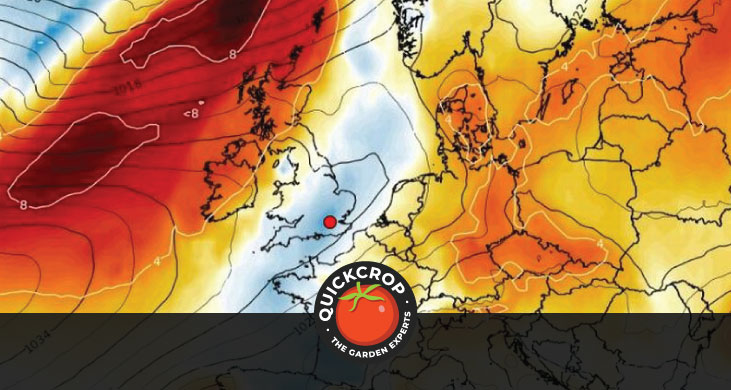
It's hardly worth me pointing out that it's been hot and dry at this stage of the game, but as weather conditions have such a big impact on the garden that's what's foremost in my mind. I think we have to accept now that unusually hot, dry weather is increasingly likely for at least some period in the summer - a longer or shorter period of course depending on where you live.
It only takes a few days of really hot weather to do damage - especially when growing undercover - but, because gardeners tend to be growing on a relatively small scale (in comparison to agricultural crops), there is still plenty we can do.
Why Deep, Infrequent Watering is Best
Around 20-30% of water used to irrigate plants can be lost to evaporation, more or less depending on the weather. Some will evaporate quickly from the plant leaves, while the bulk is lost from the soil surface. Plants also lose moisture through transpiration, where water is sucked up by roots and exits (as water vapour) through stomata on the leaves.
There isn't anything we can do about transpiration (nor would we want to), but we can reduce the amount of water lost from the soil surface by changing how and when we water.

Flopro Soaker Hose 15 m
View ProductIt can be hard not to give plants a drink if they are wilting in the heat of the day, but this can be a normal response to high temperatures that won't be remedied by giving more water.
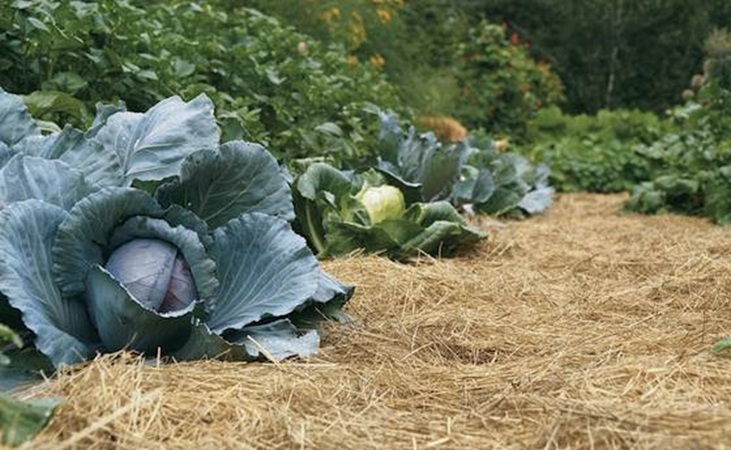
Plants with large leaves (e.g. cabbages) will often wilt in hot weather; this is a natural response due to the fact that their roots can't keep up with the water demands of the leaves. Watering won't make any difference, but you will see the leaves recover if you shade the plant or when temperatures drop later in the day. The times to take note are in the morning or evening: if leaves are still wilting when the air is cooler, then the soil is too dry.
Infrequent deep watering is better than frequent light watering, as it builds up a store of moisture below the soil surface (where it is slow to evaporate). The plant roots can draw from this reservoir during the day, while you replenish it in the evening or early morning when temperatures are cooler and less water is lost.
The other advantage of infrequent heavy watering is that it encourages your plants to be more drought resistant. Roots grow to search out water, so if all your moisture is near the surface that is where the roots will be. As we know, water evaporates quickly from the upper soil layers - so in a drought shallow roots can be very vulnerable.
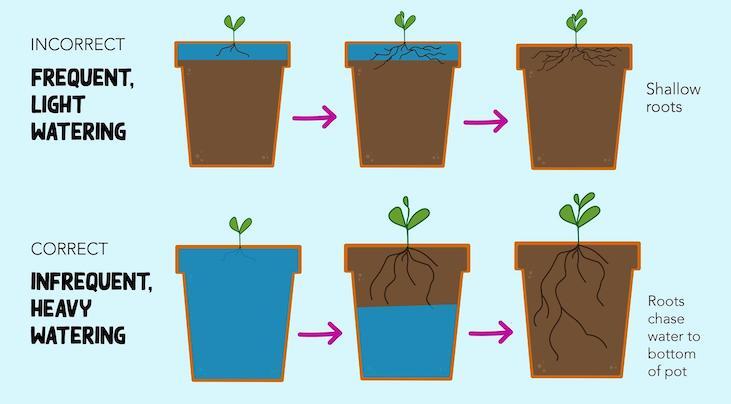
Deep watering interspersed with dry periods causes the plant to grow a deeper, more extensive root system. This means your plants are much better equipped to deal with water shortages and will survive longer if you need to stop watering altogether (e.g. if there is a hosepipe ban).
Mulching Soil to Keep Moisture In
Mulching with bulky organic material has a number of benefits, including weed control and feeding and improving your soil - but it is also an effective barrier against evaporation.
You can use whatever you can get your hands on, including straw, grass clippings, seaweed or leaves collected the previous autumn - we just need to cover bare ground. Compost mulches are very good at soaking up and holding onto water; they can be watered directly and will allow the moisture to soak through to the soil below.

Garden Compost Bulk Bag 750 L
View ProductI see a marked reduction in soil cracking on mulched beds, so - considering deep cracking only occurs when it gets really dry - it shows just how much a covering slows down the drying process.
Mulches of straw or grass clippings can form a thatch over the soil which offers good protection, but they can also cause water to run off. If watering by hand with a hose or watering can, it will be better to either water directly around plants or pull the mulch back to water and replace it when done.
Timing Your Watering
The best time to build up soil moisture levels is at dawn when most of the water you use can soak in. Watering in the daytime on a hot sunny day loses between 30 and 50% through evaporation, so you are wasting both your time and precious water.
Dawn is seen as preferable to dusk because some warmth-loving plants will prefer not to sit in cold, wet soil overnight. However an alternative viewpoint here is that when water is in short supply (and provided there isn't a hosepipe ban in place), it is better to water in the evening so the moisture has the full night to soak in and be taken up by plants. Also not everyone likes getting up at dawn to water their plants - a timed irrigation system can help here!
A water timer allows you to automate your watering schedule by setting a time and a duration - obviously this can be ideal if you are away from the garden or have an unpredictable schedule. It also gives you one less thing to worry about in a heatwave; getting up early to water can be harder to do when you've been struggling to get to sleep in the first place.

Build Your Own Drip Irrigation System (16mm Parts Picker)
View ProductDrip Irrigation
I never thought I would need an outside irrigation system but if this dry period continues I was thinking I might rig up a temporary kit in my brassica beds to see how it goes. The one point I would make about dripper systems is that they are really easy to install and can be moved around. Nearly all the beds are the same size in my garden, so if I create a setup for one bed I can simply transfer it to another if needed.
A raised bed drip irrigation system is very simple: you just need to build a supply line (the black coloured piping in our Quickcrop system) with junctions spaced 30cm apart. The dripper lines are then cut to whatever length the beds are, and slotted on to the supply line. Both supply and dripper line can be cut with a secateurs; the connections are push-fit and hand tightened, so there are no tools required to build.
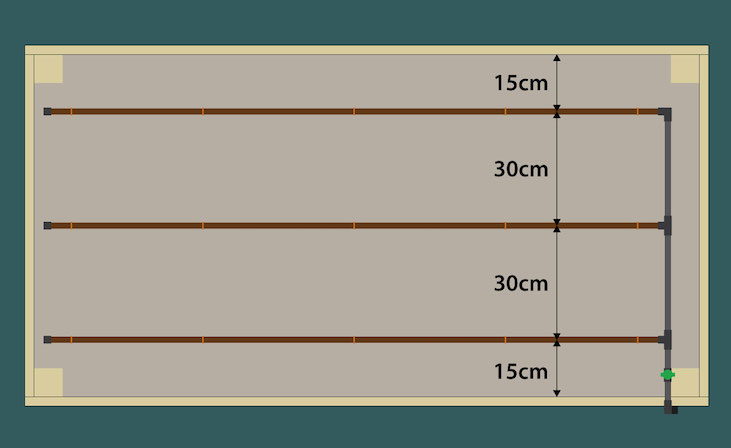
Multiple systems like these can be easily joined, or as I said you could build one or two and just move them around. I think a timer is a 'no brainer' addition as it has so many advantages (e.g. you can go on holidays and water at the most efficient times), but you can also run a bed system without a timer by connecting the system directly to a garden tap using a length of hose.
The reason I like dripper systems - and especially timed dripper systems - is that they tick all of the boxes that I mentioned above. The advantages are as follows:
- They are economical: you can water your beds at the most efficient times with a measured amount of water.
- Dripping from small soil-level emitters allows the water to move downwards and sideways through the soil; reducing the amount of evaporation or wastage compared to watering from above.
- Dripper lines can be placed under a mulch, which further reduces water usage.
- These systems are relatively easy to install, particularly for domestic garden layouts or within polytunnel beds.
As I have said before, we are always happy to help with dripper systems. They do appear complicated at first glance but, once you see how it works, they are actually very simple. Let me know if you are interested in one and need a hand.
Shade Cloth
Cloth or other material can be used to shade and protect crops both outdoors and indoors; shading material can block out from 30 to 90% of sunlight depending on requirements.
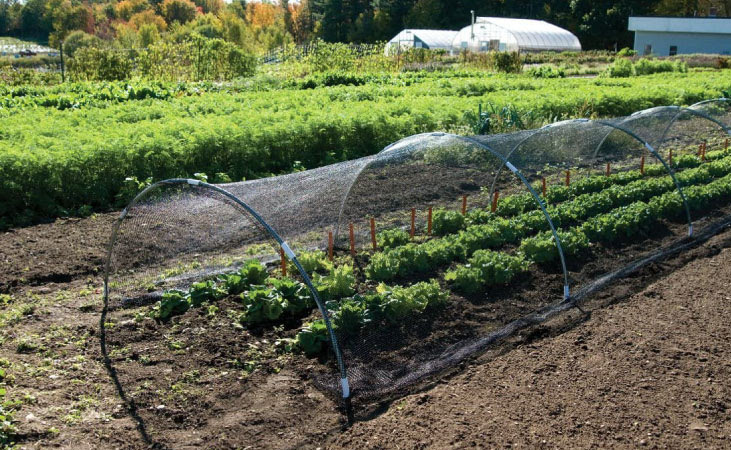
The standard for vegetables is a 50% mesh, which will reduce temperatures by around 5.5˚C under the cloth and (crucially) reduce evaporation. This mightn't seem like a lot, but for large-leaved brassicas (which tend to lose a lot of moisture on a hot day), the difference between 23 and 28˚C is huge.
As you know, there are always winners and losers in the garden depending on how the summer goes. Brussels sprouts, cabbages or cauliflower will absolutely love a damp overcast summer, while the recent hot and dry conditions have been great for maturing my onions and drying off their stalks. Point is: you don't have to cover all your beds, just the ones that need it.
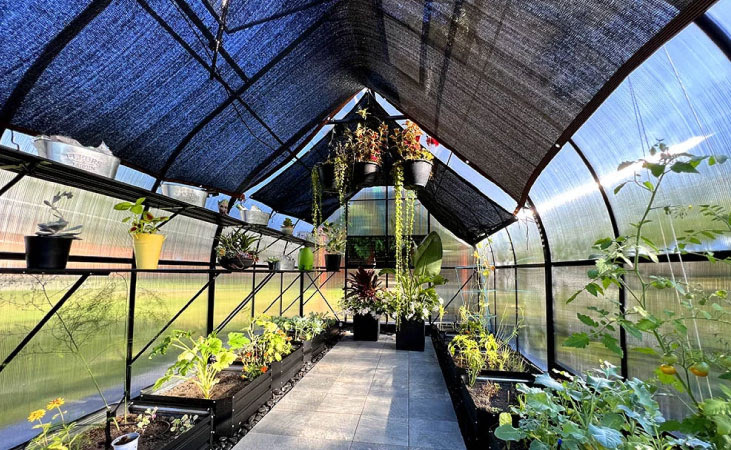
A greenhouse or polytunnel is a little different because we're dealing with the overall temperature, which can get very hot indeed - especially in smaller structures.
If possible it's better to have the shade on the outside of the tunnel and stop some of the sunlight entering in the first place. Shade used lower down will help reduce evaporation and have some benefit, but if 100% sunlight comes in above the cloth, the average background temperature will still be high.