Overwintering Garlic and Onions
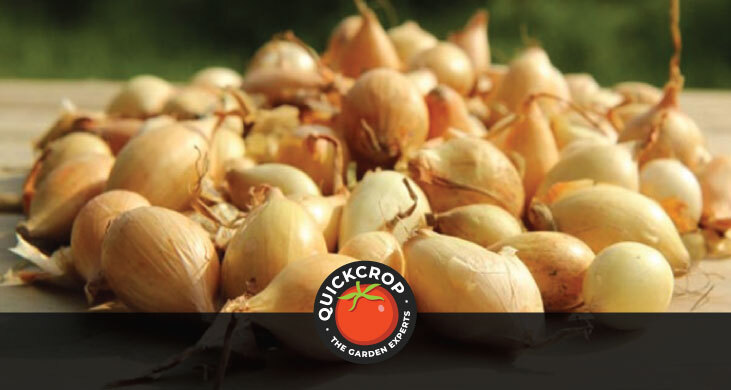
So, the season rolls around again and we're thinking about clearing beds and putting in autumn or overwintering crops.
I'm really fond of this part of the year, as the pressure is off and you can concentrate on a small number of tasks instead of a long list of crops all competing for your attention. It's a bit like a good party after half the people have gone home; the small talk is over and the more committed revellers settle into the kitchen for the long haul.
Planting Onion Sets in Autumn
I am a big fan of overwintered onions because I have had such great success with them over the years. I know I have mentioned this before, but my autumn planted onions rarely bolt the following year even with the odd spring weather we sometimes have. If you get a warm early spring followed by a cold snap, spring planted sets have a tendency to run to seed later in the season.
Onion sets are usually planted in spring, but certain varieties are suitable for planting in autumn and will give you an earlier crop next year. Overwintering onions don't store as well as those planted in the spring however, so I would advise doing both. If you have the space, use half of your onion plot for overwintering varieties - which will be ready a month earlier than the spring planted sets in the other half.
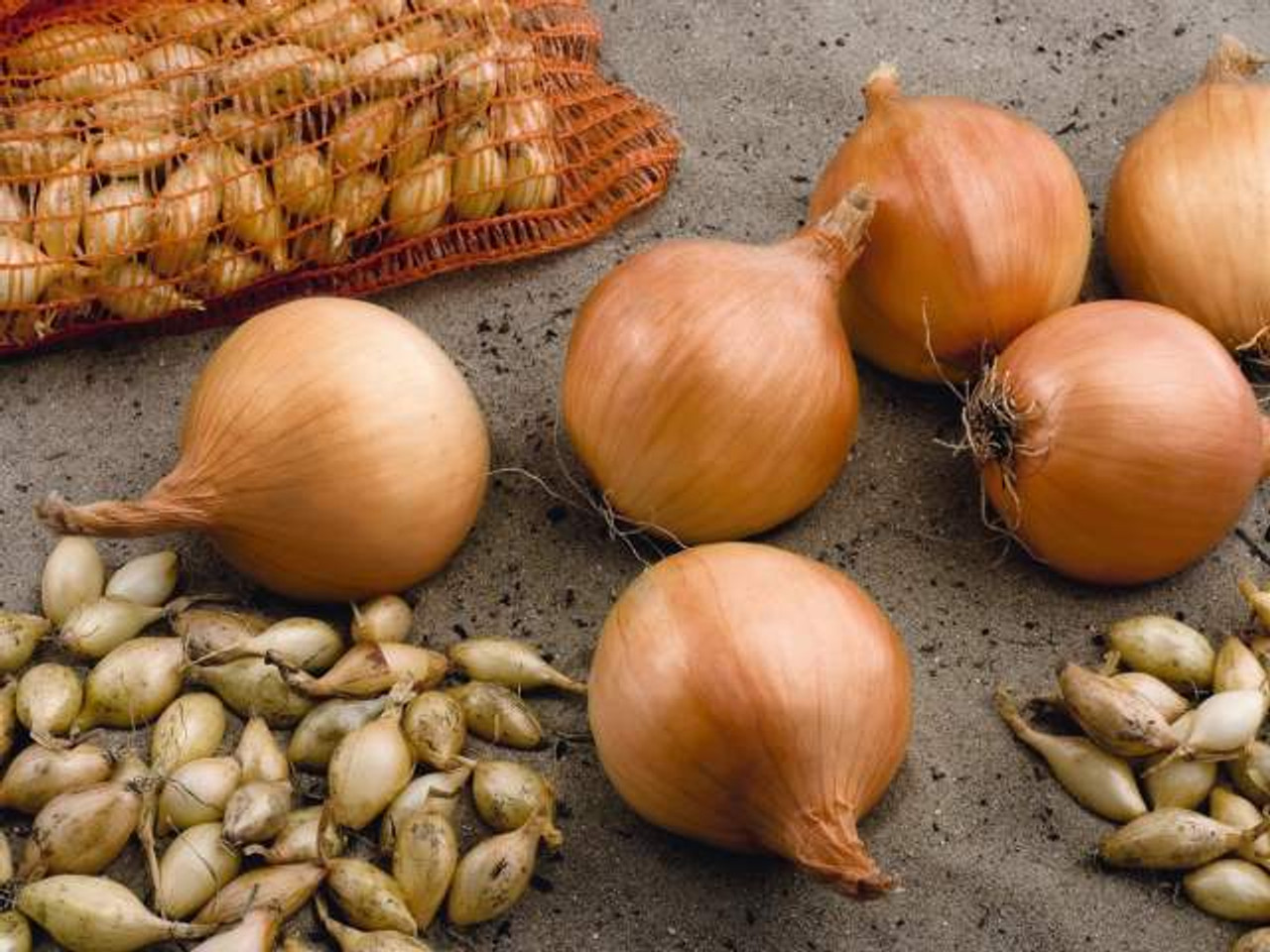
Onion 'Troy' Autumn Sets
View ProductYour soil needs to be well drained to grow overwintering onions; otherwise they are liable to rot in the ground (the same goes for garlic). If you have a heavy clay soil or live in a wet part of the country, raised beds are advisable.
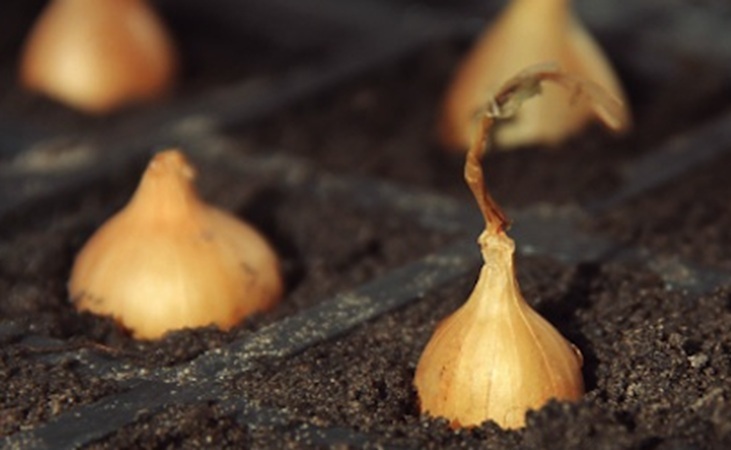
You can, however, also plant sets in modules (as in the photo below) for planting out in spring: you will still get the overwintering head start and you have the advantage of being able to bring them in if heavy frost is forecast. I did this with red onions just last year and it worked perfectly; and so I have me a very early harvest this year.
With regard to feeding your soil before planting, avoid fresh applications of manure as leaf growth will be too lush and may result in 'thick neck', causing onions to rot in storage. Soil does need to be fertile though - so if you are following on from another crop in the same space, rake in a light dressing of seaweed/poultry manure to boost fertility.
Both onions and garlic also like potash, so I would recommend using a sprinkling of Blood, Fish & Bone (also raked into the surface of the soil). There is a free alternative by the way: if you burn wood in a stove or fireplace, the ash is a good source of potash.
- Choosing your sets is important. Discard skinny, sprouted or very large sets. The ones you're looking for are small to medium sized, hard and round.
- Spacing is 10 cm-15 cm between sets and 25 cm between rows. If using a Gro Grid mat (see below) the spacing is 15 cm all round, which gives excellent medium to large sized onions.
Autumn Planted Garlic
Garlic is generally planted between October and March, with different varieties more suited to autumn or spring planting - but in general the autumn planted cloves will yield larger bulbs. To achieve the largest bulbs it's best to get autumn varieties in as early as possible (say the beginning of October) so they can get some good root growth down before the soil cools in November.
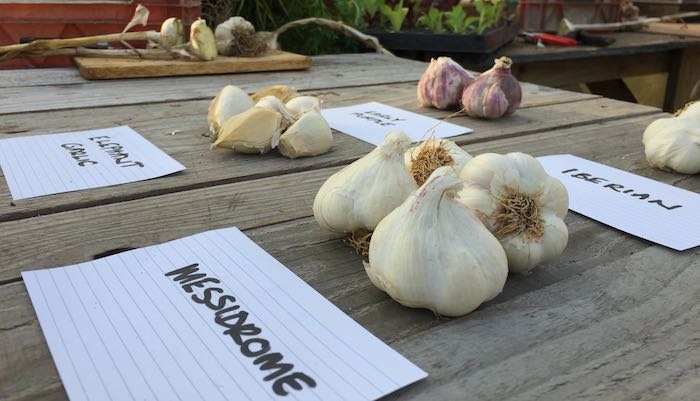
Garlic needs a long growing season, with most strains needing a period of 30-60 days at a temperature below 10˚C. These conditions allow the single clove you planted to divide and grow a bulb containing multiple cloves.
Unless you have a heavy clay soil which is prone to waterlogging, I think I would recommend autumn over spring planting to achieve larger bulbs.
If you are concerned about your soil, you can dig out a trench of earth before you plant your bulbs and fill with coarse sand: this helps keeps the roots of the garlic planted above from sitting in wet soil. Garlic roots are shallow and will spread into the surrounding fertile soil rather than down into the sand, so this will not result in a lack of nutrients.
Garlic is not a demanding crop when it comes to feeding; but some well-rotted compost will supply slow-release nutrients in autumn.
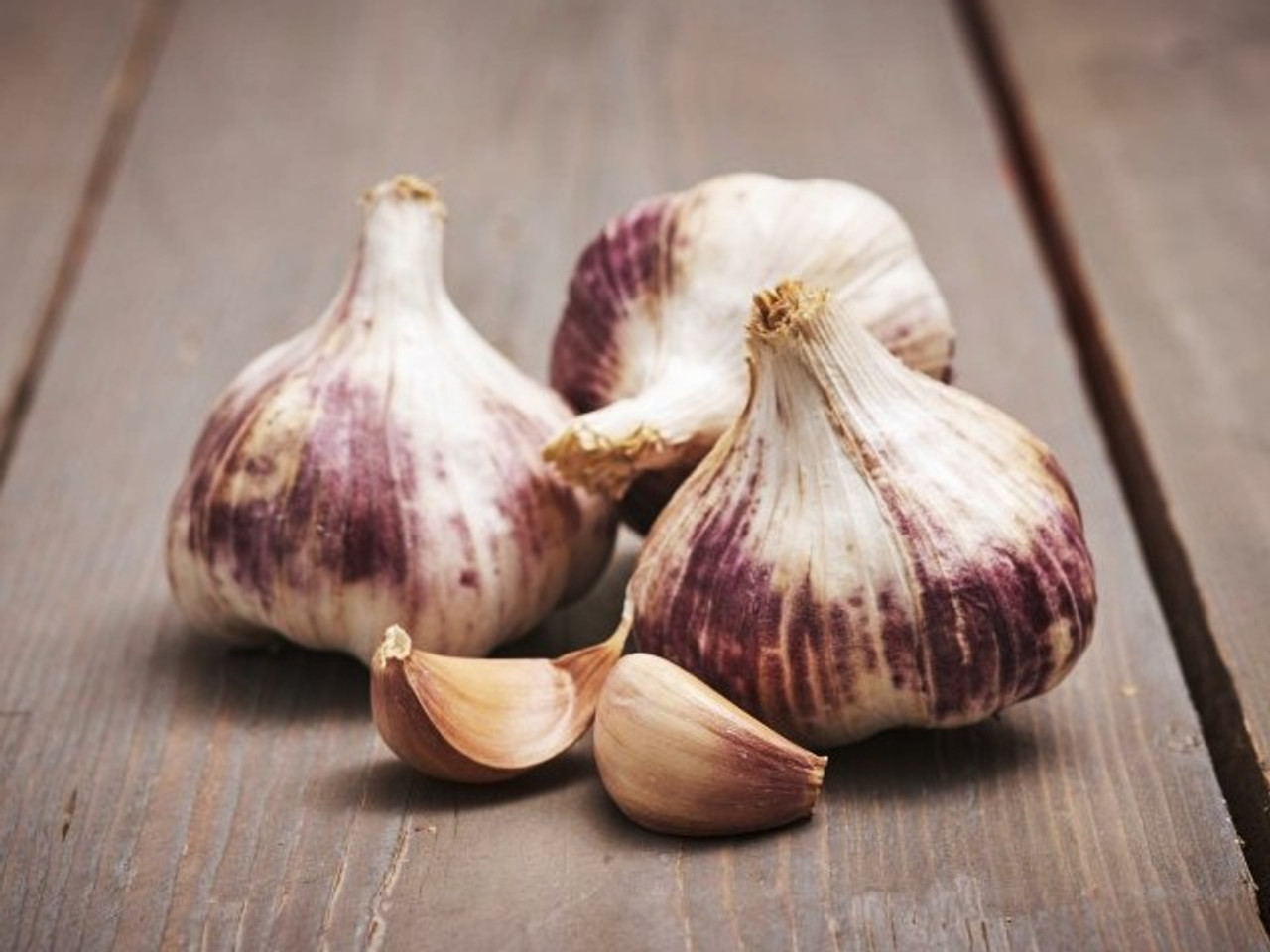
'Germidour' Purple Garlic
View ProductIf I get my garlic planted early in October I use a little bit of Blood Fish & Bone to help with root development, but I feel this is probably wasted once we get into November - as from then there will be very little growth until the spring.
Planting Garlic
- Garlic is planted by breaking the bulb open and separating into individual cloves.
- You should choose the fattest cloves from around the outside for the best bulbs, discarding any of the skinny ones from the centre.
- The cloves are planted flat side down, 10 cm deep on light soil.
- On heavy soil cloves can be planted a little shallower, but make sure they have at least a 2.5 cm covering.
- The highest yield can be achieved using a spacing of 18 cm all round. Wider spacing can produce larger bulbs but the overall yield per square metre will be less.
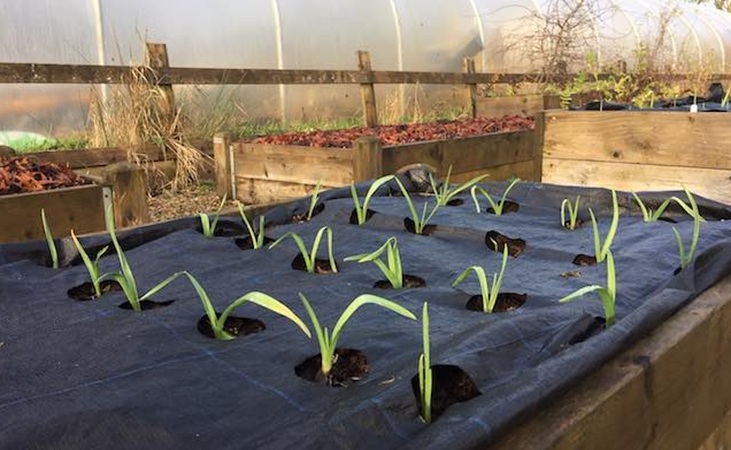
Gro Grid Weed Control for Garlic and Onions
Once garlic and onions have been planted there isn't a whole lot to do apart from keeping weeds down - which is where our unique Gro Grid mats come in. Both onions and garlic have shallow roots, so they can be difficult to weed without damage. Our solution is to avoid weeds coming up in the first place: by planting into weed control mats containing pre-punched planting holes.
If you're like me and love your garden but sometimes can't afford all the time you need, these mats are the business. I've had great success growing onions using the grid system.

Gro Grid Planting Mat 'D' For Onions & Garlic
View ProductWe make our Gro Grid mats in a range of sizes, including one (Mat D) spaced 18 cm all round for onions and garlic. If you would like to grow larger onions or larger garlic cloves, you can use Mat B which has a spacing of 18 cm between plants but 30 cm between rows.
Tray Planting Tips
A good trick - if you are late planting garlic or onions and have a covered growing space - is to plant in trays of compost, because the garlic roots and stems will be twice the size in springtime as they would be if planted outside. I use 6 cell trays which give enough room for decent rooting.
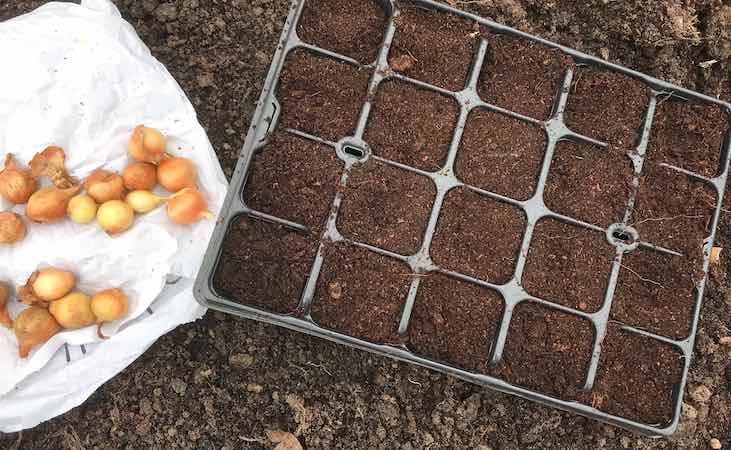
Up until this year I would have advised to move the trays out in January so that the bulbs are exposed to the required temperatures below 10 degrees (garlic needs to experience temperatures below 10˚C for the clove to form a bulb of multiple cloves), but after experimenting this season I'm not sure this is necessary. Temperatures in my tunnel are below 10˚ for the most part, and the garlic that I planted directly in the tunnel last October gave me the best bulbs I had ever grown.