The Quickcrop Garden in June
This week I thought we would have a quick look around my vegetable garden to see what's happening. We had such a cold start that I was getting jumpy - almost everything was struggling, but the recent warmer weather has brought a reassuring flush of growth with it.
After the look around, I will also cover what you can sow or plant in June: there are still plenty of options for harvests through the summer and autumn and even into next year.
Sowing Extra Seeds
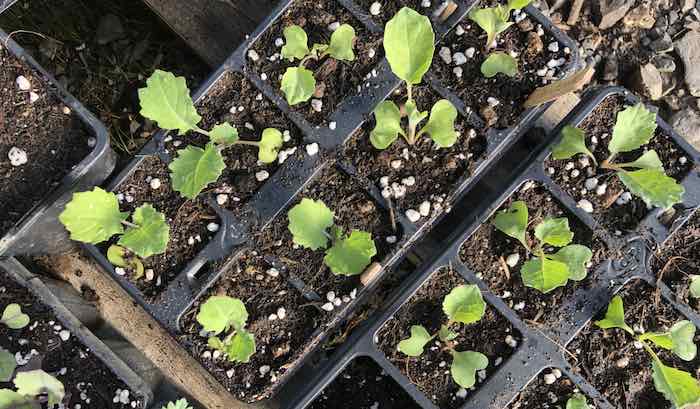
As you probably know by now, I grow most of my vegetables from seedlings sown indoors in trays or pots, which are then either planted outside or in the polytunnel. There are many reasons why I prefer this method - including more reliable germination and avoiding slugs - but one often overlooked advantage is that you get to plant out the strongest plants.
I am sure you have noticed that in any group of seedlings, whether sown direct in the soil or in trays, that some will be more vigorous than others. I always sow double the number of seeds I need so that I have some spares - but also so I can have the pick of the strongest seedlings. 9 times out of 10 the largest seedlings will go on to produce the best plants, so the minimal effort of sowing a few extra can make a big difference later on.
I will include a list of options later, but my advice is to keep up with producing seedlings so you have fresh plants to fill the inevitable holes in your beds (where things didn't go your way or you have harvested another crop).
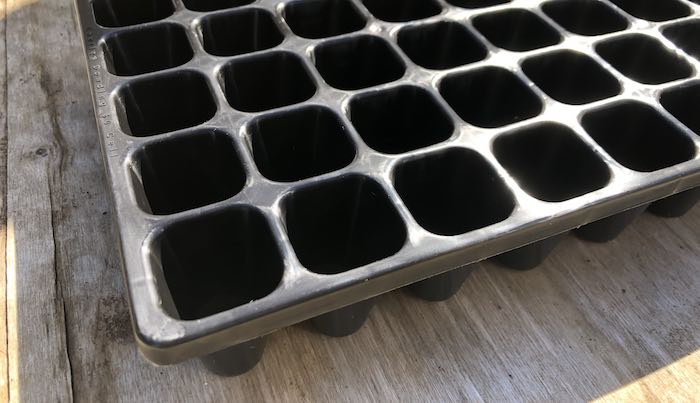
Potting on Seedlings
Charles Dowding modular trays (above) have a 3 cm module that gives about 3 weeks of growing before seedlings need to be potted on or planted out. Remember, if your beds aren't ready to receive a seedling plant, you are much better to pot on to a larger container rather than let plants get pot bound and hungry.
I use a multipurpose compost and mix in 2% Blood Fish and Bone and a little Seaweed Meal and pot into individual 7 cm pots (below, apologies for the overexposed thumb) or 5 cm modular trays.
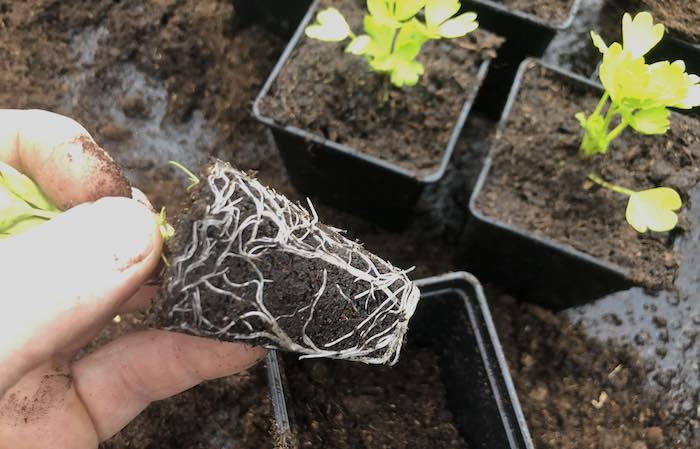
Blood, Fish and Bone is slow release, so you might expect nutrients would not be available in the short time the seedling is in the pot - but I have not found this to be the case. I also find that seedlings establish very well outside after this treatment, probably because they still have slow-release nutrients sustaining them for the week it takes for their roots to settle in (plus the fact the seaweed meal helps them with their immune systems).
If you have seedlings struggling in a low-nutrient compost and they are too small to pot on, give them a low strength liquid tomato feed which should perk them up.
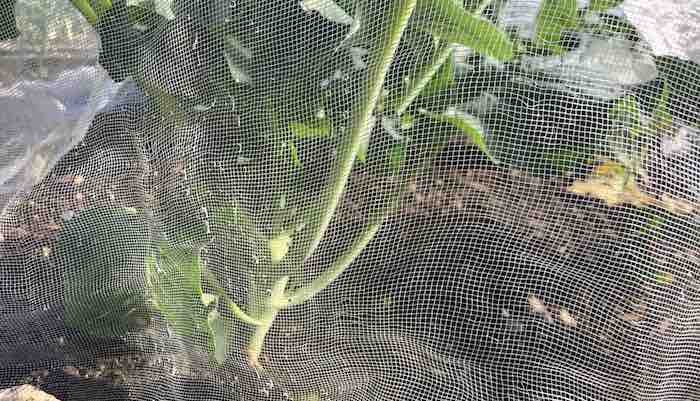
Cabbage Root Fly Prevention
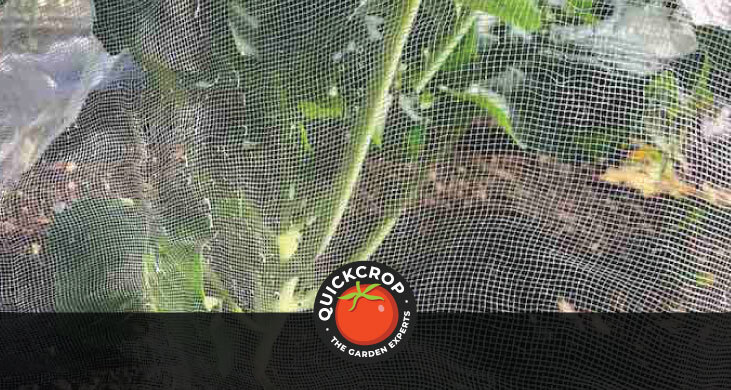
Above you can see some calabrese growing under insect protection mesh. This is to prevent the cabbage root fly laying her eggs around the stems. As I am sure you know, the eggs hatch into maggots that burrow down and eat the roots, usually killing young plants. You will also know that the root fly is a problem with all brassicas (cabbage family plants): cabbage, calabrese, broccoli, Brussels sprouts, kale, turnip etc...
I am just making the point (because I just got caught out myself) that the root fly doesn't care whether the plant is in the ground or still in a seedling tray; she is happy to lay her eggs either way. I ended up with egg on my face the other day when filming our kale and swede video when I discovered most of my seedlings had root fly before I had even put them in the ground. In future I will make sure my seedling trays left outside are also covered with insect mesh.
Tackling Nutrient Deficiencies in Tomatoes
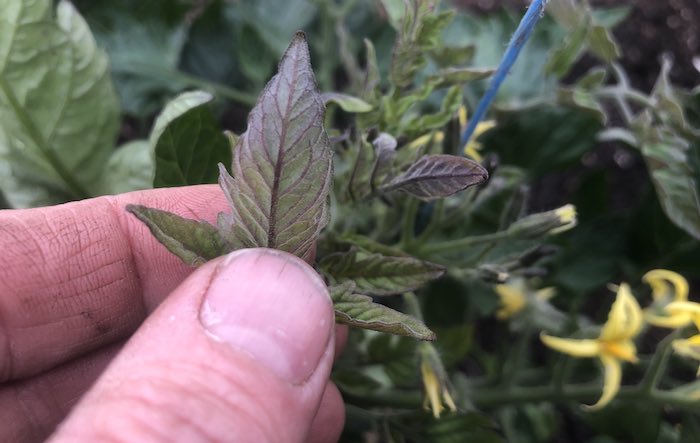
When looking at plant feeds last week we touched on nutrient deficiencies, so the above image of a tomato plant (taken 2 weeks ago) might be of interest. The photo includes a much better shot of my thumb which, judging by the white patches on my nail, also shows nutrient deficiencies (zinc) in myself as well as the tomato.
The purple leaf colouring is most likely phosphorous deficiency, which is unusual in my soil as it is deep and fertile. Interestingly, the cold start to the the year may have been to blame, as tomatoes can have difficulty absorbing phosphorous if the soil is too cold (below 15˚C) which has been the case until recently.
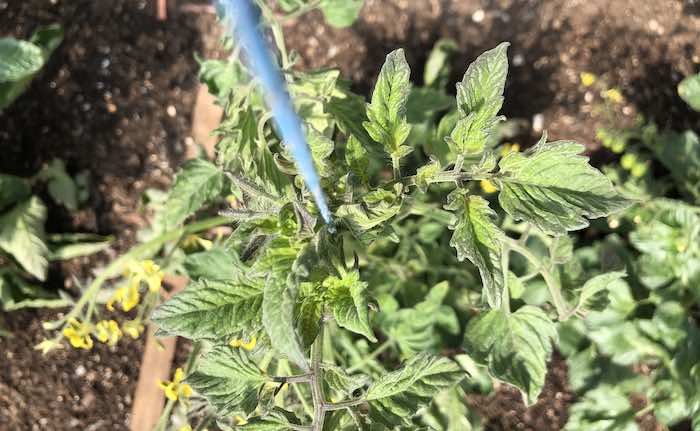
I took the image above yesterday showing an almost complete recovery after temperatures have increased over the last 2 weeks. Stupidly I had also applied a liquid tomato feed so I can't say for sure, but considering the rest of the tomatoes suddenly took off (with no purple leaf or feed applied) I reckon the extra warmth did the trick. As regards my own deficiencies, I haven't taken any extra feed yet but I understand oysters will do the trick.
By the way, if you are growing tomatoes in a greenhouse or tunnel it is highly likely that the lower leaves are curling inwards (mine are anyway): this is generally nothing to worry about, as it is caused by significant fluctuations in temperature. Until recently it would have been reasonably warm undercover when the sun was out but could also be very cold at night - making leaf curl very likely. From now on younger leaves should be fine, but as lower curled leaves age they can be removed and added to the compost heap.
Keeping Celery Watered
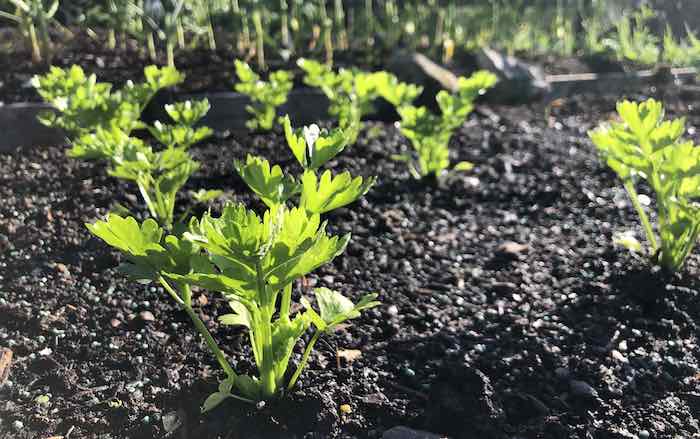
The trick with celery is to never let it dry out or it will get tough and stringy (it is, of course, originally a marshland plant). Certainly, in my garden, drying out of anything is a rare occurrence - but if it does happen, it will most likely be in June.
Above you can see celery 'Victoria' looking very happy in the early morning sun. If the weather stays dry I will give it a good daily soaking early in the morning or in the evening to make sure I lose as little moisture as possible to evaporation.
Quick Potato Update
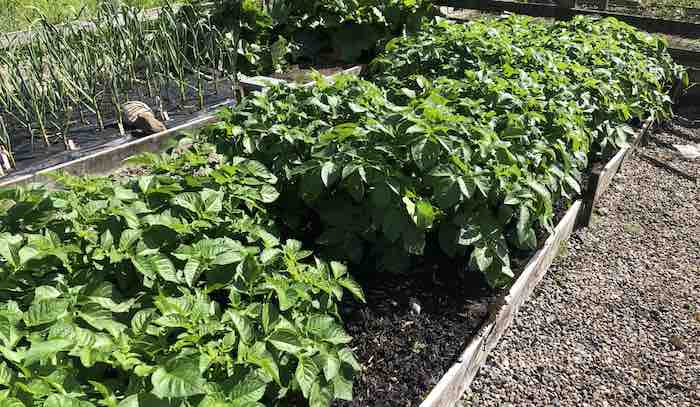
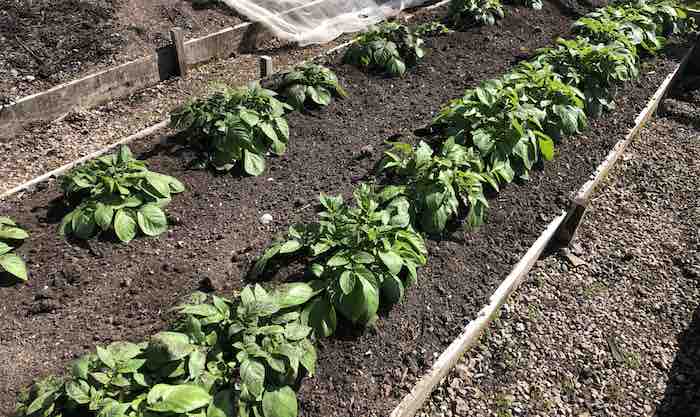
Above and below you can see the difference in growth in my early and maincrop potatoes. This is hardly surprising as they were planted nearly 4 weeks apart (at the beginning and end of April respectively).
Broad Beans
Broad beans are flowering now, so will soon start to produce beans - which herald the start of the summer pea and bean season. Broad beans are underrated in my opinion, with a better flavour than French or runner beans - and a very pretty plant with their layers of sweetly scented flowers with lilac and pink centres.
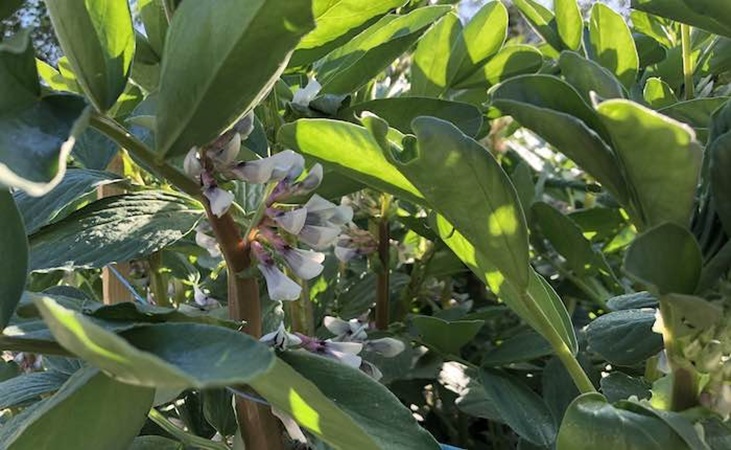
Once the flowers have been produced the plants will be close to their optimum height (1 metre in the case of 'Witkeim Manita' pictured above) and can have their tops (growing tips) pinched out and used steamed or in salads. The growing tips often become infested with aphids in June and July, so removing them will also reduce the chances of an attack.
Maincrop Peas
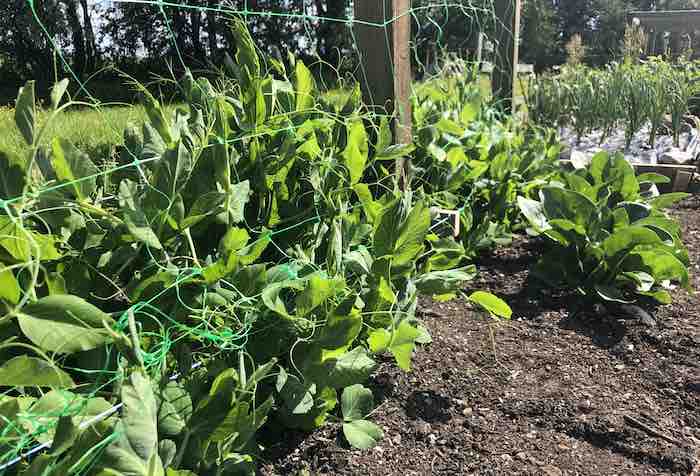
Here you see a not very tidily arranged pea support mesh and a crop of 'Greenshaft' peas beginning their scramble up the poles. The mesh will be covered very quickly now - they are nearly covering a rung every couple of days, with flowering to follow and (I expect) the first peas in early July.
You can also see Oriental spinach 'Mikado F1' growing alongside the peas. Remember your beds need not be reserved for a single crop; many plants are very happy together, and sometimes do better, when grown side by side.
Polytunnel Carrot Harvest
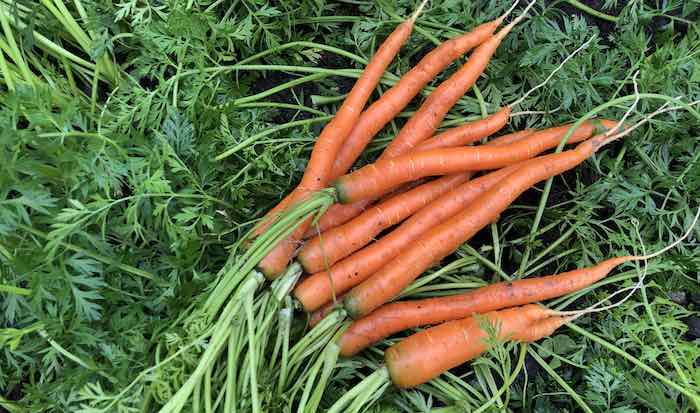
I have started to harvest my polytunnel carrots now as I need my beds for dwarf French beans and courgettes; and I am glad to report they have fared very well. I had thought I was in trouble 2 weeks ago as one or two carrots started running to seed (this is always a risk with very early sown carrots sown under cover) but so far, very few have followed.
The variety by the way is Amsterdam Forcing (you must use a 'forcing' variety when sowing early) which, as you can see, produces long, tapered roots. If I was able to leave them longer they would bulk out a bit more but I think it is highly likely the rest will go to seed if left for much longer.
I don't need to pull the entire bed, but rather harvest from the areas where I want to put in my new crops. This might sound obvious but when a new seed or seedling goes in, it only needs its immediate area vacant to get established. Previous crops can be left to grow on for a period before the space is required by the roots of the new crop.
What to Sow in June
Many people tend to think if you haven't got the vegetable garden well established by June, you have run out of time. This couldn't be further from the truth, as there are still a wide range of summer, autumn and overwintering crops you can grow.
Remember growing is a yearly cycle: you can jump on at any stage and still have plenty to do, whether it is growing in the summer or preparing the garden in the colder months.

VegTrug Wall Hugger Trough Planter
View ProductCrops to sow for summer & autumn harvest include:
- Basil
- beetroot
- broccoli calabrese
- carrot
- Chinese cabbage
- coriander
- courgette
- cucumber
- kale
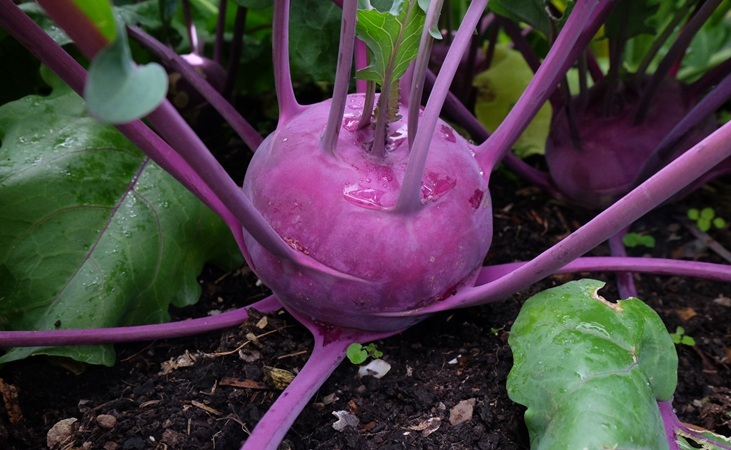
- kohl rabi
- lettuce
- mini cauliflower
- Asian greens
- Pak choi
- Florence fennel
- french beans
- parsley
- perpetual spinach
- radish
- runner beans
- spring onions
- spinach
- swede
- swiss chard
- turnip