
How To Grow Carrots
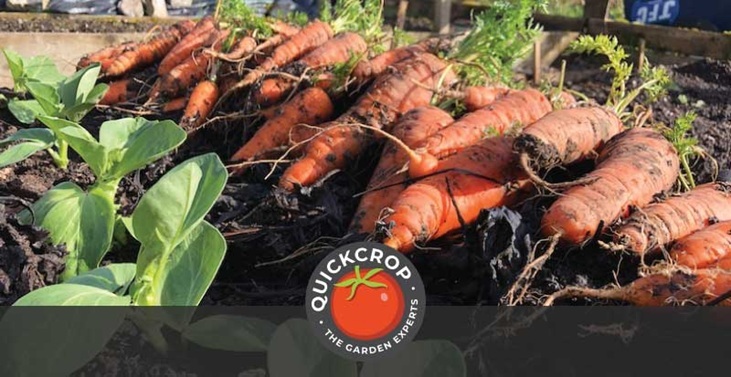
Get the soil conditions correct and carrots are one of the easiest vegetables to grow in the cooler climates. This root crop is rich in vitamin A, calcium and trace elements, and a good source of fibre. If you need some added incentive, homegrown carrots have a much better flavour than shop bought ones.
If you have a polytunnel or greenhouse you can pretty much keep yourself in homegrown carrots all year, as undercover crops can be sown as early as the end of January.
Soil Requirements
Carrots require a very fine soil without any large stones or obstacles, so that they can push their way down and go straight. The soil should be light and sandy if possible, and not recently manured.
Incorrect soil conditions (such as dense clay or stony soil) can lead to stunted or forked roots, and misshapen carrots - these may well cause a chuckle when dug up, but they are not appreciated so much come cooking time!
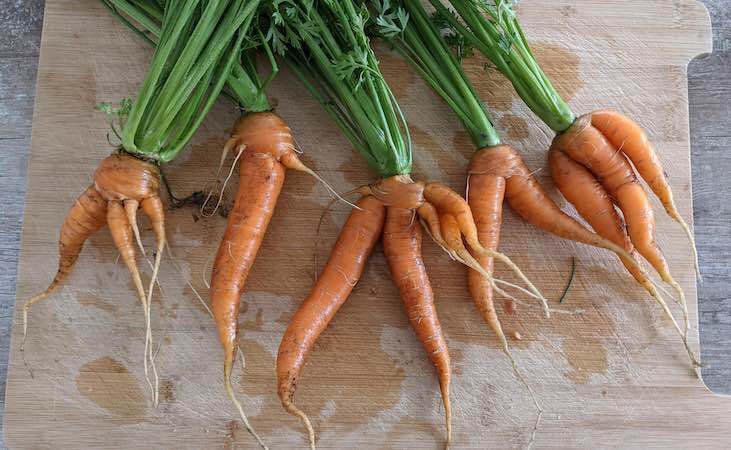
This is also why carrots don't do well when sown in modules, and are better sown direct - whether undercover or outdoors.
If you have a heavy clay soil you will struggle with carrots, unless you improve the structure by adding large amounts of organic matter. This is what I did by adding manure, compost and seaweed over a number of years - but it's not a quick fix.

Carrot Patio Planter - 2 Pack
View ProductIf your soil is a problem try growing in containers or raised beds. You could also opt for a short root variety like 'Wortelen Chantenay'. Don't be tempted, by the way, to improve a clay soil by adding sand (unless you add enough to make a 50/50 mix) as you will actually make the problem worse.
Related Article: How to Grow Carrots in Containers
Soil Preparation
- Remove as many stones possible and rake the soil into a fine consistency or 'tilth'.
- Any soil amendments like well rotted manure should be added several months before sowing.
- Carrots are not heavy feeders so if your soil is reasonably good you should still get a good crop without supplementary feeding.
Carrots are poor competitors with weeds, so you want as weed-free an environment as possible.
The 'stale seedbed' technique is a good organic solution; this is where the bed is cleared and prepared and then left for any weed seeds present to germinate. When they have done so, hoe or rake out the young weeds before you plant your carrot seeds.
When to Sow Carrots
As mentioned earlier, carrots are one of the first crops you can get going with in a new calendar year. In a polytunnel they can be sown in late January or February - although this will likely require a cloche or mini tunnel to warm the soil to germination temperature (aim for at least 10 °C).

Tenax Soil Thermometer
View ProductOutdoors you can sow from March, but you are better waiting until April (for early varieties) or after mid June (maincrop carrots). This is not only because outdoor conditions are better, but also to avoid the first generation of carrot root fly - which is active in late spring and early summer.
For growing later in the year, go for a fast-growing variety such as 'Early Nantes'.
Sowing and Spacing
Sow carrots in 2cm deep drills (little trenches) spaced 25-30cm apart. You can be fooled into thinking the drill is deeper than it is by the soil piled either side, so check relative to the surrounding soil level.
When sowing your seeds you want to get them as close as you can to the correct spacing, as removing any unwanted plants will attract the carrot fly (due to the scent). The spacing for maincrop carrots is 3-4cm between roots, but due to the small size of seeds it can be difficult to achieve this. Here's a trick:
- take a pinch of seed from your palm and sow by rubbing your thumb and forefinger together while moving along the row.
- They should start to pop their heads above the ground in approx. 17 days.
For early carrots sow seed in rows 20cm apart at a depth of 1cm.

Carrot 'Autumn King'
View ProductThinning Carrots
Thinning is the practice of removing surplus seedlings to ensure that the crops left in place have optimum space for healthy growth. Try to sow as close as you can to the correct spacing to avoid too much thinning. When it needs to be done, the best time to do so is in the evening or on a windy day.
Thinning carrots needs to be a quick and efficient exercise, as the smell of newly plucked baby carrots will attract the root fly. Do it all in one go and don't leave the pulled foliage or baby carrots lying around: the tiny carrots make for a lovely snack, and you can bury the foliage.
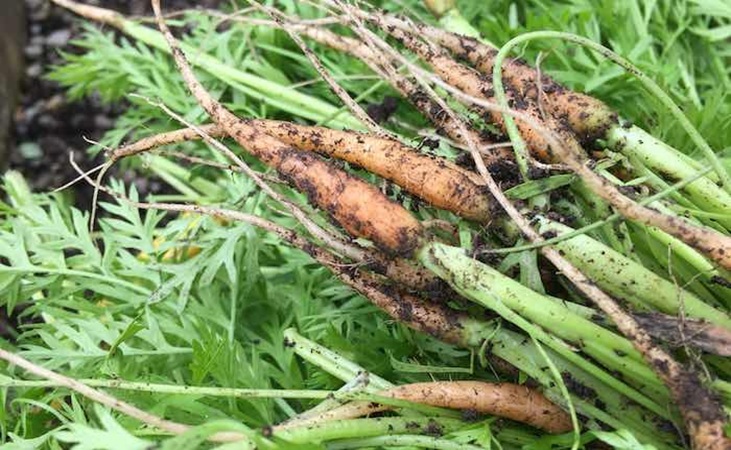
Gently pull up any excess carrot seedlings to leave a spacing of 3-4cm between plants. Take the opportunity to remove any weed seedlings which may have come up also.
Avoiding Carrot Root Fly
Perhaps the biggest challenge when growing carrots is trying to avoid the very persistent carrot root fly. Root fly larvae - seen as cream yellow maggots - burrow into the flesh of your carrots, making them unattractive and prone to rot.
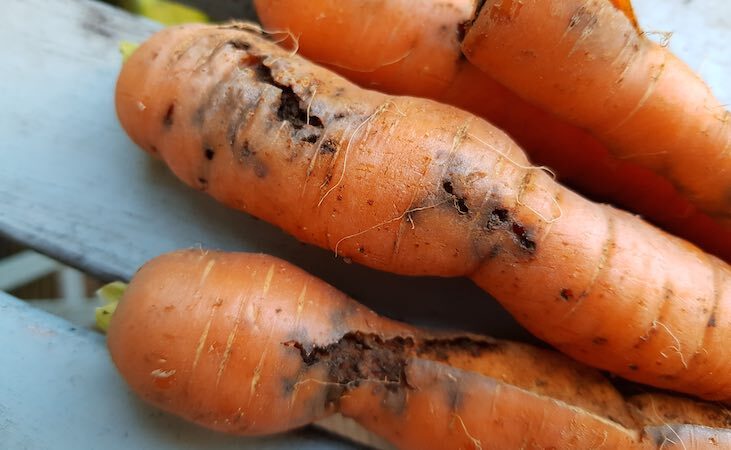
While root fly is essentially impossible to get rid of, there is a lot you can do to avoid it. The root fly is attracted by the smell of the foliage - which is more intense after any job you have to do on them. The idea therefore is to sow as close as you can to the correct distances so that you won't have to thin out the crop later.
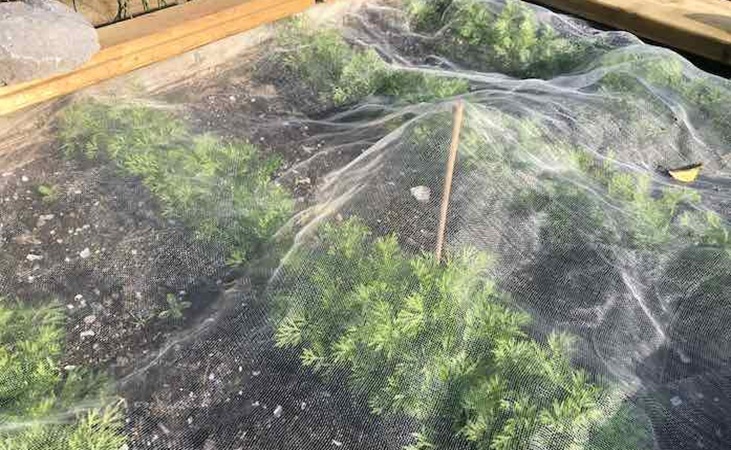
The most effective crop protection is a fine-weave covering such as micromesh. This material allows light and water through but will keep very small insects such as the carrot root fly off your crop. The protective covering can be hung suspended over the crops with support hoops or a frame, or you can drape the mesh loosely over them (burying the edges to secure).

Enviromesh Netting Bird And Pest Protection
View ProductIn my opinion this is the best method; I keep the crop covered for its lifetime with good success. Products like Enviromesh have been specially designed with insects like the carrot fly in mind. Keep your thinning to a minimum and bang the cover back on as quickly as possible.
Another avoidance technique is to be aware of sowing times: root fly is at large from May to mid-June and from August to October; if you sow maincrop carrots in late May, they will be coming up just as the first generation of root fly is on the wane.
Carrot Crop Care: Weeding and Watering
Keep those carrots weed free for best results! I don't recommend using a hoe because it'll cause slight damage to the carrot foliage, thus attracting our old friend mentioned above.
Instead pick any weeds by hand between the rows. By the way if you use a micromesh cover you'll have less weeding to do as weed seeds won't have blown in from surrounding weeds.

Deep Root Planter 1 m
View ProductIf the weather is dry keep your carrots watered: otherwise they are likely to split when a rainy period arrives. This is caused by a sudden burst of growth when the moist conditions return after a dry spell. Consistency is key.
Harvesting Carrots
You are better off harvesting your carrots in one go, as the carrot smell will attract the flies in large numbers. If you're not using a cover and harvest every now and then, you will find the last carrots severely infested with maggots.
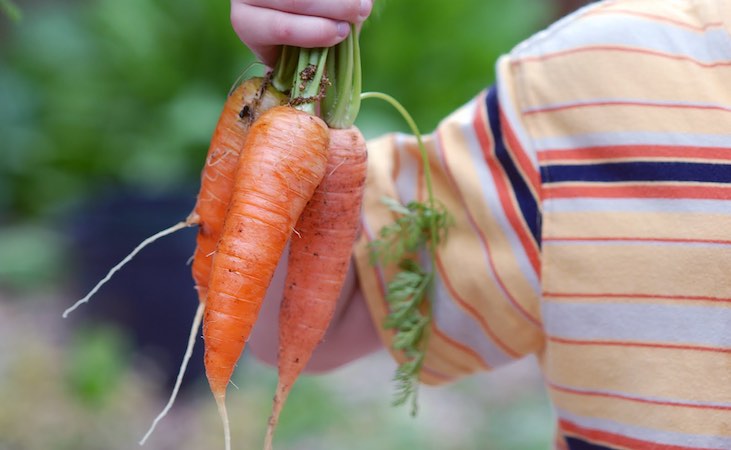
As carrots should be growing in loose sandy soil, they are usually very easy to harvest: just grab the tops and pull gently.
A garden fork or trowel can be used to loosen the soil around the carrots if required. If the green foliage breaks off, don't worry - just dig the carrots up. If you have a heavier soil you should fork the roots up to avoid breaking them.
If you live in a wet area you are better off lifting all your carrots or they may rot in the ground over winter.
Storing Carrots
Maincrop carrots are suitable for storage and can be stored for up to three months. Early carrots don't store well; in either case, and as with most things, the flavour is better when freshly picked.
If there are too many carrots to eat at any one time, they can be placed in a box of slightly moist sand and placed in a cool, frost free, dark place for storage. Cut off all the leaves about half an inch above the root before doing this. They should keep for a couple of months in these conditions.

Carrot Colour Mix
View ProductWhen harvesting carrots for storage you need to be picky about quality control. Any damaged roots need to be used in the kitchen or thrown away, as they will rot quicker and that may spread to the rest. Similarly when placing in the box, try to prevent roots from touching up against eachother in case any rot might spread.