What is the Best Compost For Container Growing?
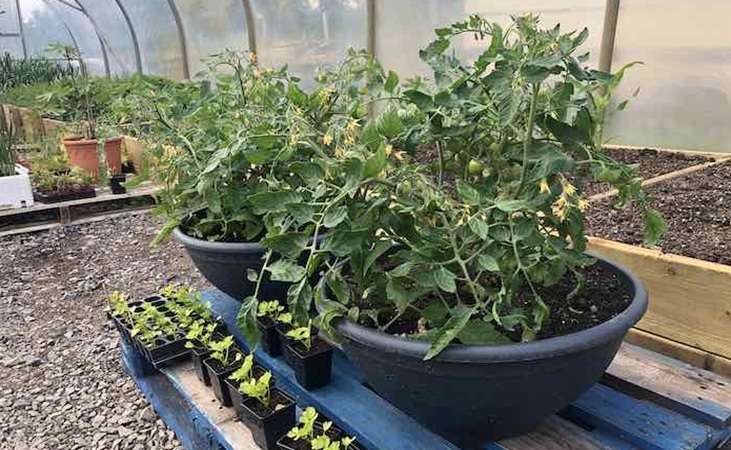
While I am lucky enough to have plenty of outdoor and tunnel growing space, I do grow some plants in containers (e.g. bush tomatoes) and I realise that for many gardeners living in urban areas, container gardening is going to be the main method through necessity.
Growing in a pot or container is something of a different kettle of fish to growing in outdoor soil, or even to raised beds. Open garden soil tends to have a more stable moisture and nutrient reserve because the plant can draw from a wider area, while container grown plants are confined to the area inside the pot or planter. This can mean that they become more reliant on us for sustenance.
Meeting the Needs of Container Plants
Food crops are, generally speaking, more demanding than a planter filled with flowers - so they will need much more feed to produce a decent crop. Having said that, the more effort you put into creating the right compost mix for your containers, the less (and less soon) you will need to rely on liquid feeds later on.
Most multipurpose composts will only have enough feed to sustain plants for 4-6 weeks. Organic composts tend to feed for longer as the nutrients used are released more slowly, while compost with artificial NPK feed added will provide faster growth for a shorter period of time.

Pea and Bean Planter Growbag
View ProductCan You Fill a Container with Garden Soil?
No. Well you can, but it won't go well. Straight soil is not suitable for pots and containers because it tends to become compacted in confined spaces - reducing air around roots and impairing drainage.
This may sound like a bit of a contradiction, but what we want from a potting material is good moisture holding capacity but also good drainage:
- If pots dry too quickly they will need to be watered very frequently.
- If they don't drain well, the roots - which need air - will suffocate in the saturated soil.
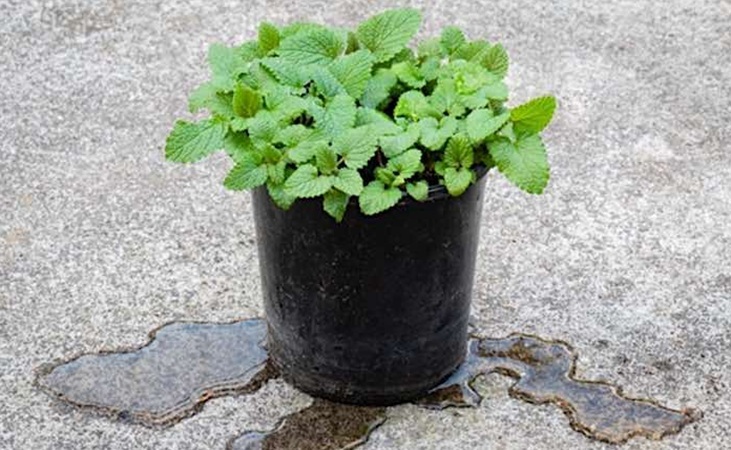
In garden soil excess water usually drains below the root zone, but in a pot or container it tends to pool in the base. This is going to get a bit scientific here, but the level at which water collects in the bottom of a pot is the balance point between a) the wicking effect of the compost drawing it up, and b) gravity pushing it down.
Pots are relatively shallow, with the root zone often filling the entire pot - so if the base of the pot is saturated, so are the roots. Also, the more dense (less air spaces) your potting mix is, the higher the water level will rise in the pot. Soil is more dense than compost, so when watered roots will stay saturated (and at risk of suffocation) for longer.

Perlite Compost Improver
View ProductCompost - whether it is peat, coir or green waste-based - has more air spaces than soil, so will drain better; but potting compost can be further improved by adding a mineral aggregate like perlite or vermiculite.
What about Mixing Soil and Compost?
A mix of soil and compost (up to 50/50) is better for large containers, especially for taller plants as the added weight will prevent them blowing over in strong winds. If you have access to good quality garden soil, I find most crops grow better with some soil added to the mix; just use less for small pots and increase the ratio as the pot size increases.
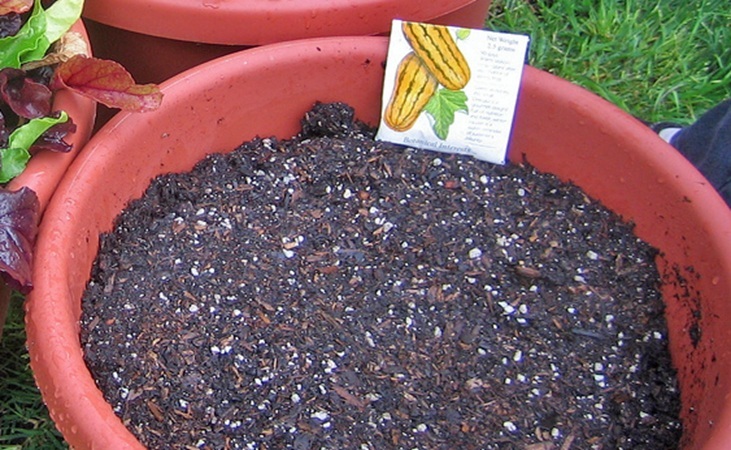
Most commercial composts don't contain soil (referred to as loam, which is roughly equal proportions of sand, silt and clay), but this is to do with the practicality of maintaining a stable supply (soil differs so much) rather than whether it it is an effective ingredient.
John Innes (a set of compost recipes rather than a brand name) compost mixes do contain soil at varying concentrations depending on the intended use of the compost - e.g. less for sowing seed, more for growing to maturity in pots.

Basalt Low Planter
View ProductChoosing the Right Potting Compost
Commercially available potting composts can vary in quality, particularly as suppliers adapt to new regulations around the use of peat.
It's important to note that potting composts rarely if ever consist of compost alone. Instead you will be looking at a mix of materials, which can include coir (coconut fibre), peat, bark, perlite, vermiculite, sand and added fertilisers.

Vermiculite Soil Improver
View ProductTo be effective, a potting compost or potting mix should:
- retain moisture effectively (containers dry out faster than garden soil)
- promote good structure and aeration (ingredients such as bark, coir and perlite help to create air pockets within the mix)
- release nutrients steadily as the plant or seedling gets established within the pot
In general a potting or multipurpose compost will only sustain your plants for 4-6 weeks; after this point you will also need to use a supplementary feed to avoid a disappointing harvest.
Plant feeds need not be synthetic. A weekly seaweed-based liquid feed can be just the thing once nutrients in the potting mix have been depleted.
Feeds with a high proportion of nitrogen can be used when you want to encourage leafy growth later in the season, while potash-based feeds are ideal for encouraging flowers and/or fruiting. For more on NPK in plant feeds see this article.
Klasmann Potting Compost
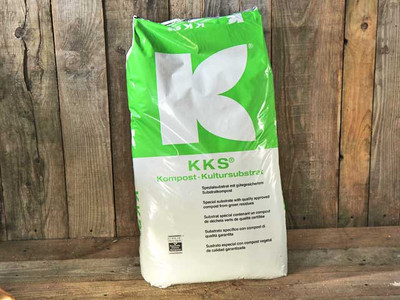
Klasmann is a very well regarded brand, whether it's their seed compost or this potting compost which is suitable for containers of various sizes. Perhaps the key to its reliability is that Klasmann is formulated for horticulture and commercial growers (who don't have much room for error).
You can kind of see this in the minimalism of their compost bag, which almost assumes that you already know what you're looking for as opposed to announcing what it can do. On that note I've tried to find the exact makeup of their potting compost and it's like trying to crack a code.

Klasmann Organic Potting Compost - 70 L
View ProductIf in doubt just search for reviews on gardening groups, google or indeed on our site. I don't think I've ever seen anyone complain about Klasmann - and if there's one thing that attracts complaints, debates and mixed reviews in the world of gardening, it's compost. They also offer a peat free version which consists of 55% organic coir, 20% compost from green waste and 25% composted wood fibre.
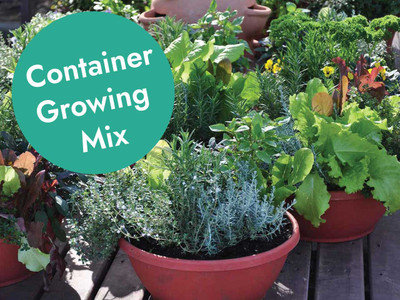
Container Growing Mix
Our bulk bag of soil/compost mix which is specially formulated for container growing.
30% Screened high grade topsoil: low clay content; screened to remove large or medium sized stones
50% Peat reduced compost: improves soil consistency and helps the mix hold on to moisture
15% Coarse grit horticultural sand: enhances drainage and aeration
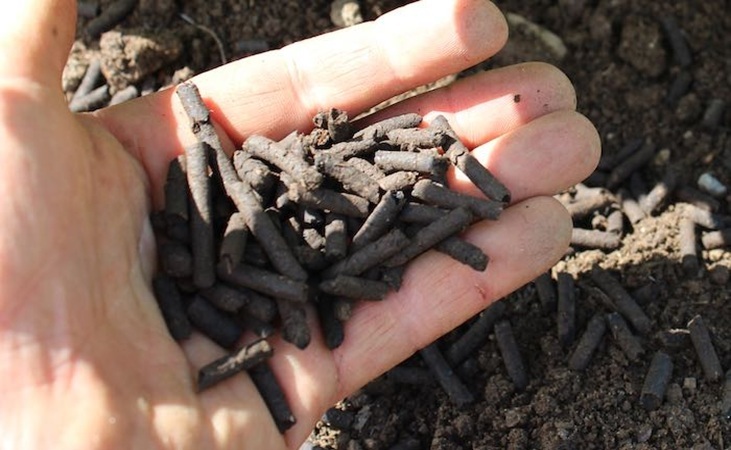
5% Seafeed fertilizer pellets: slow release nutrients for up to 90 days. Seafeed is a mix of organic free range poultry manure which is composted with seaweed meal. The addition of the seaweed meal helps to boost plant immune systems and improves soil quality.

Container Growing Soil Mix 750 L
View ProductMaking Your Own Container Growing Mix
I like to make up my own potting mix:
- soil and compost as a base
- mix in perlite for drainage for plants that don't like wet feet
- mix in 'Rockdust' which is ground basalt for extra minerals
- seaweed and poultry manure pellets, which add slow release NPK (from the poultry manure) and growth boosting hormones and micronutrients (from the seaweed).
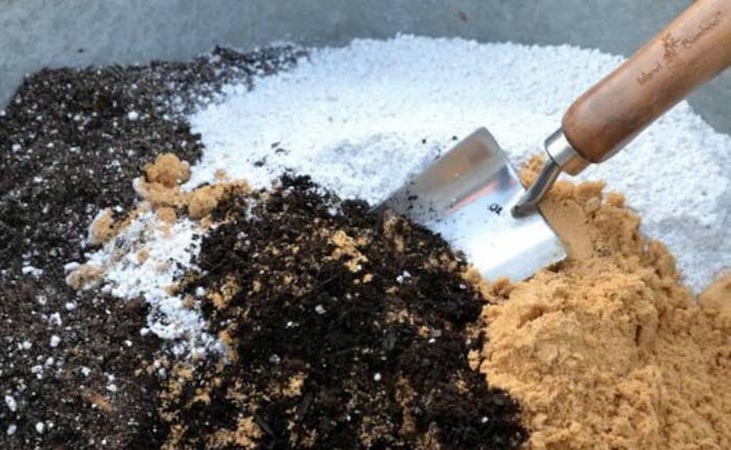
I am not too strict with ratios but in general I mix equal parts of good sieved garden soil, bagged compost (or sieved garden compost) and perlite for the base.
I then add approximately 5% of seaweed and poultry manure pellets and 1 or 2% Rockdust. If I have some to hand I often add extra seaweed meal, as I know what a difference seaweed makes in my beds: again 1 or 2%.

Granular Seaweed Fertiliser - 5 L
View ProductHow Mycorrhizal Fungi Can Help Container Grown Plants to Establish
Unless you are using a fertilizer containing chemical NPK (nitrogen, phosphorous and potassium), your container mix will likely be comprised of slow release nutrients. This is good! We are looking for sustained, even growth; but we do need to make sure plants are able to access these nutrients as efficiently as possible - and for this they may need a helping hand.
Undisturbed garden soil is full of fungal networks that feed minerals to plant roots in exchange for sugars produced by the plant. This was a deal struck millions of years ago, and is a key part of healthy plant growth. It's the key motivation for the 'No Dig' method of gardening championed by Charles Dowding and other organic growers.
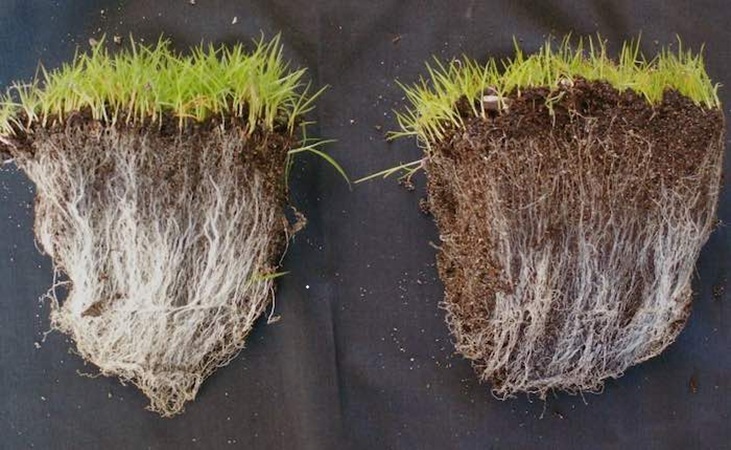
The image above shows grass grown with and without mycorrhizal fungi; obviously the one on the left is with the fungi. The large root system is actually a mix of grass roots and fungal hyphae that are feeding each other, resulting in better growth for both parties. Fungi are very efficient at mining minerals, but because they don't photosynthesise they can't produce sugars.
The point is that container grown plants don't have their own fungal networks, so it makes sense to add some when making your container growing mix. As our understanding of the importance of fungal networks has grown, so have the range of products available which include mycorrhizal enriched compost, root powders and granules or fungi inoculated compost 'biscuits'.

Root Booster - Better Plants
View ProductThe amounts required are very small - about half a teaspoon for a tomato plant - but the key thing is the fungi are in contact with the roots. While I don't personally add fungi to my compost mix, I will either a) dip seedling roots in granules or powder before planting or b) sprinkle a bit in the planting hole.
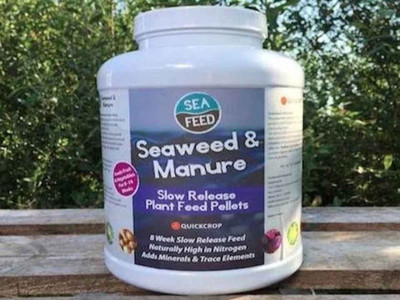
Seafeed Slow Release Plant Feed
We mentioned Seafeed a couple of times above as a very useful component for a potting or container mix.
Seafeed is perfect for container growing as it releases nutrients slowly over a 3 month period, and as long as you don't overdo it won't burn the roots of your veggies. Mix a handful into your potting mix for a steady release of readily absorbable nutrients.